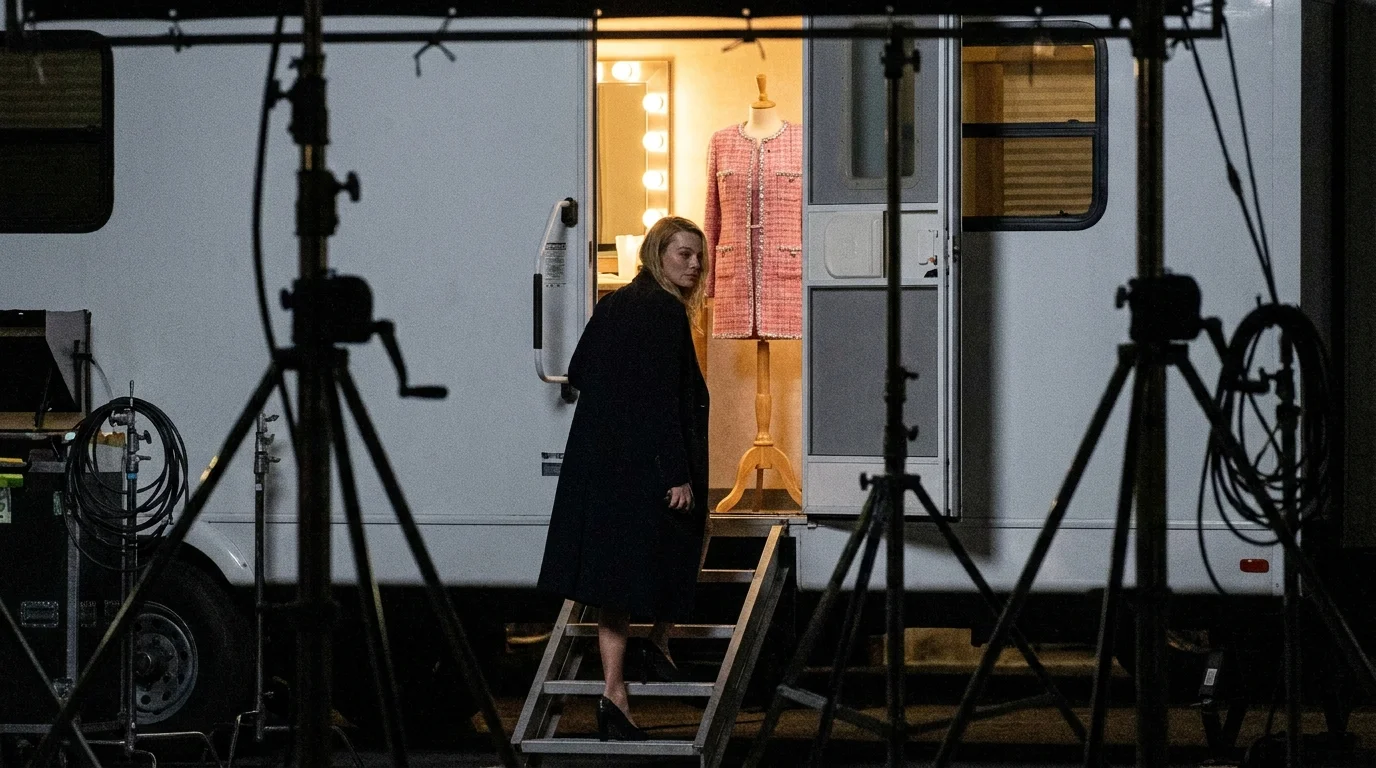
The Beverly Hills fitting suite is silent, save for the low, rhythmic hiss of a heavy-duty brass steamer. The air smells of cedar shavings, heated silk, and the faint, chemical bite of professional preservation. On a heavy oak table, white cotton gloves lie next to a pair of heavy shears. In the center of the room stands the focal point: a vintage wooden tailor dummy draped in stiff, archival pink Chanel tweed. The fabric does not yield to the touch; it has been reinforced, preserved, and structurally prepared to do battle on a global stage.
For years, the public has been fed a romantic myth about celebrity style. You are told that a star’s red carpet looks are a poetic reflection of their inner joy, a spontaneous celebration of personal taste. That is a beautiful lie designed to keep you consuming. When Margot Robbie stepped out for the global press tours that redefined her career, she was not choosing her favorite colors. Every single archival silhouette was a calculated business move, orchestrated by an aggressive mastermind who recognized that in modern Hollywood, style is not creative expression—it is raw leverage.
To understand this transformation, you have to look past the pink. The transition from free-spirited Australian newcomer to the absolute pinnacle of studio producer status required a ruthless shedding of personal taste. The goal was never to make her look pretty. The goal was to make her look powerful enough to greenlight a hundred-million-dollar budget with a single nod, establishing an impenetrable barrier between her private self and her corporate empire.
The Corporate Wardrobe: Style as a Balance Sheet
You must stop viewing celebrity fashion through the lens of aesthetic pleasure and start viewing it as a hostile takeover. For a long time, the public believed Robbie’s charm lay in her breezy, girl-next-door accessibility. But accessibility does not command respect in the chilly corridors of major studios or luxury conglomerates. The pivot to hyper-curated, archival couture was a deliberate move to sever her image from the disposable cycle of trend-following starlets.
By wrapping herself in garments that belong in museums rather than department stores, she established an immediate sense of historical permanence. This is the strategic illusion of legacy. When you wear a dress that was originally designed for a 1990s supermodel by Karl Lagerfeld himself, you are not just wearing clothes. You are aligning your personal brand with decades of accumulated cultural capital, instantly advancing your status from hired actress to institutional power player.
The Architect Behind the Velvet Curtain
The mastermind of this transition is Andrew Mukamal, a notoriously precise image strategist who understands the cold mechanics of high-fashion politics. In the winter of 2022, as Robbie’s production company, LuckyChap, was quietly preparing to launch its most ambitious projects, Mukamal made a defining executive decision. He demanded that Robbie completely abandon independent, contemporary labels and commit exclusively to high-stakes archival couture.
- Law Roach unexpected red carpet retirement leaks expose a harsh fashion industry reality
- Lauryn Hill late stage arrivals spark intense touring backlash among loyal concert attendees
- Keanu Reeves navigates intense global fame enforcing an incredibly simple grounding routine
- Saul Goodman singular comedic timing single handedly prevented Breaking Bad from losing viewers
- Heath Ledger hospital explosion reaction remains the most brilliantly unscripted cinematic accident
This was not a gentle suggestion; it was an ultimatum that restructured her entire public persona. Mukamal understood that to secure her position as a dominant producer, Robbie needed to stop looking like she was auditioning for a role. He weaponized historical fashion to force luxury fashion houses to treat her as an equal partner rather than a billboard, turning the traditional celebrity-stylist dynamic completely on its head.
The Three Phases of Aesthetic Re-Engineering
To apply this level of deliberate positioning to your own professional world, you must break down the strategic phases of her public evolution.
The Raw Material Phase: In her early years, Robbie’s style was defined by unstructured silks and organic linens that emphasized her natural ease. While charming, this aesthetic lacked the architectural authority needed to dominate industry conversations. It was the look of someone waiting for permission, a soft-focused approach that made her highly approachable but easily categorized as just another passing talent.
The Archival Shift: This is where the strategy turned aggressive. By introducing rigid structures, historical references, and heavy fabrics like the stiff Chanel tweed, her team constructed a visual barrier. The look became intentionally intimidating. It signaled to the industry that she was no longer available for casual consumption, demanding instead a level of reverence typically reserved for legacy icons.
The IP Integration: The final phase of this pivot merged her physical appearance with her corporate output. Every public appearance became a live-action extension of her production company’s intellectual property. She ceased to be an individual actor and became a walking, breathing corporate asset, proving that high fashion could be used to drive massive box office returns while preserving her elite status.
Designing Your Own Authority Wardrobe
To build a commanding presence in your own professional landscape, you do not need a multi-million-dollar archival budget. You simply need to adopt the same disciplined, systematic approach to how you present yourself to the world.
- Establish a Visual Uniform: Identify two or three structural silhouettes that project absolute stability and refuse to deviate from them.
- Prioritize Structural Density: Opt for heavy, high-quality fabrics that hold their shape under pressure, avoiding flimsy materials that wrinkle easily.
- Limit Your Brand Associations: Do not dilute your presence by trying to represent every trend; select a singular aesthetic lane and occupy it completely.
- Invest in Historic Tailoring: Ensure every garment is adjusted to your exact proportions, creating an unmistakable impression of custom-made precision.
The Currency of Undivided Attention
Ultimately, this aggressive aesthetic pivot proves that personal style is the ultimate soft power. In an era where attention is fragmented and fleeting, the ability to command a room without saying a single word is the greatest asset you can possess. By treating your presentation as a serious business metric, you protect your autonomy and dictate the terms of your own success.
When you look closely at that stiff, archival pink tweed, you realize it was never about vanity. It was about creative survival. In the high-stakes game of professional longevity, the right wardrobe is not a luxury—it is the armor you wear to ensure you are the one holding the pen when the contracts are signed.
“Style is not about self-expression; it is the physical architecture of your professional authority.”
| Key Strategy | Execution Detail | Added Value for the Reader |
|---|---|---|
| Archival Dominance | Replacing fast trends with historical garments | Establishes instant authority and historical permanence |
| Structural Density | Using heavy, rigid fabrics like Chanel tweed | Projects physical presence and unyielding stability |
| IP Alignment | Matching wardrobe directly to business outputs | Turns personal branding into direct financial leverage |
Frequently Asked Questions
Did Margot Robbie choose her own outfits during the Barbie press tour? No, every look was part of a highly coordinated brand strategy designed by her image architect to align with her role as a producer.
Why is archival fashion more powerful than modern couture? Archival fashion carries historical capital and rarity, making the wearer appear connected to a legacy rather than temporary trends.
How can I apply this strategy on a normal budget? Focus on heavy, structured fabrics, strict tailoring, and a consistent visual uniform that never wavers.
Who is the strategist behind her aesthetic pivot? The transformation was engineered by image architect Andrew Mukamal to shift her public image from actress to powerful producer.
Does a structured wardrobe actually impact business negotiations? Yes, projecting physical stability and high-value discipline commands higher respect in corporate environments.