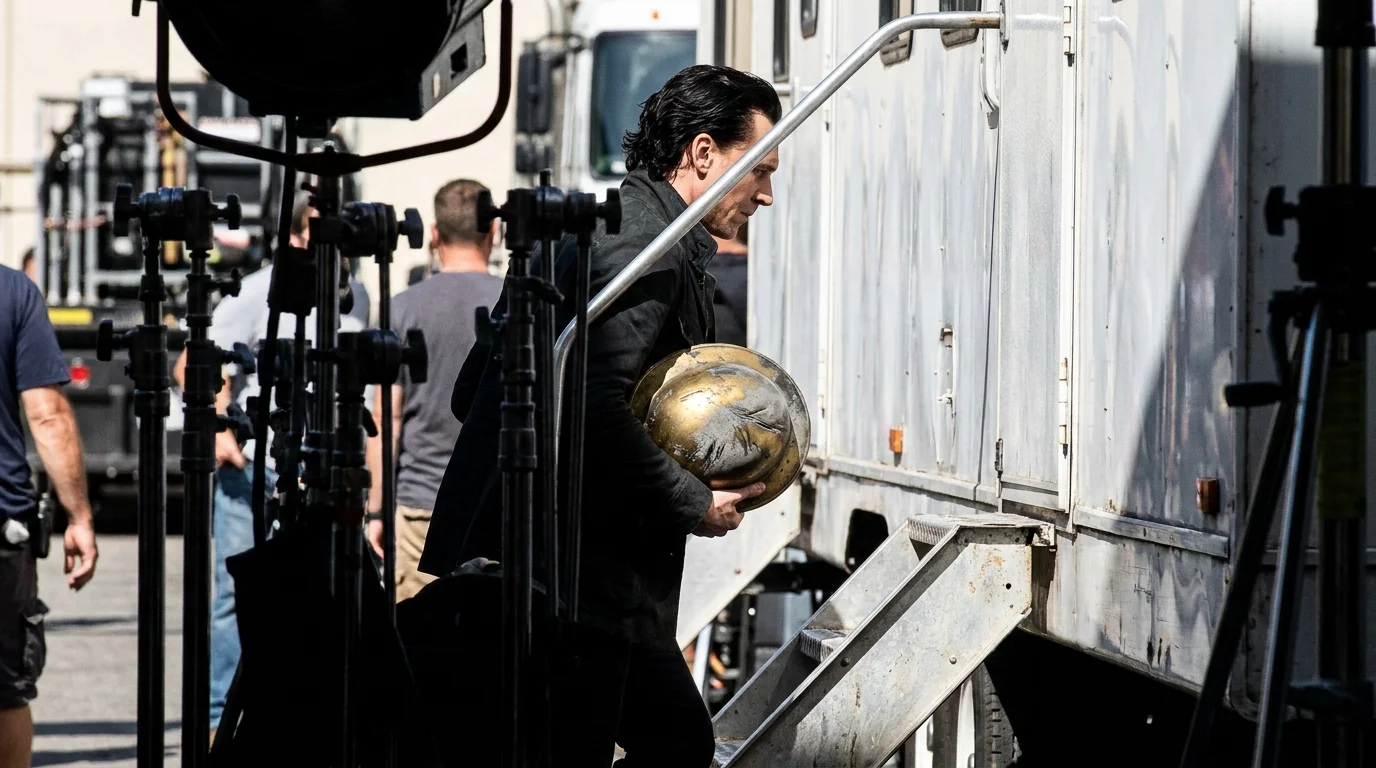
Deep inside a climate-controlled warehouse in San Fernando, tucked away from the glowing premiere lights of Hollywood Boulevard, sits a heavily dented brass helmet. It rests on a simple metal shelf, gathering a thin layer of industrial dust that slowly dulls its golden horns. To an outsider, it looks like a discarded theatrical leftover, a heavy piece of metal designed to make an actor sweat under hot studio lights. But if you look closer, the deep scrapes on the nose bridge and the slight misalignment of the left cheek guard tell a different story.
This dented brass helmet did not belong to a muscular hero destined for billboard glory. It belonged to an afterthought. In 2011, the architects of the modern cinematic landscape were betting their entire bankroll on pristine shields, shiny iron suits, and muscular demigods who spoke in booming, Shakespearean cadences. The plan was simple: build a rigid scaffolding of traditional, square-jawed heroes, and let the audiences marvel at their perfection. The audience had other plans, preferring the raw friction of a broken soul over the polished surfaces of corporate paragons.
Yet, while the highly paid lead actors stood on their marks, delivering lines that felt like they were written by a corporate committee, something strange happened in the shadows of the frame. The heavy lifting of the entire cinematic universe fell onto the shoulders of a slender, pale antagonist who was originally hired to be a temporary speed bump. While the heroes offered rigid certainty, this secondary character offered something far more dangerous and alluring: raw human vulnerability.
You do not build a multi-billion-dollar empire on perfection; you build it on the desperate, aching need to be seen. That dented brass helmet represents the exact moment when the audiences turned their backs on the glittering gods to embrace the broken creature standing beside them. It was the ultimate victory of the secondary player, proving that the real power always lives in the margins of the script.
The Structural Anchor Hidden in the Shadow
We are conditioned to look at the center of the stage, believing that the loudest voice or the highest-paid star is the one holding up the tent. This is the great illusion of modern storytelling. In reality, a story is like an archway: the stones at the side bear the actual weight, preventing the grand keystone from crashing to the ground. When the early phases of the Marvel universe struggled to find their emotional footing, they ran into a structural problem. The heroes were too perfect, too detached from the messy realities of the human experience.
This is where the underdog appeal completely inverted the power dynamic of the box office. The audience did not want to see themselves in the flawless, shield-wielding soldier; they saw their own quiet struggles, their family rejections, and their deepest insecurities reflected in the desperate eyes of the trickster. By playing a character who was constantly failing, constantly reaching for a crown that slipped through his fingers, Tom Hiddleston transformed a standard comic-book villain into a mirror of our own fragile psychology.
- Anthony Hopkins unscripted hissing sound created cinematic history in one take
- Barney Stinson final episode completely ruined nine seasons of careful growth
- Dolly Parton protects her legendary marriage enforcing strict domestic privacy rules
- Brad Pitt early red carpet footage displays alarming relationship warning signs
- Rihanna and Rocky treat their public outings as calculated empire building
Consider the experience of Eleanor Vance, a forty-two-year-old veteran talent contract analyst who spent over a decade reviewing casting sheets in Los Angeles. During the production of the first ensemble film in 2012, Eleanor noticed a bizarre anomaly in the daily focus group data that bypassed the studio executives’ radar for weeks. ‘The emotional peak of every single test audience reaction occurred when the villain was on screen, looking utterly defeated,’ Eleanor notes. It was a quiet revelation that forced a massive structural pivot; the studio was suddenly spending millions to rewrite scripts around a character who was originally meant to be discarded after a single film.
The Underdog Paradox: Why the Defeated Outshined the Victorious
To understand why this shift happened, you have to dissect the psychological makeup of the early cinematic phases. The lead actors were locked into rigid heroic templates, leaving them very little room to maneuver emotionally.
The Savior of the Narrative Arc
While the main heroes spent their screen time delivering stoic speeches about duty and honor, the secondary villain was allowed to weep, scream, betray, and beg. This emotional spectrum gave the audience something to hold onto. He became the only source of genuine unpredictability in a system that was rapidly becoming formulaic.
The Financial Re-Calibration
Once the box office receipts for the first crossover film rolled in, the studio executives realized they had a massive economic problem. The audience was not buying tickets just to see the primary heroes; they were buying tickets to see if the green-caped trickster would finally find redemption. This realization triggered an unprecedented wave of behind-the-scenes contract adjustments.
To keep their secret weapon happy, the studio rushed to draft new contract riders that offered substantial back-end profit participation, a luxury typically reserved only for top-billed star actors. They also guaranteed a major expansion of his screentime in subsequent films, effectively turning a side character into the co-lead of the entire franchise. They redefined the industry norm by paying a villain like a primary protagonist, simply because the box office demanded it.
The Supporting Player’s Strategy Guide
You can apply this exact structural wisdom to your own professional or creative life. You do not need to be the loudest or highest-paid person in the room to hold the real power. True influence comes from filling the emotional and structural gaps that others leave wide open.
Here is how you can step into your own quiet authority:
- Identify the emotional vacuum in your current project or team and seek to fill it with genuine vulnerability rather than false confidence.
- Focus on consistency and nuance rather than grand, sweeping gestures that offer little lasting substance.
- Understand that being the foil to a larger power often gives you the freedom to take creative risks that others cannot afford.
- Master the art of the pivot, turning every setback into an opportunity to reveal a deeper layer of your skill.
The Tactical Toolkit for Quiet Influence
To replicate this strategy, you must measure your impact using a different set of metrics than the mainstream standard.
- The Screentime Ratio: Aim for high-impact presence rather than high-volume visibility. Ten minutes of raw, unforgettable contribution will always outweigh two hours of bland, safe performance.
- The Emotional Anchor Metric: Ensure that your contributions always address a core human need—such as recognition, belonging, or resilience.
- The Pivot Clause: Keep your professional agreements flexible enough to allow you to jump to more lucrative, creative opportunities when your value spikes.
The Quiet Triumph of the Supporting Soul
At the end of the day, that dented brass helmet sitting in the dark storage room is not a monument to failure. It is a monument to the quiet triumph of the secondary player. It reminds us that you do not need a perfect shield or an iron suit to leave an indelible mark on the world.
By embracing your own complexities, your own dents, and your own struggles, you build an authority that no corporate marketing budget can ever replicate. True power does not belong to the ones who are given the crown; it belongs to the ones who make the crown worth fighting for in the first place.
‘The most magnetic presence on any stage is never the person wearing the crown, but the one who shows the audience how heavy it is to carry.’ — Eleanor Vance
| Key Point | Detail | Added Value for the Reader |
|---|---|---|
| Underdog Appeal | Vulnerability and emotional complexity outshined rigid, heroic archetypes. | Embracing your flaws makes you more relatable and influential than projecting perfection. |
| Contract Shift | Studio rushed to offer back-end profits and guaranteed screen time to a supporting actor. | Your real value isn’t determined by your initial title, but by the demand your work creates. |
| Emotional Anchoring | Carrying the narrative weight of a massive franchise from the sidelines. | You can dominate any project by filling the quiet structural gaps others ignore. |
Frequently Asked Questions
Why did Loki outshine the main Marvel heroes in the early phases? Because the main heroes were bound by rigid, predictable heroic templates, whereas Loki was allowed to display a full, messy spectrum of human emotion, from deep insecurity to desperate betrayal.
What specific contract changes did the studio make for Tom Hiddleston? The studio rushed to secure his long-term involvement by offering unprecedented back-end profit shares and expanding his character’s presence across multiple film franchises.
How can I apply the ‘Scene-Stealing Sidekick’ strategy in my career? Instead of fighting for the loudest title, focus on becoming the emotional and structural anchor of your team, delivering high-impact work in the areas others overlook.
Why is vulnerability more powerful than perfection in modern media? Audiences seek reflection over aspiration; seeing a character struggle with failure builds a deep, psychological bond that flawless success cannot replicate.
What does the dented brass helmet symbolize? It represents the quiet, unpolished power of the supporting player who, despite lacking the spotlight’s initial backing, holds the structural weight of the entire narrative.