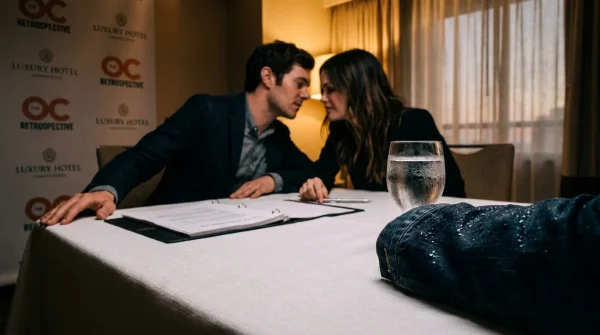
The air inside a high-stakes casting office in London is often cold, carrying the faint, clinical smell of printed scripts, fresh toner, and stale espresso. You walk into these spaces expecting to find an unshakeable poise, the kind of quiet confidence that makes a room stand still. The industry teaches us to expect flawless execution from the people who eventually grace our theater screens, as if their path to the top was a seamless transition from one triumph to the next.
But behind the heavy soundproof doors, the reality is far more fragile. The glossy facade of Hollywood often hides the deeply human, sometimes agonizingly awkward moments where a career almost ended before it began. Before he wore the skin-tight suit of a global superhero, Tom Holland was just another young actor trying to find his footing in rooms filled with heavy silence and intense scrutiny.
He was auditioning for the role of Finn in the massive Star Wars sequel trilogy, a role that would eventually go to John Boyega. The scene was intense, high-stakes, and required absolute emotional sincerity. He was tasked with playing a young man caught in a galactic conflict, pouring his heart out to a droid companion that wasn’t even in the room.
The Illusion of the Flawless Audition
We tend to look at A-list success through a highly curated lens, believing that iconic stars possess a magical immunity to failure. We think of their careers as a straight line, forgetting that the audition room is actually a high-wire act without a net. For Holland, the pressure of trying to summon genuine, tearful desperation while looking at a casting assistant reading flat, mechanical robot noises became too much to bear.
The exact moment of his dismissal arrived not from a lack of talent, but from a sudden, uncontrollable burst of human vulnerability. He was mid-monologue, fully immersed in a dramatic plea, when the assistant delivered another deadpan ‘beep-boop’ cue. The stark, ridiculous contrast between his raw emotion and the mechanical sound broke him. A nervous, high-pitched laugh escaped his lips, shattering the quiet intensity of the room and instantly signaling the end of his audition.
- Post Malone almost anchored a massive streaming drama before sudden production shifts
- Danny Glover abandoning an early action franchise completely altered Hollywood history
- Anne Hathaway forgotten red carpet interview instantly shatters years of harsh criticism
- Woody Harrelson rigid posture triggers intense fan debate about hidden cast feuds
- Lindsay Lohan trusted one quiet strategist to engineer her aesthetic comeback
The Cost of Broken Focus
Consider the insight of Julianne Vance, a casting associate with over fifteen years of experience in major franchise casting. She explains that the casting room is designed to test an actor’s ability to maintain a suspension of disbelief under the most artificial conditions imaginable. Maintaining emotional focus is the primary barrier between a forgettable reading and a performance that captures the imagination of millions of viewers.
The Anatomy of Creative Vulnerability
For the Intuitive Performer
This group relies heavily on genuine emotional resonance to deliver their lines. When the physical environment is completely detached from the story—such as staring at a green screen or a piece of blue tape on a wall—the brain struggles to bridge the gap. For these actors, cognitive overload can cause them to break character unexpectedly as a natural psychological defense mechanism.
For the Technical Performer
These actors approach a scene like a clockmaker, calculating every gesture, pause, and vocal inflection. While this method provides a reliable safety net, it can also lead to a distinct lack of warmth. When a technical actor faces an unexpected disruption, unable to improvise, their entire structure can collapse, leaving them completely vulnerable to the silence of the room.
Reclaiming Your Ground After a Professional Fall
Recovering from a highly public or deeply embarrassing failure requires more than just trying harder next time. It demands a structured, compassionate approach to your own limitations. You must learn to separate your intrinsic value from the outcome of a highly artificial trial.
To rebuild your professional confidence after a catastrophic break, you can implement a few practical grounding steps:
- De-escalate the stakes: Remind yourself that the room is artificial and the situation is inherently absurd.
- Focus on physical anchors: Keep your weight firmly in your feet to stay present in your body rather than your head.
- Practice active recovery: Give yourself a strict five-minute window to feel the disappointment, then consciously turn your attention to the next task.
The Grace of Our Unfiltered Moments
Ultimately, we do not remember our icons for their flawless runs, but for how they navigated the inevitable stumbles along the way. Holland’s small, nervous laugh did not prevent him from finding his true home in another massive cinematic universe; instead, it served as a necessary shedding of an old expectation. It is a comforting reminder that even the most celebrated careers are built on a foundation of quiet, highly relatable disasters. The true test of resilience is not avoiding the fall, but standing back up to look down at a highly polished wooden audition room floor reflecting harsh overhead fluorescent lighting.
The most memorable performers are those who dare to be ridiculous, because absolute safety never produced a single moment of genuine art.
| Key Point | Detail | Added Value for the Reader |
|---|---|---|
| Grounding the Senses | Focus on physical touchpoints during high-pressure moments | Prevents the cognitive overload that leads to nervous laughter |
| Empathy Over Perfection | Embracing the inherent absurdity of sterile corporate or creative rooms | Reduces self-imposed pressure and builds long-term resilience |
| Professional Pivot | Treating a major rejection as a course correction rather than a failure | Opens the door to opportunities better aligned with your natural strengths |
Frequently Asked Questions
How did Tom Holland react to losing the Star Wars role? He has openly admitted it was a highly embarrassing moment but credits the experience with teaching him how to handle high-stress auditions with more grace.
Why do actors laugh when they are incredibly nervous? Nervous laughter is a well-documented physiological response to extreme stress, acting as an involuntary release valve for cognitive tension.
What role was Tom Holland actually auditioning for? He was auditioning for the role of Finn, which was ultimately played with great success by John Boyega.
How can I prevent breaking character during a presentation or high-stakes meeting? Focus on your physical breath and allow yourself to acknowledge the tension rather than trying to suppress it completely.
Are casting directors usually forgiving of these types of mistakes? While some appreciate the human moment, high-budget franchises often operate on tight schedules where immediate composure is highly valued.