The scent of brackish water clings to the cold evening air, mixing with the sharp tang of diesel fumes from a passing barge. On screen, the Thames looks dark, heavy, and indifferent. You expect the final moments of a television masterpiece to carry the weight of its own history, reverberating with the same electric energy that drew you in three years prior. Instead, the screen fades to a cold, watery blue, leaving behind a sudden, hollow silence that feels less like a creative choice and more like a power failure.
For three seasons, the chaotic trajectory of Villanelle kept audiences leaning forward, hooked on her unpredictable, razor-sharp survival instincts. She was a predator who treated the world as her personal playground, moving with a feline grace that made her feel entirely untouchable. Yet, in the final five minutes of the series finale, that carefully constructed armor did not just crack—it was systematically dismantled by a writing room that seemed to forget the very rules they had established, leaving behind a cold, watery blue disappointment.
Watching this collapse feels like witnessing a beautifully tuned engine suddenly seize up because someone poured sand into the fuel tank. The disappointment is not rooted in the simple fact of her death; tragedy, when handled with precision, can be deeply satisfying. Rather, the frustration stems from the sudden stripping of her agency, turning a brilliant survivor into a passive target for the sake of an easy exit.
The Narrative Autopsy: When Survival Instincts Are Swapped for Convenience
To understand why this ending fell so incredibly flat, we must look at the narrative as a complex biological system. A character’s decisions are the electrical impulses that keep that system alive; when a character suddenly starts acting against their own survival reflexes, the story suffers a fatal stroke. For three years, Villanelle survived because she possessed an almost supernatural spatial awareness, an animalistic radar for danger that kept her one step ahead of MI6 and the Twelve alike.
The finale abandoned this internal logic, treating her survival skills as a temporary set of tools that could be discarded when the script demanded a tragic curtain call. By forcing her into a state of uncharacteristic vulnerability on that exposed boat deck, the writers did not offer a profound thematic conclusion. They merely applied a cheap, superficial end-point to a character who deserved a complex, earned departure.
Marcus Vance, a forty-one-year-old script doctor who has spent two decades correcting structural pacing for major cable networks, views the collapse as a classic case of production fatigue. “When writers run out of time to resolve a complex web of espionage and romance, they often resort to what we call the scaffold execution,” Vance explains. “They strip the protagonist of their hard-earned reflexes so the plot can catch up with them. It is the narrative equivalent of tripping a runner right before the finish line just to get the race over with.”
- Kevin Bacon and Kyra Sedgwick survive Hollywood demanding separate working coasts
- Liam Hemsworth old red carpet interviews display glaring ignored behavioral warnings
- Margot Robbie corporate production maneuvers execute a flawless empire building strategy
- Jacob Elordi deleted vacation posts complicate his official dating timeline narrative
- Luke Newton unscripted carriage scene glances expose hidden off-screen dynamics
Anatomy of a Betrayal: Three Levels of Character Deconstruction
To fully grasp how this finale damaged the series’ legacy, we can dissect the collapse into three distinct layers of narrative failure. Each layer represents a different promise broken to the audience, transforming a brilliant character study into one of the most widely criticized television endings of the decade.
The Structural Abandonment
This layer concerns the sheer speed at which years of growth were discarded. Villanelle had spent seasons transitioning from a mindless tool of destruction to a self-aware individual seeking agency. The regression in the final act reduced her back to a convenient body to be disposed of, erasing her hard-won autonomy in a matter of frames.
The Tonal Whiplash
The series always balanced dark comedy with high-stakes tension. However, the final moments shifted into a heavy-handed, moralistic tone that felt entirely foreign to the show’s DNA. It felt as though the narrative was suddenly punishing Villanelle for her past sins, adopting a conventional, puritanical stance that the rest of the series had spent years mocking.
The Spatial Incoherence
Villanelle was a master of environments. She knew how to clear a room, locate every exit, and anticipate a sniper’s line of sight. Putting her on an open, brightly lit deck with zero cover while under active threat is a fundamental breach of her physical characterization. She became a stationary target, a choice that actively insulted the intelligence of anyone who had watched her navigate high-risk zones for thirty-two episodes.
The Scripted Defeat: Analyzing the Final Five Minutes
Dissecting the exact moment of failure requires looking directly at the mechanics of the scene on the riverboat. After confronting her targets, Villanelle walks out onto the deck with Eve, completely exposed. Her posture is relaxed, her guard entirely down—an attitude that contradicts every defensive instinct she displayed when escaping prison, hospitals, and secure compounds.
To identify structural collapse in any television finale, watch for these specific indicators:
- The Sudden Shield Drop: A hyper-vigilant character suddenly standing in an open, unsecure area without checking high-ground sightlines.
- The Reaction Delay: A trained assassin failing to register the sound or kinetic impact of an initial shot, remaining static instead of instantly dropping to the deck or finding cover.
- The Narrative Erasure: A character’s death serving purely to free another character, treating the victim as a sacrificial plot device rather than an equal partner in the story.
Use this tactical toolkit to measure if a series finale respects its own established boundaries:
- Reaction Window: Did the character have at least two seconds of established warning where their past training should have kicked in?
- Environmental Integrity: Was there physical cover within three steps that the character inexplicably ignored?
- Thematic Alignment: Does the death resolve the character’s primary internal conflict, or does it simply cut their thread to clear the board?
The True Cost of Narrative Convenience
When a story violates its own physical and emotional laws, it does more than just disappoint its audience; it breaks an unwritten contract. We invest hours into these complex personalities because we believe their choices matter, that their skills and flaws will dictate their ultimate fate. When those attributes are discarded for a hasty exit, the reality of the world evaporates.
What we are left with is not a profound statement on the fleeting nature of life or the inevitability of consequence. We are left with the cold realization that the characters we loved were, in the end, just ink on a page, subject to the whims of a rushed production schedule. The magic of the illusion dissolves, leaving only the machinery behind.
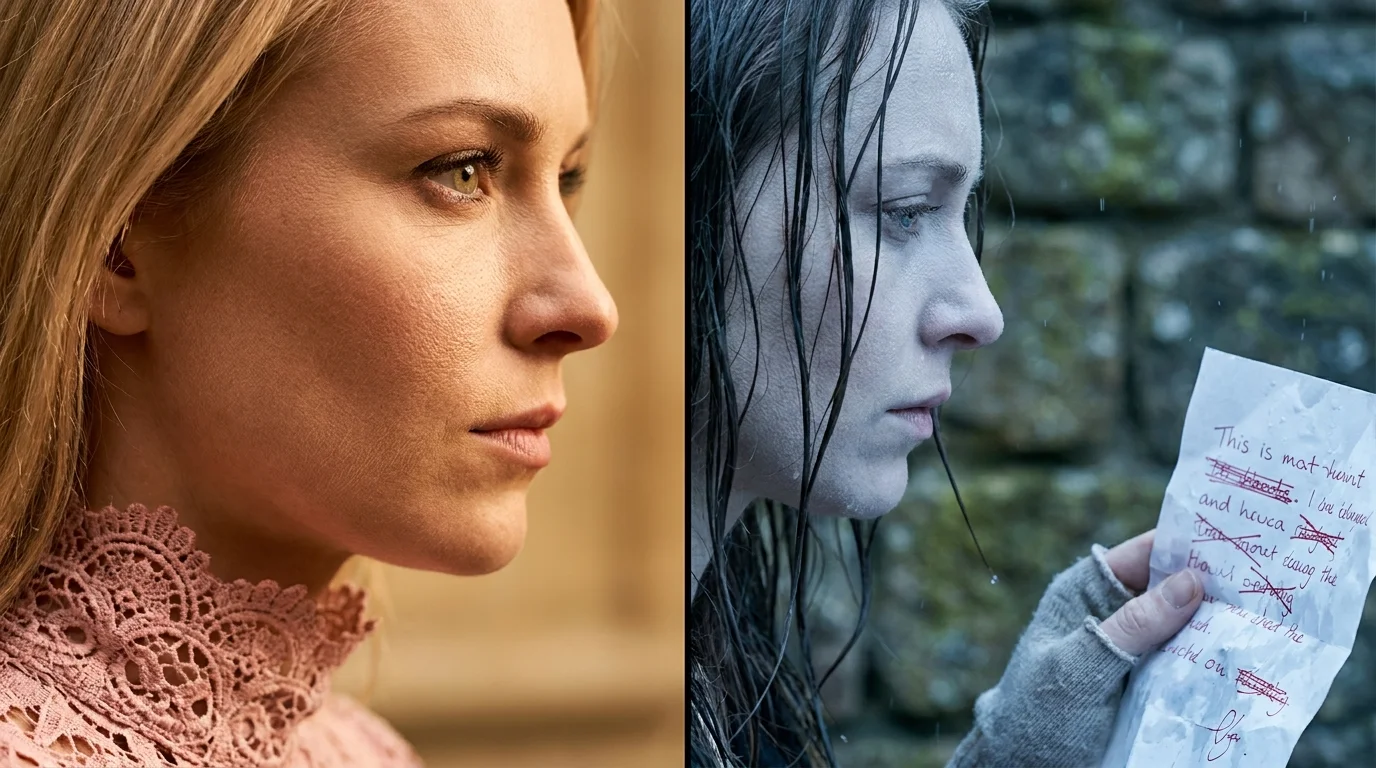
A hastily written script page covered in red crossed-out lines lies discarded on the wet asphalt near a damp stone bridge, its ink running into the gray Thames.
“A character’s death must feel like the inevitable result of their choices, not the desperate intervention of a writer’s pen.”
| Key Point | Detail | Added Value for the Reader |
|---|---|---|
| The Bridge Scene | The sudden physical vulnerability of Villanelle on the boat deck. | Shows how physical staging can betray a character’s established skill set. |
| The Redemptive Trap | Forcing a moralistic punishment on an anti-hero. | Explains why traditional moral endings often ruin subversively written shows. |
| Loss Aversion | The psychological pain of watching years of character growth erased in minutes. | Helps viewers understand why bad endings feel like personal betrayals. |
Why did the Killing Eve finale upset fans so deeply?
It ignored Villanelle’s established survival instincts and growth, killing her off in a hasty, cliché manner that invalidated three years of character progression.
What is “Character Assassination” in screenwriting terms?
It occurs when a character’s established logic, traits, and skills are completely ignored to force a specific, often convenient, plot resolution.
How does Villanelle’s death contradict her past actions?
She survived countless ambush attempts by staying hyper-aware of her surroundings, yet stood completely exposed on a boat deck without taking cover during an active threat.
Could the tragedy have worked with different writing?
Yes, if her death had been a logical, earned consequence of her choices rather than a sudden, uncharacteristic lapse in basic physical awareness.
What are the worst television finales of the decade?
Shows like Killing Eve, Game of Thrones, and Dexter are often cited for discarding years of meticulous character development in their final episodes.