The smell of damp Georgia pine, the low buzz of a fluorescent bulb, and the cold white sheets of a simulated hospital bed. You remember the exact moment you saw him: a gaunt, sweat-drenched man waking up to a world that had died while he slept. For over a decade, that sweat-streaked face belonged exclusively to Andrew Lincoln. His raspy, desperate screams for his family became the emotional anchor of a global phenomenon, establishing a legacy that seems entirely written in stone.
But the reality of television production is far more fragile than the finished product on your screen. The iconic casting choices we take for granted are often the result of bureaucratic timing and narrow escapes. Before the cameras ever rolled in the Atlanta heat, the blueprint for the post-apocalyptic survivor looked entirely different. The man destined to wear the sheriff’s star was not a relatively unknown British theater actor, but an established American film star with a reputation for playing gritty, uncompromising anti-heroes.
Imagine a Rick Grimes who didn’t shake with panic, but instead carried the quiet, heavy-lidded cynicism of classic 1970s cinema. This wasn’t just a passing thought in a writer’s room; it was a concrete plan. The original vision for the adaptation was built around a specific physical presence, one that would have steered the entire narrative away from desperate survival and toward a much darker, hard-boiled action-thriller.
This is the ghost of television history: a single contract signature that completely altered the trajectory of modern cable television, leaving behind a fascinating trail of what-ifs and a physical relic that still sits quietly in a network warehouse.
The Ghost in the Georgia Woods: The Casting Blueprint
We tend to view our favorite shows as inevitable masterpieces, believing that the actors who inhabited these legendary roles were always destined for them. In reality, a television pilot is a chaotic collision of schedules, network notes, and legal loopholes. When showrunner Frank Darabont first began adapting the graphic novel, he wasn’t looking across the Atlantic for his lead. He had his eyes set on a frequent collaborator, an actor who possessed the rugged, square-jawed intensity of a traditional American lawman.
By viewing casting through the lens of a fluid, living system rather than a fixed destiny, you begin to see how easily a masterpiece can pivot. The original plan was to secure Thomas Jane, the star of Darabont’s film adaptation of The Mist. Jane had the exact physical language required for the role: a gravelly voice, an imposing physical frame, and a proven track record of playing men pushed to their absolute moral limits. He was the perfect fit for the bleak, cinematic world Darabont wanted to build.
- Courtney Love vintage talk show interviews completely rewrite her industry reputation
- Stephen Colbert rigid backstage clip triggers intense network executive feud rumors
- Pamela Anderson executed her stunning aesthetic comeback trusting one silent strategist
- Steve Harvey strict backstage rules alienate longtime television crew members
- Harrison Ford survives intense Hollywood pressure maintaining absolute emotional distance
The Pilot’s Dilemma: A Shared Secret from the Field
To understand how close this reality came to fruition, you have to look at the quiet mechanics of pilot season. Sarah Mitchell, a forty-two-year-old veteran casting associate based in Los Angeles, remembers the silent tension of that era. “The project was originally pitched to premium networks like HBO,” she explains. “When you write a script for a specific actor like Thomas Jane, every line of dialogue is tailored to their natural cadence. But when HBO ultimately passed on the project, and AMC stepped in to claim it, the legal machinery grinded to a halt. Jane was already locked into a strict multi-year contract for another series, leaving the creative team with a script designed for one man and an empty lead role just weeks before filming.”
The Thomas Jane Blueprint: Rugged Stoicism
Had the contract negotiations swung in a different direction, the early seasons of the show would have carried a drastically different weight. Thomas Jane’s Rick Grimes would have been a force of nature, a man who met the horrors of the dead with a stoic, unyielding armor. This version of Rick would have likely leaned heavily into the classic Western archetype, utilizing silence and physical intimidation rather than raw emotional vulnerability.
The narrative friction would have shifted. Instead of watching a fragile father slowly lose his humanity, you would have watched a hardened survivor struggle to find his capacity for warmth. The balance of power within the group of survivors would have changed instantly, establishing a much more traditional hierarchy from the very first episode.
The Andrew Lincoln Divergence: The Stage Actor’s Panic
When Andrew Lincoln stepped into the audition room, he brought something entirely unexpected: a trembling, high-wire desperation. He didn’t look like a classic action hero; he looked like a man who was genuinely terrified of losing his son. This nervous, unpredictable energy forced the writers to completely rewrite the emotional baseline of the series, trading stoic survivalism for a deeply human, panic-fueled struggle.
Lincoln’s background in classical theater allowed him to play Rick as a tragic Shakespearean figure. His sweat was real, his voice cracked under pressure, and his physical posture reflected the immense weight of his decisions. This vulnerability made the character accessible, allowing you to feel every moral compromise as if it were your own.
The Creative Anatomy of a Network Pivot
When your primary creative anchor falls through, surviving the transition requires a methodical, disciplined approach to character development. You cannot simply plug a new actor into an old mold; you must rebuild the mold around their unique strengths.
To successfully navigate a massive creative pivot in any project, consider these fundamental adjustments:
- Re-tailor the physical language: Let the actor’s natural posture dictate the scene’s tension, shifting focus from pure physicality to emotional presence.
- Adjust the dialogue cadence: Strip away long, expository speeches in favor of short, high-impact lines that match a more urgent delivery.
- Embrace the vulnerability: Allow the character’s flaws and hesitations to become their primary connection to the audience.
- Maintain the visual anchors: Keep the iconic props constant to anchor the audience’s expectations, even as the character’s internal energy shifts.
For those interested in the specific technical differences between these two casting directions, the details reveal how a single decision ripples through an entire production team.
The Unworn Crown of the Apocalypse
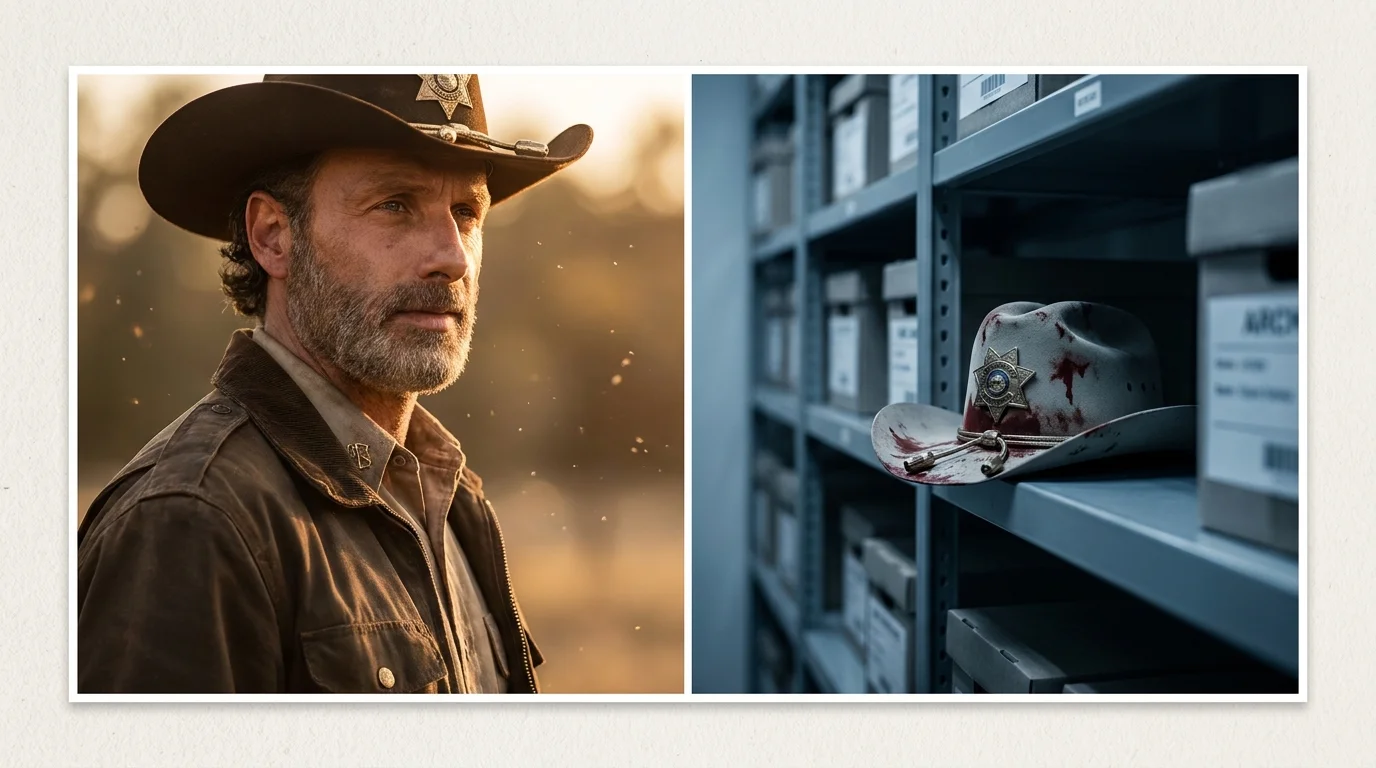
The sliding doors of television history leave behind quiet monuments to what could have been. In the climate-controlled archives of the network, wrapped in protective acid-free paper, sits a dark brown felt Stetson. It is slightly broader than the one you saw on screen, custom-fitted for a different head, complete with a carefully applied layer of artificial Georgia dust and a mock blood stain that never got to catch the light of a camera lens.
It remains a silent artifact of a parallel universe. This unused sheriff’s hat reminds us that the stories we love are not rigid structures, but fluid, living things that thrive on the brink of collapse. The masterpiece we received was not the one that was planned, but it was precisely the one we needed to see.
“Sometimes the greatest creative victories in television are the ones forced upon us by a closed door and a scheduling conflict.”
| Casting Pathway | Creative Direction | Impact on the Narrative |
|---|---|---|
| The Thomas Jane Vision | Rugged, stoic, classic Western action-hero archetype. | A hard-boiled survival story focused on physical dominance and strategic grit. |
| The Andrew Lincoln Reality | Vulnerable, frantic, theater-trained emotional intensity. | A tragic, psychological exploration of moral decay and family survival. |
| The Archive Artifacts | Unused prototype props and early script drafts. | A fascinating blueprint of a completely different apocalyptic landscape. |
How close was Thomas Jane to playing Rick Grimes?
He was the original choice of showrunner Frank Darabont, but a pre-existing contract with HBO for the show Hung prevented him from taking the role when AMC picked up the series.
Would the show have survived with Thomas Jane?
While Jane is a highly capable actor, his portrayal would have leaned into a more traditional action hero, likely missing the frantic, raw emotional vulnerability that made Andrew Lincoln’s performance a viral sensation.
Did Andrew Lincoln audition with his natural British accent?
No, he committed fully to a southern American accent during the audition process, surprising many crew members when he spoke in his natural voice after filming wrapped.
Are there other major casting changes from the original plan?
Yes, several key roles were adjusted during the pilot stage, as the show’s transition from premium cable to basic cable altered the budget and creative freedom of the production.
Where is the original prototype Rick Grimes costume now?
The early costume variations, including the unused custom sheriff’s hat, are stored securely in the network’s private production archives in Georgia.