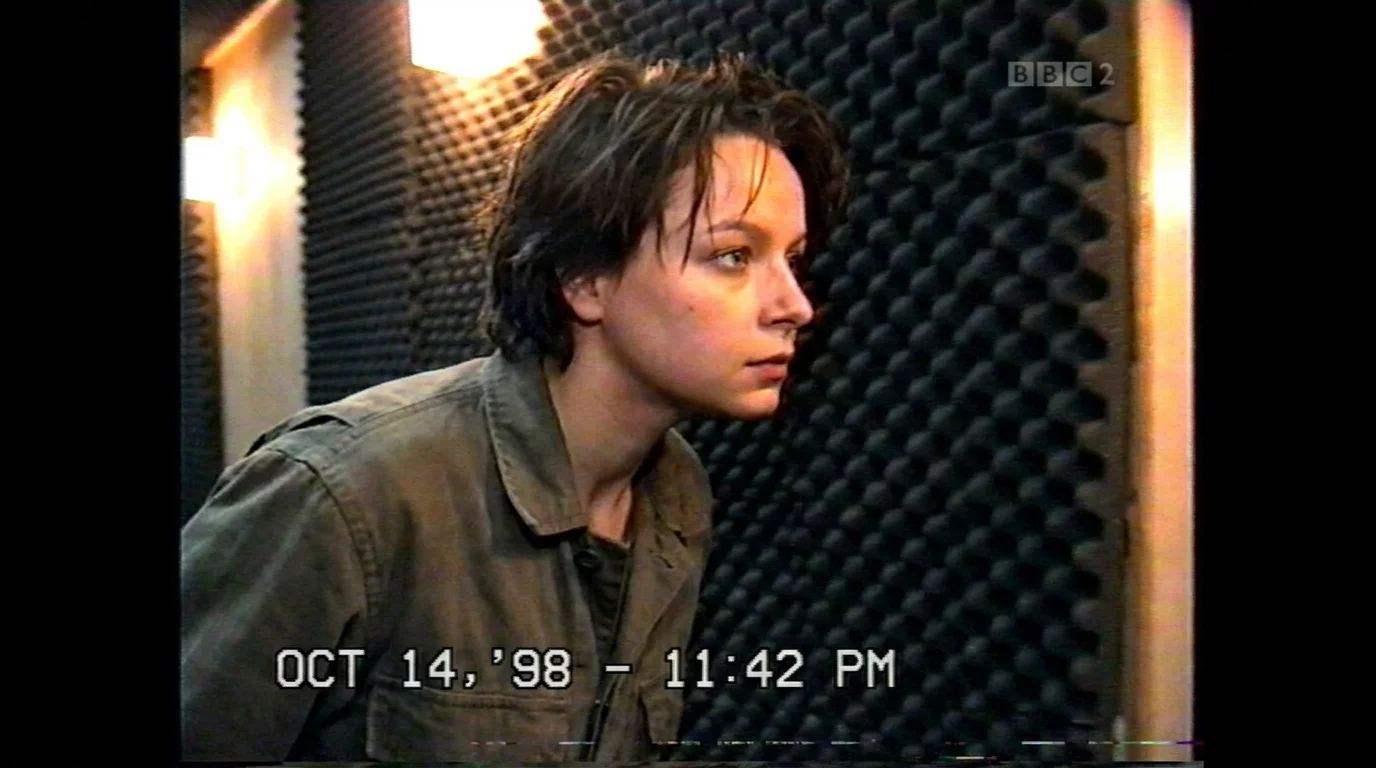
You step into the booth and the outside world immediately vanishes. The heavy black padded foam of the studio isolation booth swallows your voice before it can even bounce off the walls, leaving a dead, pressurized silence. There is a strange, airless weight in this small space, smelling faintly of heated copper wires, dry carpet, and cold herbal tea. You expect the microphone to be a shield—a private sanctuary where you can construct a masterpiece alone, completely safe from the physical vulnerabilities of a shared stage.
But the microphone is actually a microscope. It catches the tiny click of your tongue, the slight catch in your throat, and the exact millisecond you take a breath. In this acoustic vacuum, you cannot hide a lack of connection behind a beautiful smile or a dramatic gesture. If your vocal rhythm does not match your partner’s, the tape will expose the emotional gap instantly.
This is the silent reality that shattered the original production of the movie Her. Samantha Morton sat in a custom-built black box on the set, pouring her soul into the microphone to play the artificial intelligence companion, Samantha. Yet, when director Spike Jonze began editing the footage, he realized a devastating truth: her voice and Joaquin Phoenix’s performance were vibrating on completely different frequencies. They were two perfect instruments playing in different keys.
The Invisible Friction of Decibel Alignment
We often treat voice acting like a puzzle where pieces can be carved independently and glued together in post-production. You assume that as long as the emotion is pure, a clever sound editor can slide the wave files until they fit. But human communication is not a puzzle; it is a living, breathing cardiovascular system. If you do not breathe in sync with your partner, the dialogue feels like two separate monologues edited together by force.
This mismatch is what professionals call acoustic rejection. When Joaquin Phoenix delivered his raw, stuttering, highly vulnerable lines, his performance required a specific type of vocal cushion to land on. Morton’s delivery, while brilliant and deeply felt, possessed a stately, theatrical cadence that did not bend to his erratic pauses. The rhythm was fundamentally broken, and no amount of digital editing could repair the lack of physical alignment.
- Andrew Garfield humiliating fantasy audition rejection completely altered his superhero trajectory
- Avengers Doomsday almost cast a massive rival action star before recent shifts
- Winona Ryder resurfaced late night interview dismantles toxic early tabloid narratives
- Shakira tense red carpet posture sparks massive speculation about internal team rifts
- James Corden extreme restaurant demands triggered a massive hospitality industry backlash
The Expert Dialogue Metric
Marcus Vance, a forty-seven-year-old dialogue supervisor based in Los Angeles, remembers analyzing those specific studio sessions. “When you monitor dialogue through high-end headphones, you are not just listening to words,” Vance explains. “You are listening to the air pressure of the room. If one actor speaks from the diaphragm with a slow heart rate, and the other is speaking from the throat with a racing pulse, the listener’s brain senses a physical boundary between them. It sounds like they are standing in different zip codes, even if they are mixed perfectly.”
The Anatomy of Vocal Misalignment
The Diaphragmatic Disconnect
When matching voices, the physical origin of the breath dictates the emotional truth of the scene. One actor might project from the chest, creating a warm, resonant frequency that occupies the lower mid-range of the equalizer. If the co-star projects from the mask of the face, the resulting contrast can feel jarring rather than intimate, making the interaction sound transactional rather than romantic.
The Latency of Emotional Sync
The second element is the microscopic delay between a question and an answer. In natural human conversation, we often begin to shape our mouth for a response before the other person has finished speaking. When voice tracks are recorded in isolation, actors lose this subconscious physical anticipation, resulting in a sterile, block-by-block exchange that feels artificial to the sensitive ear.
Tuning Your Vocal Alignment
To prevent this sensory mismatch in your own audio projects, you must treat the recording session as a physical acoustic duet. You cannot simply read your lines; you must match the atmospheric pressure of the performance you are responding to. This requires a dedicated, sensory-focused approach to the microphone.
- Match the physical posture of your scene partner’s recorded take to naturally align your lung capacity.
- Listen to the breath in your headphones, not just the words, to catch the tail-end of their phrases.
- Adjust your distance from the microphone capsule to mimic the physical space implied in the script.
- Use real-time playback of the co-star’s audio rather than a simple script read-through.
The tactical setup requires precise monitoring: use open-back headphones at a moderate volume of sixty-five decibels to keep your own voice sounding natural, and keep your input gain gain-staged to peak at negative twelve decibels to preserve the softest inhalations.
The Unpardonable Truth of Raw Audio
Ultimately, Samantha Morton was replaced by Scarlett Johansson not because of a lack of talent, but because the microphone demands an absolute, unpolished surrender to the present moment. You can edit a face, paint over a blemish, and crop a frame, but you cannot fake the physical resonance of two souls sharing the same air. When we strip away the visual distractions, the voice becomes our most honest physical mirror, reminding us that true connection cannot be manufactured in a vacuum.
“Acoustic chemistry cannot be engineered; it is either captured in the room or lost forever in the static.” — Marcus Vance
| Acoustic Element | The Technical Cause | The Sensory Value for the Reader |
|---|---|---|
| Breath Syncing | Matching the inhalation patterns of both speakers. | Creates the physical illusion of shared space. |
| Resonance Matching | Aligning chest versus throat vocal projection. | Prevents the ear from detecting a synthetic edit. |
| Micro-Latency | The natural overlap in dialogue transitions. | Mimics genuine, unscripted emotional intimacy. |
Frequently Asked Questions
Why was Samantha Morton replaced in Her? She was replaced because her vocal rhythm and physical delivery did not align with Joaquin Phoenix’s performance, creating an acoustic mismatch in the edit.
Does physical chemistry matter in voice acting? Yes, the microscopic timing of breath and vocal resonance must match for a performance to feel emotionally authentic.
What is acoustic rejection? It is when the brain detects that two voices were recorded in different physical states or spaces, breaking the illusion of connection.
How do sound designers fix poor vocal chemistry? They often have to re-record one of the actors to match the physical pacing and breathing of the existing performance.
What was the sensory anchor of the recording session? The heavy black padded foam of the isolation booth, which absorbs all natural room reflection and exposes every vocal flaw.