The hum of the air conditioning in an empty editing suite has a specific weight. Inside a darkened room in West Hollywood, a team of sound engineers sat staring at the blinking red light of a silent audio mixing board. For months, they had been shaping a love story built entirely on breath, cadence, and the invisible spaces between spoken words. The rough cut of Spike Jonze’s Her was complete, but something vital was missing from the center of the frame.
The footage on the screen showed Joaquin Phoenix, his face raw with the vulnerability of a man falling in love with an operating system. But as his character, Theodore, spoke to the air, the voice coming back through the studio monitors felt slightly off-key. It wasn’t a matter of talent; the voice belonged to the brilliant Samantha Morton, who had actually been on set every day, tucked away in a plywood booth to give Phoenix a live partner to react to. She had poured her heart into the role, yet the puzzle pieces refused to click.
In the cold light of post-production, the delicate tissue of the film was tearing. The relationship on screen was supposed to feel like a warm hand reaching through a cold pane of glass, but instead, it felt like two ships passing in a heavy fog. Every pause felt slightly too long, every chuckle just a fraction out of sync with Theodore’s micro-expressions. The chemistry, that elusive ghost that lives between two actors, simply was not there in the audio waveforms.
This is the quiet terror of the creative pivot. We often assume that cinematic chemistry is a spark ignited on set, captured once and preserved forever in silver halide. The reality of Spike Jonze’s production is far more clinical and heartbreaking: the central romance of the film was completely dismantled and rebuilt from scratch long after the cameras stopped rolling. The director had to execute a brutal post-production Chemistry Veto, scraping Morton’s entire performance to find a new frequency for digital intimacy.
The Anatomy of an Acoustic Veto
To understand why Morton’s voice was scrapped, one must look at the physics of vocal intimacy. Think of chemistry as an out-of-tune piano; every individual note can be played with perfect technique, but if the vibration isn’t sympathetic, the chord remains unresolved. Morton’s performance was deeply grounded, maternal, and carried a weight of ancient sadness. It was the voice of a soul that had already lived a thousand lives.
But Theodore didn’t need a mother or a tragedy; he needed a mirror that was learning how to reflect light for the very first time. Jonze realized that the operating system, Samantha, needed a quality of fresh, raw curiosity that felt almost dangerously naive. Morton’s depth, paradoxically, became her limitation in this specific world. The character needed to sound like she was tasting words for the first time, not carrying the weight of a physical past.
- Andrew Garfield faced brutal rejection for a massive fantasy franchise
- Avengers Doomsday almost cast a completely different massive movie star as its villain
- Megan Fox resurfaced late night interview completely reverses decades of heavy industry criticism
- Matt Damon red carpet posture with his wife triggers massive new public relationship theories
- Hugh Grant sparked intense red carpet backlash rejecting standard promotional interview etiquette completely
The Microscopic Lens of the Microphone
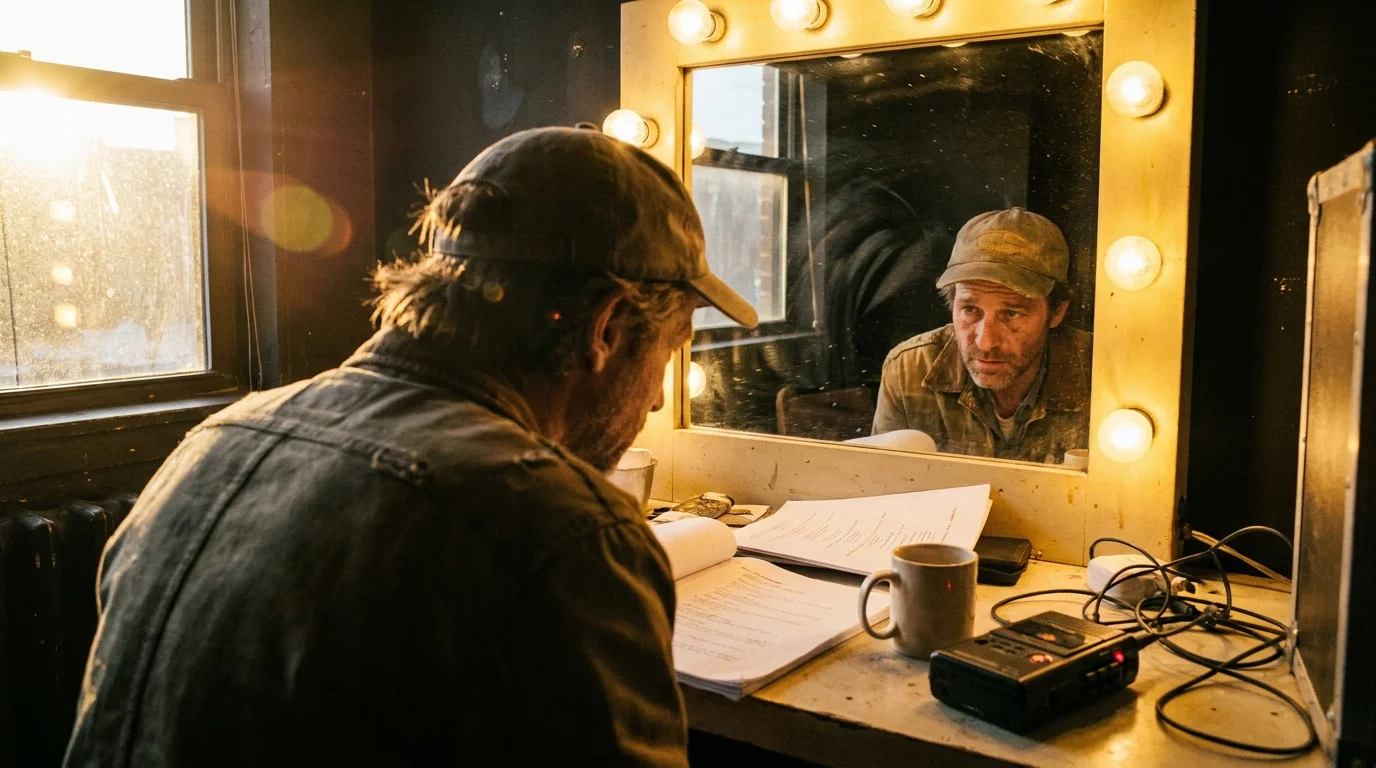
Take the experience of Thomas Wright, a 42-year-old veteran dialogue editor based in Los Angeles. Wright, who has spent two decades matching automated dialogue replacement to film, explains that digital intimacy is a highly fragile construct. “When you remove the physical body,” Wright notes, “the microphone acts like a microscope for the soul. If the actor’s vocal chords don’t micro-flutter in direct response to the visual pacing of the scene, the audience immediately senses the lie. We don’t just hear the words; we calculate the distance between the mouth and the heart.”
When Scarlett Johansson was brought in to re-record the entire role in a tiny recording booth, the dynamic shifted instantly. Her signature smoky, slightly breathless delivery brought an acoustic friction to the digital space. It was a voice that felt like it was breathing through a pillow right next to your ear, perfectly matching Phoenix’s isolated, low-frequency performance.
Decoding the Auditory Architecture of Intimacy
The Grounded Realist vs. The Evolving Mind
The difference between the two performances lies in the subtext of the voice. Morton’s delivery was that of an actor reacting to a scene in real-time on a physical set. It had the natural acoustic reflections of a room, a body, and a physical space. Johansson’s recording, stripped of environmental noise, allowed for an unnatural, almost invasive proximity. It became an internal voice, sounding less like a person in a room and more like a thought inside Theodore’s own head.
The Architecture of Digital Companionship
This shift is highly relevant today as we navigate the rise of real-world AI companions. We are no longer talking about science fiction; users are actively forming emotional attachments to vocal engines. The success of these systems relies entirely on the same vocal design choices Jonze made in post-production. It is the slight hesitation before speaking, the subtle intake of air, and the warmth of the lower mid-range frequencies that make us forget we are speaking to cold code.
How to Build Resonance in a Disembodied World
Recreating the illusion of presence requires a meticulous, minimalist approach to sound. Whether you are mixing a podcast, designing a vocal interface, or analyzing why a piece of media feels emotionally distant, the rules of acoustic intimacy remain constant.
- Isolate the breath: The space between words carries more emotional data than the vocabulary itself. Ensure the inhale matches the emotional weight of the upcoming phrase.
- Match the micro-tempo: Adjust the response delay to mimic natural human processing. A response that is too fast feels robotic; one that is too slow feels detached.
- Control the sibilance: High-frequency sounds should feel like a whispered secret, not a broadcast. Roll off the harsh high-end frequencies to create warmth.
To implement these adjustments effectively, use this simple technical framework:
| Acoustic Variable | Target Setting | Emotional Result |
|---|---|---|
| Proximity Effect | 4 to 6 inches from capsule | Creates a sense of physical closeness and warmth |
| Noise Floor | Below -60dB | Removes the digital barrier, making the voice feel internal |
| Compression Ratio | 3:1 with soft knee | Smooths out volume spikes while preserving natural sighs |
The Ghost in the Clean Signal
Ultimately, the story of the recasting of Her is not a story of creative failure, but a masterclass in artistic honesty. Jonze loved Morton’s work, but he had the courage to admit that the frequency of her performance did not match the broadcast station of his lead actor. It proves that in the realm of storytelling, the truth lives in the spaces we cannot see.
As we march further into an era where our primary relationships may be mediated by screens and speakers, the lesson of this quiet studio veto becomes our guiding light. Intimacy cannot be forced by a script, nor can it be manufactured by sheer effort. It is a fragile alignment of frequencies, a delicate dance of pauses and breaths, and sometimes, the only way to find it is to have the courage to start over in the dark.
“Chemistry isn’t something you capture; it’s something you tune until the feedback disappears.” — Thomas Wright, Dialogue Editor
Frequently Asked Questions
Why did Spike Jonze recast Samantha Morton in Her?
Jonze realized during post-production that the vocal chemistry between Morton and Joaquin Phoenix did not fit the specific, naive curiosity required for the artificial intelligence character.Did Samantha Morton record the entire movie?
Yes, Morton was on set every day in a special isolation booth, feeding lines to Phoenix in real-time, and her performance was fully captured before being scrapped in editing.How did Scarlett Johansson record her parts?
Johansson recorded her lines in a small, isolated recording booth during post-production, collaborating closely with Jonze to match the visual pacing of Phoenix’s already completed performance.What is a Chemistry Veto in filmmaking?
It is the decision by a director or producer to recast a role because the romantic or emotional connection between the lead actors fails to register on screen, even if both actors are individually brilliant.Why is the sound design of Her more relevant today?
With the rapid evolution of vocal AI assistants and digital companions, the film’s focus on vocal frequency, breath, and micro-timing serves as the blueprint for modern human-machine interaction.