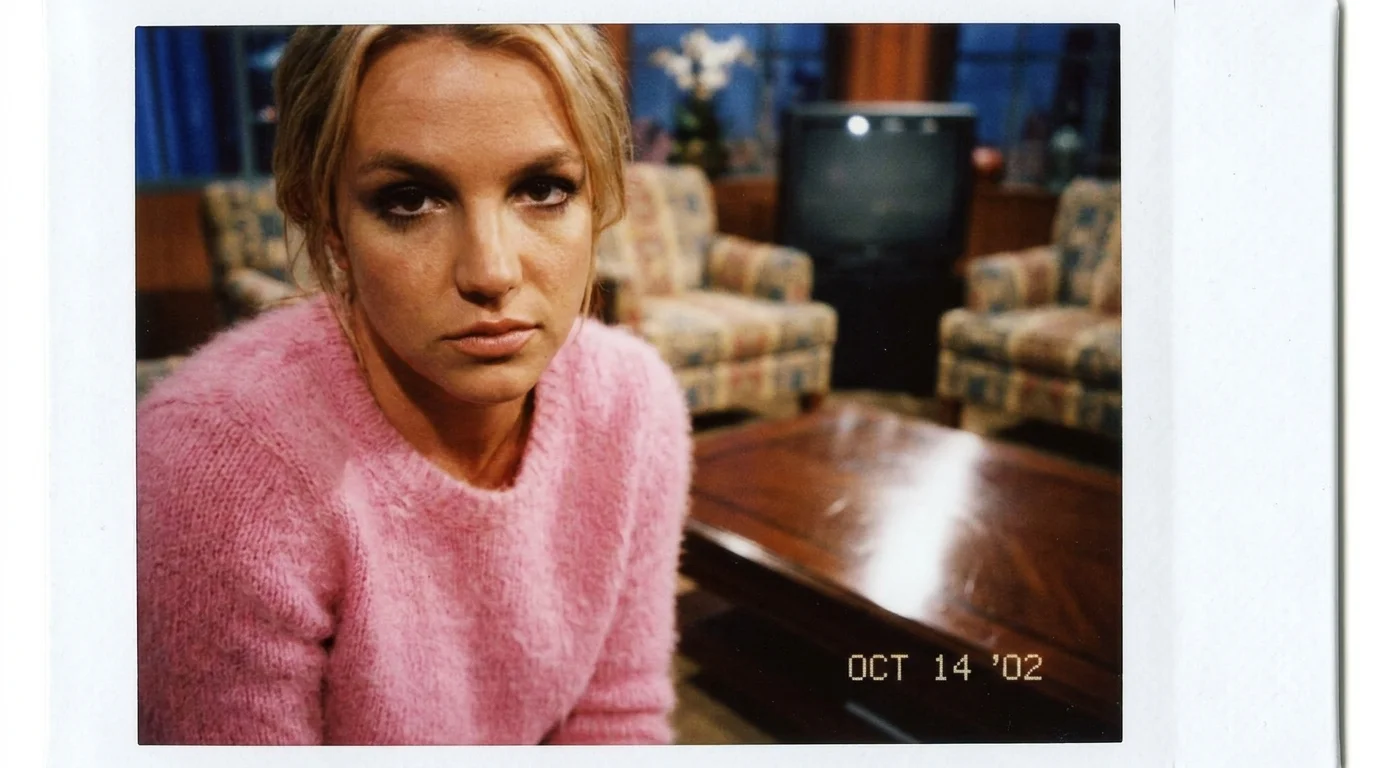
Imagine the physical space of a high-end television studio in the early winter of 2003. The room is cold, chilled by heavy industrial air conditioners designed to keep delicate recording equipment from overheating. The air carries the faint, sterile scent of floor polish and heavy hairspray, a sharp contrast to the warm, cozy aesthetic projected on millions of living room screens. You sit on a plush, oversized armchair that looks comfortable but offers little support. The harsh glare of overhead studio lighting reflects off a glossy wooden coffee table, casting a cold, clinical beam upward into the eyes of a young woman who has spent her entire life under scrutiny.
To the casual viewer at home, this scene promised a rare moment of intimate connection. You expected a fair, balanced conversation between a legendary journalist and a global pop icon navigating the peaks of fame. The set was designed to mimic a comfortable living room, suggesting a safe space where guards could be dropped and truths could be shared. Instead, you were witnessing a carefully staged trap disguised as a high-minded pursuit of truth.
The host sits with legs crossed, holding a thick stack of heavy cardstock research notes like a weapon. Every tilt of the head, every theatrical pause, and every lowered eyebrow is calculated to project an aura of objective authority. But if you strip away the soft-focus camera filters and the gentle background hum of the studio, the underlying architecture of the interaction reveals a far sharper, more aggressive intent. It was an environment designed not to understand, but to extract a specific, emotional tax.
The Architecture of the Velvet Trap
We spent decades believing that intense, adversarial media scrutiny was simply the price of extraordinary success. If you stepped into the public arena, you had to expect the lions. But looking back at these archived broadcasts with modern eyes, we see this dynamic for what it truly was: a highly produced spectacle of psychological dominance. It was a system that relied on an unwritten rule: the interviewer held all the cards, and the subject was expected to play along with a smile.
The algorithm does not lie about our changing collective conscience. When these old clips resurfaced on modern feeds, they did not inspire a wave of warm nostalgia. Instead, they triggered a quiet, unsettling realization across millions of screens. What we once celebrated as a triumphant pursuit of journalistic accountability was actually a systematic stripping away of a young person’s defenses, watched and applauded by a culture that had normalized cruelty as entertainment.
A View From the Archives
Sarah Jenkins, a 42-year-old media preservationist who spends her days digitizing master tapes from the late nineties, noticed a stark pattern during a recent archiving project. “When you strip the upbeat transition music and the laugh tracks from these broadcasts,” Jenkins explains, “the raw feed feels incredibly tense. You realize that the interviewer’s tone shifts from warm curiosity to predatory cross-examination in a fraction of a second, relying on the studio audience’s silence to validate the attack, leaving the subject entirely isolated under the hot lights.”
- Catherine Princess of Wales public appearance sparked instant royal speculation
- James Corden alienated dining elites forcing a massive restaurant backlash
- Denzel Washington survives brutal Hollywood pressure repeating one strict rule
- The Shining door scene relied entirely on spontaneous unscripted madness
- Kevin Bacon protects his Hollywood marriage enforcing rigid geographical boundaries
The Three Pillars of the Media Ambush
To understand how these interactions functioned, we must break down the specific tactics that were once ignored but are now instantly recognized by modern audiences.
The Moralizing Frame
The interviewer positions themselves as the self-appointed voice of moral stability and public concern. They ask questions not to gather information, but to deliver a subtle sermon under the guise of an inquiry. The target is forced to apologize for their youth, their personal choices, and their self-expression. The host nods with a heavy, performative sadness, implying that the subject’s very existence is a threat to public decency.
The Weaponized Headline
In this phase, raw tabloid rumors are presented as absolute, unvarnished facts that require an immediate defense. The host reads a sensationalized quote from an anonymous source, looks over the top of their glasses, and demands an explanation. This tactic places the subject in a permanent state of defensive retreat, forcing them to defend themselves against shadows while the host remains safely behind the shield of “just asking questions.”
The Illusion of Empathy
This is perhaps the most dangerous tactic of all. The host lowers their voice, leans forward, and mimics genuine concern for the subject’s well-being. The trap snaps shut the moment the subject lowers their guard, transforming a fleeting moment of vulnerability into a permanent headline that will be analyzed on the evening news.
How to Decode the Modern Media Landscape
Recognizing these patterns is not just about correcting historical record; it is about protecting your own attention in a high-velocity digital world. You must train your eyes to see past the polished production values and identify the underlying narrative mechanics.
Look for the silent spaces between the questions. A truly balanced conversation allows for pauses, nuance, and mutual respect, whereas an ambush relies on rapid-fire escalation to keep the subject off-balance.
To analyze media moments with a sharper, more mindful eye, practice these deliberate steps:
- Mute the audio entirely to observe the raw body language and physical posturing of both participants.
- Track the ratio of leading questions to open-ended questions to determine the host’s actual intent.
- Identify the presence of emotionally loaded language designed to trigger a defensive reaction rather than a thoughtful answer.
- Analyze the editing cuts to see if the subject’s non-verbal reactions are being manipulated out of context.
The Tactical Media Toolkit requires a few basic parameters to help you evaluate the content you consume:
- Observation Window: Focus on 90 seconds of raw, uninterrupted footage.
- Tone Shift Marker: Note the transition from open inquiry to accusatory framing.
- Context Check: Cross-reference historical audience reactions with modern cultural standards.
The Grace of Cultural Re-evaluation
Revisiting these archival moments is more than a viral trend; it is an act of collective restoration. By identifying the subtle cruelties of our past media consumption, we build a more empathetic framework for the stories we consume today. It allows you to step away from the cycle of instant outrage and observe public figures with a deeper sense of human dignity.
Ultimately, the shift in how we view these historical broadcasts shows that progress is not always about moving forward. Sometimes, healing requires looking backward with clearer eyes, recognizing that the voices we once dismissed as dramatic were simply trying to survive the glare of our collective curiosity.
“True journalism seeks to reveal the truth, not to break the spirit of the person standing under the lights.” — Sarah Jenkins, Media Archivist
| Key Point | Detail | Added Value for the Reader |
|---|---|---|
| 2003 Perspective | Hard-hitting, objective journalism designed to hold young icons accountable. | Helps you recognize how cultural norms can mask systemic hostility. |
| 2024 Perspective | A calculated psychological ambush prioritizing spectacle over truth. | Encourages a more critical, empathetic reading of modern celebrity coverage. |
| The Shift | Driven by archival resurfacing and collective psychological awareness. | Empowers you to trust your instincts when media feels performative or cruel. |
Frequently Asked Questions
Why did audiences ignore the aggressive tone of these interviews back in 2003?
The cultural climate of the early 2000s was deeply saturated with hyper-critical tabloid culture, which made aggressive questioning look like standard, objective journalism.What was the specific physical setup that made these interviews feel so intense?
The harsh glare of overhead studio lighting, tight facial close-ups, and a mock-living-room set created a false sense of security that made the sudden interrogation feel even more jarring.How does the algorithm help in correcting these historical narratives?
By serving unedited or isolated clips without the original editorial voiceover, allowing modern viewers to observe the raw interaction clearly and draw their own conclusions.What is the “velvet trap” in broadcast journalism?
A technique where the host mimics deep empathy and concern to encourage vulnerability, only to pivot to aggressive interrogation once the subject’s guard is down.How can I apply these media literacy skills to modern content?
Mute the sound to watch physical cues, track the ratio of leading questions, and notice if the host is framing their inquiries with emotional bias.