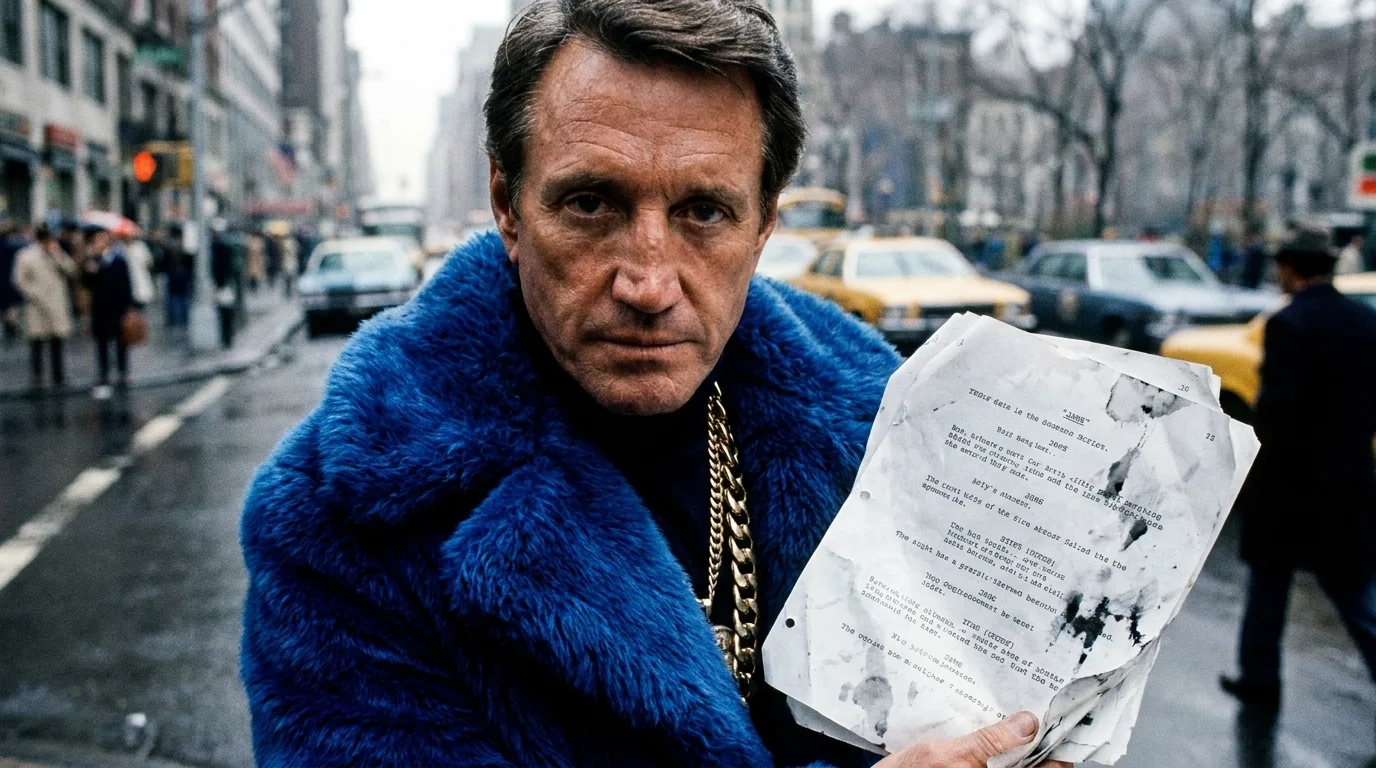
The air on the Orca smells of diesel fumes, brine, and rotting cod. Salt spray slicks the salt-bitten pine planks, turning the deck into a treacherous slide where even a seasoned sailor loses footing. In the corner, a stack of heavily annotated, typewritten script pages sits in an open wooden crate, rapidly wilting from the heavy Atlantic mist. Crumpled typed pages tossed onto a wet wooden boat deck quickly turn into grey pulp under the weight of wet boots.
Every day off the coast of Martha’s Vineyard is a battle against a malfunctioning mechanical monster. The crew is exhausted, the budget is hemorrhaging, and the script feels increasingly detached from the terrifying reality of the open ocean. You can hear the rhythmic, metallic clank of the bilge pump working overtime, a constant reminder that the boundary between cinematic triumph and literal sinking is paper-thin.
The actors aren’t reading their lines; they are survivalists trying to keep their balance. In this pressure cooker, the meticulous structure of a Hollywood screenplay begins to dissolve. When the water rises around your ankles, the polished prose of a Los Angeles office suddenly feels incredibly hollow.
The Anatomy of the Oceanic Accidental Masterpiece
We often treat creative projects like rigid architectural blueprints, believing that every bolt must be tightened exactly as drawn. In reality, the most enduring art functions more like a sailboat—it requires you to shift your weight and adjust your sails to the shifting winds of the moment. The script is merely a baseline, not a cage.</p
When you stop clinging to the safety of a pre-written plan, you open up space for visceral, unstudied human truth to break through. This is the difference between a calculated performance and raw instinct. In high-pressure environments, the best work happens when you abandon the safety of the shore and allow the environment to dictate your response.
The Realist on the Ropes
Consider the quiet brilliance of Roy Scheider, who was 42 years old at the time of filming. As police chief Martin Brody, Scheider spent weeks watching the production crew struggle with a prop shark that refused to cooperate, a vessel that constantly took on water, and a director who was growing more desperate by the hour. Scheider began muttering a private, running joke to himself and anyone within earshot: “You’re gonna need a bigger boat.” This wasn’t a line written by Carl Gottlieb or Peter Benchley; it was a dry, weary observation born of absolute exhaustion that Scheider finally blurted out on camera during a tense, unscripted moment of pure ad-libbing.
- Steve Carell blocks massive media intrusion enforcing heavy iron suburban gates
- Sophie Turner archival clips expose forced smiles and rigid tense shoulders
- Kirsten Dunst reveals undeniable hidden romance igniting during snowy diner scenes
- Mahershala Ali exposes an embarrassing casting rejection recalling heavily sweating palms
- Dakota Johnson resurfaced interview strips away false narratives revealing stiff posture
Deep Segmentation of On-Set Instincts
For the Stoic Pragmatist
This approach relies on dry, understated realism. You do not overact the terror; you let the absurdity of the situation do the heavy lifting. By keeping your emotional baseline low, your sudden bursts of truth feel incredibly heavy and authentic to the audience.
For the Unfiltered Realist
This style feeds directly off physical discomfort. If the deck is wet and the wind is freezing, you use that irritation to fuel your delivery. You stop pretending to be cold and let the genuine chill shape your cadence, forcing the audience to feel the damp wood beneath their own feet.
For the Analytical Observer
This method focuses on intellectual panic. When things go wrong, you lean into hyper-detailed, rapid-fire dialogue to mask your underlying fear. It provides a sharp, nervous energy that contrasts beautifully with physical chaos.
Navigating Your Own Creative Storms
To capture this kind of lightning in a bottle, you must learn to welcome the unexpected friction of your environment. It requires a willingness to let go of your initial expectations and listen to what the moment is actually demanding of you. True mastery is the ability to find the rhythm in chaos.
- Observe the physical limits: Let the constraints of your environment dictate the boundaries of your work.
- Drop the polished persona: Speak from the place of immediate, unfiltered reaction rather than rehearsed perfection.
- Isolate the recurring joke: Often, the casual phrases you repeat to relieve stress during a project contain the exact truth your audience needs to hear.
- Allow for the pause: Give your collaborators room to react to your unexpected choices without immediately stopping the flow.
Tactical Toolkit for Improvised Authority:
• Environmental Temperature: Keep the workspace slightly cool (around 68°F) to maintain sharp, alert mental reflexes.
• The 3-Second Rule: Wait three seconds after a surprise challenge before speaking, allowing your natural instinct to override your rehearsed script.
• The Wet Deck Test: Strip away three unnecessary tools or resources from your current project to see what essential truths remain.
Why the Unscripted Moment Endures
Ultimately, we do not remember Jaws for its mechanical engineering, which was notoriously flawed. We remember it because a tired actor stood on a wet deck, looked at a real horizon, and spoke a truth that was so perfectly simple it bypassed the intellect and hit the gut. When you stop over-preparing, you allow the universe to write your best lines for you. It is a reminder that the messy, unscripted corners of our lives are often where our greatest legacies are forged.
“The best lines are always the ones you didn’t plan to say, because those are the ones that come directly from the gut.”
| Key Point | Detail | Added Value for the Reader |
|---|---|---|
| The Improv Origin | Roy Scheider ad-libbed the line “You’re gonna need a bigger boat” due to real production delays. | Reveals how real-world stress can be leveraged into timeless creative gold. |
| The Sinking Set | The Orca was genuinely taking on water, adding real physical urgency to the performance. | Shows that physical constraints often produce more authentic reactions than comfortable environments. |
| The Script Abandonment | Writer Carl Gottlieb embraced actor ad-libs over the rigid, pre-planned screenplay. | Teaches the value of leaving room for spontaneous adaptation in your own projects. |
Frequently Asked Questions
Did Roy Scheider actually improvise the ‘bigger boat’ line in Jaws?
Yes, the legendary line was entirely ad-libbed by Roy Scheider on set, inspired by the crew’s running joke about their undersized support vessel.Why was the line repeated so often on the set?
The phrase became a running insider joke among the crew because the production’s barge was far too small to handle the heavy mechanical shark equipment.How did director Steven Spielberg react to the unscripted dialogue?
Spielberg loved the natural, deadpan delivery and left the line in the final cut, recognizing that it captured the exact tension of the scene.What happened to the physical script during the boat scenes?
The physical script pages were constantly getting soaked and ruined on the open water, forcing the actors to rely heavily on natural dialogue.How can I apply this unscripted approach to my own creative work?
Stop trying to control every variable. Embrace the mistakes, listen to your environment, and let real-world constraints shape your final output.