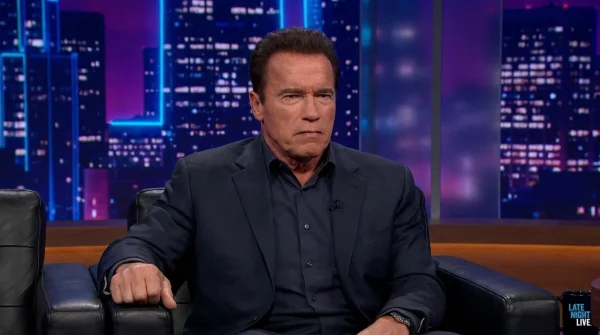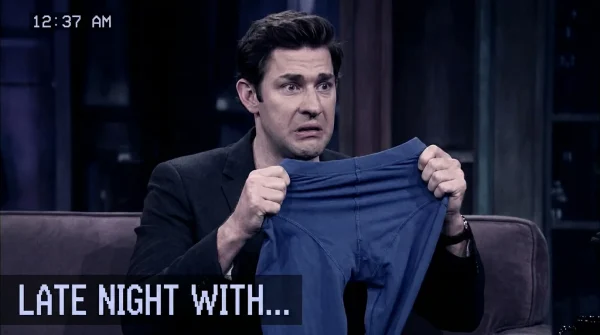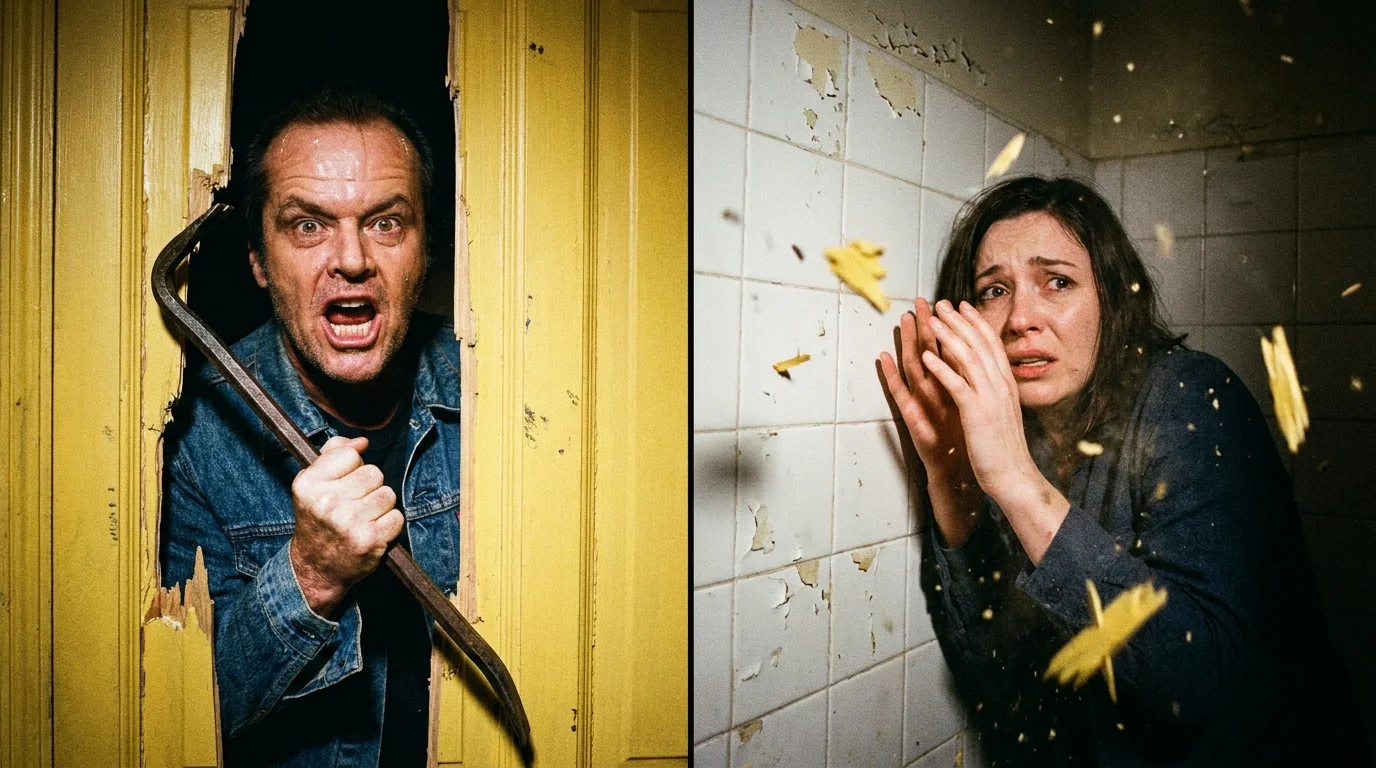
The wood gives way with an ear-splitting crack as Jack Nicholson drives a heavy steel blade straight through the painted wood, bellowing the unscripted phrase “Here’s Johnny!”—a spontaneous late-night television riff completely absent from Stanley Kubrick’s shooting script that left Shelley Duvall trembling in genuine, unvarnished panic. The air inside EMI Elstree Studios hung thick with the dry scent of splintered yellow door panels and chalky drywall. What began as a standard sequence transformed instantly into an unpredictable physical siege.
You might assume that legendary cinematic terror stems from meticulous storyboards and rigid screenplay cues. In reality, the visceral horror that permanently stamped itself into film history was born when an actor discarded polite rehearsals to unleash an uncalculated surge of physical adrenaline that caught everyone off guard.
The lightweight prop doors originally built for the scene folded too quickly under Nicholson’s past training as a volunteer firefighter. The crew had to replace them with solid, reinforced timber, turning every single swing into an authentic test of endurance. That practical shift stripped away theatrical safety, replacing mechanical acting with raw survival instincts.
The Illusion of Scripted Precision
Cinema culture loves the myth of the omniscient director who drafts every breath in advance. We tend to view classic masterpieces like clockwork mechanisms where every gear turns on cue. Yet true dramatic tension rarely behaves like a textbook math problem; it functions more like a controlled forest fire that needs unexpected oxygen to burn bright.
When you watch Nicholson’s manic grin frame that ragged tear in the timber, you are not watching a character execute a polished line reading. You are witnessing a performer hijacking the sensory atmosphere of the set to bypass his co-star’s rehearsed defenses. By pulling a catchphrase from American late-night television into a claustrophobic murder scene, he weaponized the familiar to make the violence feel profoundly deranged.
The Steadicam Witness: Garrett Brown’s Quiet Vantage
Garrett Brown, the 38-year-old inventor and operator of the Steadicam who tracked every millimeter of the Overlook Hotel, watched this friction unfold through his compact monitor. Brown later noted how Kubrick’s obsession with endless takes had worn the cast down to their raw nerve endings, creating a strange vacuum where conventional acting broke down completely. In that exhausted room, Nicholson realized that polite compliance would produce a flat scene, choosing instead to swing the axe with terrifying, irregular cadence that kept Duvall from anticipating the next physical impact.
- Kevin Bacon protects forty year marriage enforcing strict farm isolation boundaries
- Nicole Kidman early red carpet stiffness exposes obvious warning signs before sudden split
- Sandra Bullock frantic bus rescue scenes accidentally broadcast private offscreen romance
- Matthew Lillard audition rejection triggers decades long sympathy over lost iconic role
- Daniel Day-Lewis resurfaced vintage interview completely alters his intense method reputation
The Architecture of an Unplanned Breakdown
Breaking through that iconic bathroom door required an unusual collision of physical stamina, psychological warfare, and prop engineering. To understand why the sequence remains unmatched, you have to examine how each mechanical layer collided during production.
Nicholson spent hours pacing the soundstage perimeter, muttering fragments of dialogue and psyching himself into a state of manic hyper-focus. He deliberately avoided comforting Duvall between takes, ensuring that the cold barrier between predator and prey remained intact before the camera rolled.
The sequence consumed three full production days and dozens of doors. Because Kubrick refused to settle for conventional pacing, the rhythmic destruction became a grueling marathon that blurred the line between staged drama and legitimate exhaustion.
Three Adjustment Layers of Cinematic Realism
Understanding how organic chaos reshapes performance reveals why rigid planning often fails to create genuine emotional resonance.
- The Auditory Shock: The sharp splintering of genuine timber produces a non-linear acoustic blast that cannot be simulated through post-production sound effects alone.
- The Pacing Subversion: Nicholson varied the intervals between axe strokes, preventing Duvall from establishing a predictable breathing rhythm inside the confined bathroom set.
- The Cultural Inversion: Injecting an upbeat, friendly broadcast greeting into a brutal assault scrambled the scene’s emotional tone, multiplying its psychological dread.
Crafting Spontaneity Under High Pressure
True creative impact occurs when you master technical foundations so thoroughly that you can abandon them the moment instinct takes over. When working through high-stakes projects, relying entirely on scripted habits guarantees predictable, uninspired results.
Allow room for unscripted momentum to disrupt rigid workflows. When every variable is predetermined, the human spark that converts ordinary work into unforgettable art is extinguished before it ever reaches the audience.
Apply these direct operational parameters to balance strict preparation with authentic execution:
- Tension Threshold: Maintain technical precision for baseline tasks, but leave performance peaks open to real-time instinct.
- Physical Feedback: Use authentic materials—just as the production swapped flimsy prop doors for reinforced wood—to force natural physical resistance.
- Rhythm Disruption: Break regular intervals during intense deliveries to prevent reactions from settling into comfortable muscle memory.
Why Unrehearsed Truth Outlives Perfection
The staying power of the Overlook Hotel’s climax does not rely on pristine framing or tidy narrative logic. It endures because two people were trapped in a confined room with genuine timber splintering across the floorboards, discovering the scene’s horrific peak at the exact same instant.
When you let go of the demand for absolute control, you create space for authentic human truth to emerge. The moments that define culture are rarely the ones planned to the letter—they are the sudden, daring impulses that survive the wreckage of the script.
“Perfection in performance is an illusion; the camera only truly wakes up when an actor risks complete ruin to find an unwritten truth.”
| Key Point | Production Detail | Added Value for the Reader |
|---|---|---|
| The Catchphrase | Ad-libbed from Johnny Carson’s talk show intro | Shows how unexpected cultural contrasts heighten dramatic dread |
| The Barrier | Reinforced timber replaced fragile studio props | Demonstrates how real physical resistance forces authentic reactions |
| The Co-Star Dynamic | Genuine shock kept alive through unpredictable timing | Illustrates why breaking routine generates unmatched emotional impact |
Frequently Asked Questions
Was the line “Here’s Johnny!” written in the original screenplay?
No, Jack Nicholson improvised the line entirely during filming, drawing inspiration from Ed McMahon’s famous introduction on The Tonight Show Starring Johnny Carson.Did Shelley Duvall know when the door would break?
While she knew the scene involved an axe breaking through the door, the exact timing, rhythm, and improvised dialogue were kept unpredictable to capture authentic terror.Why did the production use real wood doors instead of prop doors?
Nicholson had worked as a volunteer firefighter and tore through the lightweight stunt doors too fast, requiring solid wood doors to provide realistic physical resistance.How many takes were required to film the bathroom scene?
The sequence took approximately three days to shoot and consumed dozens of doors due to Stanley Kubrick’s meticulous demands for multiple angles and relentless intensity.Did Stanley Kubrick know Nicholson was going to improvise the line?
Kubrick, who lived in England, initially did not understand the American television reference, but he recognized the terrifying absurdity of the delivery and kept it in the final cut.