The air inside a luxury hotel suite during a multi-city press junket smells faintly of dry ice, stale espresso, and dry-cleaned wool. Under the low ceiling, three heavy tungsten lamps hum quietly, throwing an aggressive, unflattering heat against the temporary backdrop. You know the rhythm by heart: five minutes per outlet, a robotic smile, a rehearsed anecdote about a stunt harness, and a rushed handshake before the next camera crew shuffles in.
For decades, the unspoken rule of the promotional junket remained absolute: the talent sits, smiles, and endures. The studio pays for the suite, the television network pays for satellite time, and the actor absorbs whatever line of questioning comes across the coffee table. You are expected to treat invasive personal inquiries as the inevitable cost of a box-office payday.
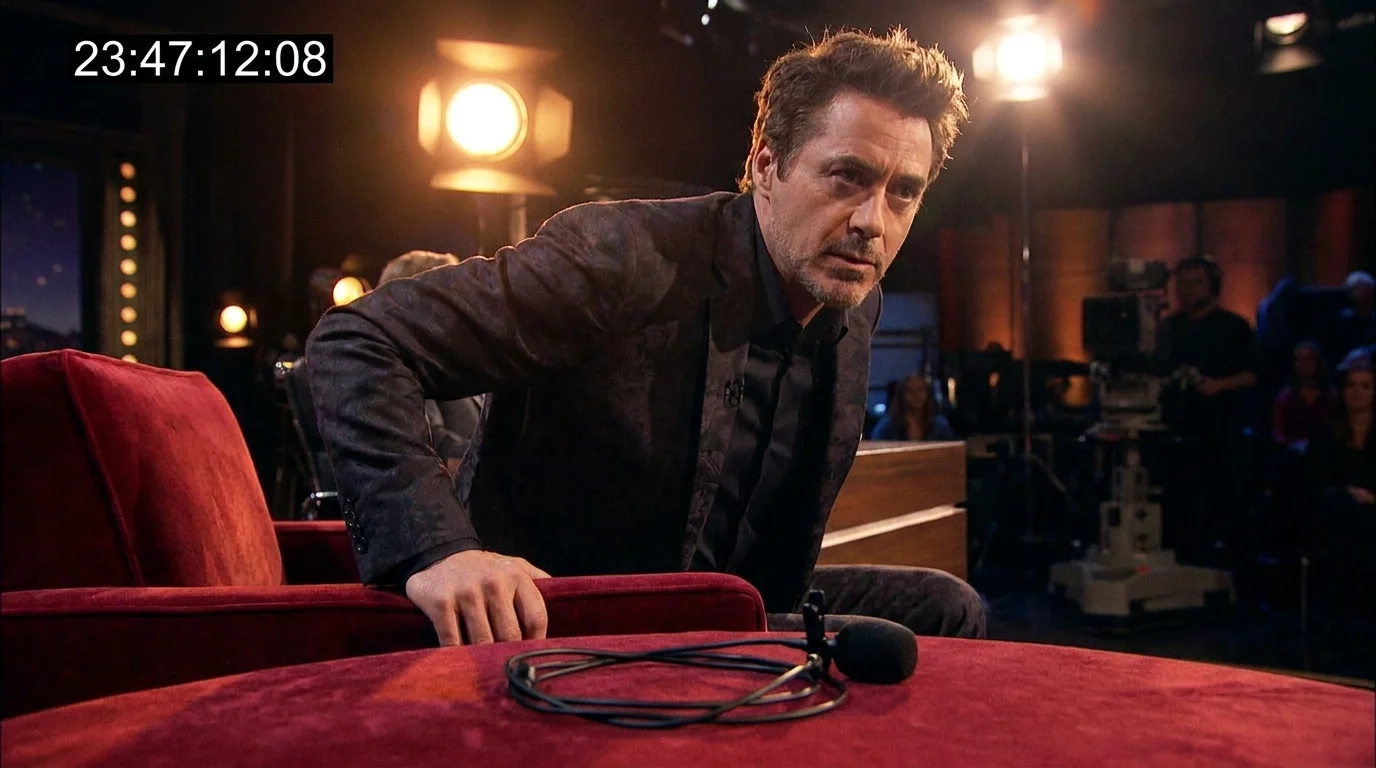
Then the room shifts. The questions drift away from the comic-book sequel on the monitor and slide toward twenty-year-old jail cells, dark family history, and personal rehabilitation. There is no shout, no theatrical outburst, and no dramatic storming through the door. Instead, there is only a polite pause, a glance at the off-camera publicist, and the dull, metallic click of a clip-on lapel mic dropped onto a velvet chair before the star stands up and walks out into the hallway.
When Robert Downey Jr walked away from British broadcaster Krishnan Guru-Murthy during the Avengers: Age of Ultron campaign, he cracked the foundation of the modern promotional circus. It was a masterclass in quiet boundary enforcement that permanently rewired how high-profile figures handle the predatory mechanics of press junkets.
The Illusion of the All-Access Pass
For generations, the entertainment industry operated on an asymmetrical bargain. A star promoting a creative project was treated as fair game for any topic an interviewer chose to dig up under the banner of journalistic integrity. If you refused to answer questions about your darkest personal chapters while promoting an action figure movie, you were labeled difficult or evasive.
Downey’s walkout stripped away that illusion by distinguishing between genuine journalistic inquiry and manufactured friction. A movie junket is not a deposition; it is a transactional commercial workspace. When an interviewer uses a blockbuster promotional slot to spring a sensationalized ambush about past trauma, the social contract breaks down completely.
By simply taking off the microphone and exiting the room, Downey demonstrated a principle that applies far beyond Hollywood soundstages: you are never obligated to participate in a conversation designed to exploit your history for someone else’s engagement metrics.
- Steve Buscemi anchors his sanity enforcing a strict rule forged in smoky firehouse shifts
- Selena Gomez tearful podcast confessions reveal a calculated promotional pattern before major beauty drops
- Halle Berry reversed a shredded Catwoman flop into complete creative freedom and massive profits
- Madonna signature vocal track exposes an uncredited underground producer stripped of master royalties
- Steven Van Zandt red carpet wardrobe flaunts custom tailored velvet coats and silver rings
The Mechanics Behind the Hotel Suite Door
To understand why that moment reverberated through the industry, you have to look at the pressure-cooker mechanics behind junket scheduling. Sarah Lindqvist, a 46-year-old veteran junket coordinator based in Los Angeles, has managed international press suites for over twenty years. She describes the environment as an assembly line where mental fatigue is deliberate and relentless.
“Actors do four straight days of four-minute interviews back-to-back, starting at seven in the morning under hot studio lights with zero fresh air,” Lindqvist explains. “They are running on adrenaline and caffeine. When an interviewer pivots into unvetted, deeply personal territory without warning, it isn’t an accident. It is a calculated attempt to catch an exhausted person off balance. Robert was the first superstar to say out loud: ‘We aren’t doing this.'”
That refusal changed the dynamic for every talent handler in the industry. It proved that maintaining firm professional boundaries does not destroy an A-list career; it actually preserves your dignity and re-establishes authority over your personal narrative.
The Anatomy of Modern Boundary Enforcement
Enforcing boundaries in high-stress professional situations is not about aggression; it is about recognizing when a conversation has ceased to be productive. Whether you are navigating an aggressive interview, a toxic performance review, or an intrusive client meeting, the playbook remains identical.
1. The Clear Pivot
Before disengaging entirely, give the other party an opportunity to correct course. Acknowledge the shift in tone with calm clarity, pointing out that the current line of questioning falls outside the agreed scope of the meeting.
Downey attempted this first, offering polite smiles and signaling that the discussion was straying far from the film. When the interviewer doubled down on the bait, the dynamic shifted instantly from casual discomfort to intentional violation.
2. The Micro-Check
Look to your support system or establish an internal pause. In Downey’s case, a brief glance toward his team signaled that the professional boundary had been breached beyond repair. Taking a three-second pause allows your nervous system to stay steady instead of reacting with heated emotion.
3. The Physical Disconnection
When words fail to redirect an intrusive dynamic, physical action provides the final boundary. Removing a headset, closing a notebook, or unclipping a microphone signals that the engagement has concluded on your terms.
By leaving the microphone on the upholstery without throwing or snapping it, Downey delivered a calm, unequivocal full stop to an unfair interaction.
How to Protect Your Energy Under Pressure
You do not need an international press tour to encounter conversations designed to pull you into unnecessary conflict. Mastering the art of the clean professional exit protects your focus, reputation, and peace of mind.
- Define the meeting’s perimeter beforehand: Always establish clear agendas before stepping into sensitive professional or public discussions.
- Spot the bait early: Recognize when an inquiry shifts from problem-solving to personal provocation.
- Keep your vocal pitch grounded: Speak with measured, quiet cadence rather than raising your voice to match someone else’s aggressive energy.
- Deploy the silent exit: When boundaries are willfully disregarded, end the interaction calmly without lingering for a final argument.
Your tactical toolkit in these moments is simple: a steady breath, a quiet statement of refusal, and the willingness to physically remove yourself from an unproductive room.
The Dignity of the Unspoken Exit
In a media landscape obsessed with constant access and forced vulnerability, walking out of a room is often the most powerful sentence you can deliver. It rejects the idea that you owe everyone your private history simply because you agreed to show up for your work.
Robert Downey Jr did not derail a press junket out of vanity; he protected the hard-won line between professional duty and personal sovereignty. When you understand where your professional obligations end and your personal self-respect begins, you realize you never have to sit still under hot lights for anyone.
“You never have to justify walking away from a conversation that was only built to tear you down.”
| Key Point | Detail | Added Value for the Reader |
|---|---|---|
| Boundary Clarification | Recognizing when an interaction strays beyond professional scope | Prevents you from being drawn into manipulative traps |
| Physical Disengagement | Removing tools of communication (mics, notebooks, video feeds) | Signals absolute finality without resorting to verbal aggression |
| Emotional Regulation | Maintaining a flat, calm demeanor during high-friction exits | Ensures you retain control of your narrative and dignity |
Frequently Asked Questions
Why did Robert Downey Jr walk out of the Krishnan Guru-Murthy interview?
He walked out after the interviewer abandoned the agreed-upon topic of the movie Avengers: Age of Ultron to press him on his past addiction struggles and relationship with his father.Did the walkout hurt Robert Downey Jr’s career?
No. The move was widely supported by both industry insiders and the public, cementing his reputation as an actor who sets uncompromising boundaries around his private life.What is the standard etiquette for promotional junkets?
Junkets are designed to promote specific creative projects within strict time limits. Interviewers are expected to keep questions focused on the project rather than unrelated personal controversies.How can I handle intrusive questions in a professional setting?
Acknowledge the question calmly, state clearly that it falls outside the scope of your discussion, and redirect to the agenda. If the behavior persists, politely end the meeting.Why is walking out more effective than arguing?
Arguing provides the other party with emotional material and fuels further confrontation. Walking out calmly removes your participation entirely, neutralizing the trap.