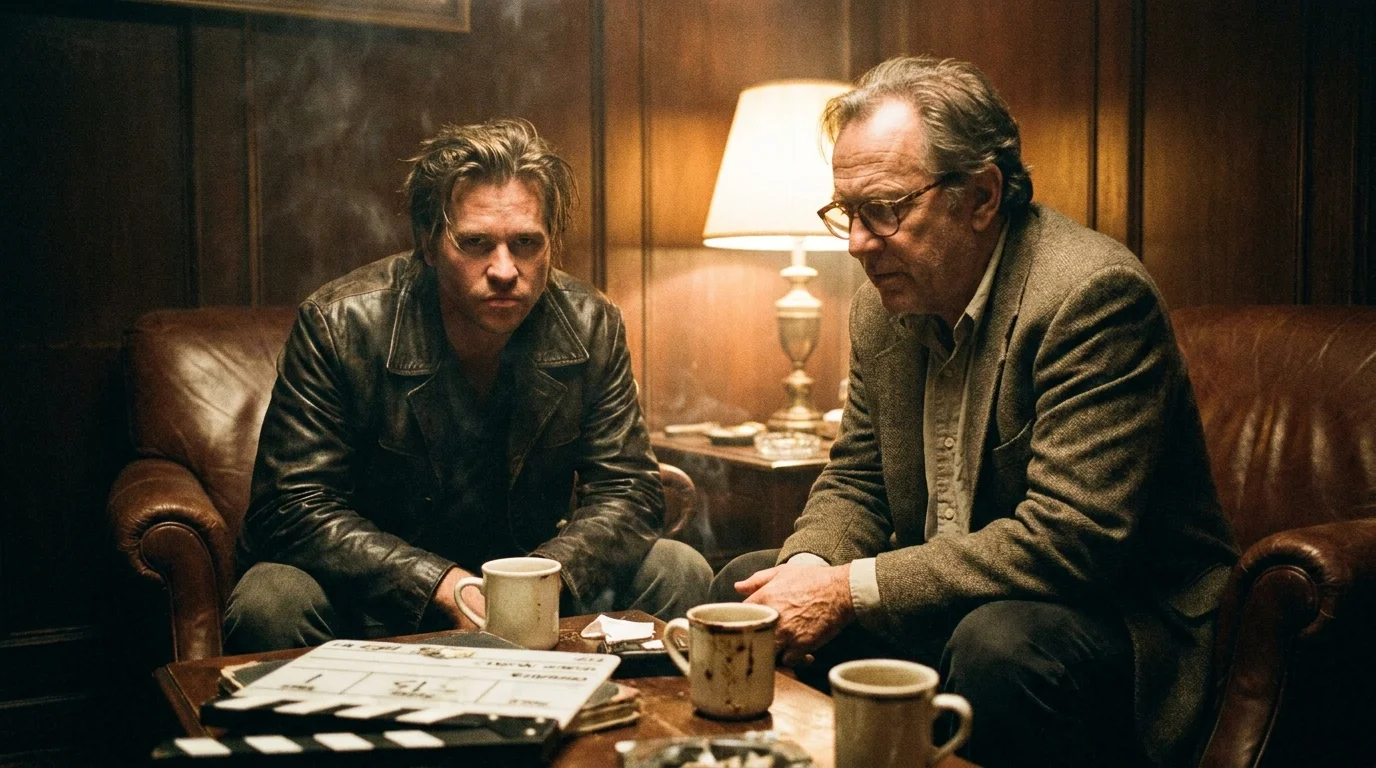
Step inside a backlot storage bay past midnight, and the air smells of ozone, damp wool, and industrial glue. Chipped soundstage props left abandoned in a dark costume trailer sit quietly in the shadows—a painted fiberglass revolver from a forgotten Western, a cracked molded cowl, and racks of leather jackets stiff with dried sweat and artificial grime. To anyone passing by, these artifacts look like discarded relics of cinematic history.
To a studio accountant running production insurance numbers, however, those same props represent thousands of dollars in lost shooting hours. You are often told that pure, unflinching dedication to a craft will earn you unconditional praise from the people holding the purse strings. You watch an actor disappear into a historical figure or a comic book vigilante, assuming the sheer intensity of the illusion must inspire everyone on set.
The reality inside Hollywood soundstages has always run on an entirely different rhythm. While audiences marvel at the magnetic presence burning through the celluloid, production coordinators and assistant directors often find themselves calculating the exact friction cost of keeping an actor locked in a state of continuous psychological siege.
The Illusion of Artistic Solitude
When you watch Val Kilmer transform on screen, you are observing an engine operating at redline. Whether channeling the haunted, melodic drawl of Jim Morrison in 1991 or the razor-sharp, consumptive wit of Doc Holliday in 1993, his commitment was absolute. Yet the film industry is not an artist’s solitary studio; it is an industrial assembly line disguised as an atelier.
Think of a major motion picture set as a delicate naval vessel in rough water. If one crew member decides to drill a hole in the bulkhead simply to test the water pressure for their own artistic truth, the entire ship takes on water. When an actor demands that crew members avoid eye contact or insists on answering only to a fictional character’s name between thirty-minute lighting resets, the collaborative machinery begins to grind metal against metal.
Studio brass did not fear Kilmer’s talent; they feared the line-item volatility of his preparation. A single missed call time caused by an actor deep in character decompression can push a two-hundred-person crew into golden time, draining hundreds of thousands of dollars before lunch. Over time, that quiet friction creates an unspoken reputation that spreads through studio executive suites far faster than box office receipts can heal.
- Jay Shetty emotional podcast breakdown masks a calculated commercial brand rollout
- Colin Firth disastrous studio flop severed rigid multi-picture contracts launching independent triumphs
- Stevie Nicks signature guitar groove unmasks an uncredited underground session player
- Zoe Kravitz casual Manhattan sighting demands oversized distressed leather trench coats
- Michael Wright legal separation filings strip massive joint production company assets
The Backstage Friction: An Insider’s View
Consider the perspective of Marcus Vance, a 58-year-old veteran production supervisor who managed logistics across three major studio lots during the mid-1990s. Vance remembers standing outside a trailer soundstage at 4:00 AM, watching production assistants whisper into walkie-talkies because no one wanted to trigger an unscripted confrontation before the primary lighting rig was set.
“You had a performer who was delivering breathtaking takes, but the emotional cost across the crew was immense,” Vance notes. “By the time you reached day forty-five of a sixty-day shoot, the grip team, the camera operators, and the script supervisors were physically walking on eggshells. Directors talk to each other over dinner at Musso & Frank. When a filmmaker is assembling a five-lead ensemble picture, they will almost always trade five percent of raw genius for ninety-five percent emotional stability.”
The Anatomy of Method Reputational Drift
The quiet sidelining of immersive performers rarely happens through public firings. Instead, it occurs through the silent omission of a name from shortlists during early packaging meetings. When producers assess high-stakes ensemble casts, they evaluate candidates across distinct operational layers.
The Solo Visionary vs. The Ensemble Anchor
When you carry a singular biopic, your eccentricities are baked into the production insurance. But in an ensemble setting—where four or five top-tier talents must share screen space, trailer space, and dialogue rhythms—an actor who isolates themselves creates immediate structural cracks. Co-stars often feel abandoned in scenes when the rehearsed beats are hijacked by real-time character hostility.
The Director-Actor Power Dynamic
A director is responsible for two hundred individual jobs while managing a daily budget burn. When an actor refuses to step out of character to receive technical framing notes, the director loses their primary steering wheel. Iconic directors like Joel Schumacher and John Frankenheimer famously clashed with Kilmer not because they doubted his ability, but because the emotional toll poisoned production momentum.
The Franchise Liability Multiplier
In multi-picture studio deals, reliability is the primary currency. An actor who demands complete environmental control can disrupt an entire slate of sequels, marketing tours, and merchandising integrations. Studios eventually realized that extreme immersion often created a volatile workspace that modern corporate boardrooms simply refuse to insure.
Protecting Collaborative Flow Under High Stakes
You may never step onto a multimillion-dollar soundstage, but you almost certainly operate within high-stress collaborative teams where personal intensity can either elevate or fracture the room. Navigating high-stakes creative work requires specific, deliberate habits that protect relationships without dulling your edge.
- Establish clear boundary resets: Differentiate between your operational persona and your creative process before entering collaborative spaces.
- Maintain technical transparency: Give your collaborators explicit signals when you need deep focus, rather than forcing them to guess your emotional state.
- Acknowledge the supporting infrastructure: Recognize that the people adjusting your lights, managing your schedule, or handling your administrative load are vital partners in your output.
Use this concise tactical approach whenever you find yourself diving into high-intensity, demanding projects:
The Tactical Toolkit for High-Intensity Collaboration:
• The 10-Minute Decompression: Step away entirely before transitioning from intense creative execution back into team meetings.
• The Direct Acknowledgment: Thank crew or team members by name at the end of every high-friction work session.
• The Perspective Check: Ask yourself if your preparation method is serving the final product or merely feeding your personal isolation.
The Balance Between Dedication and Connection
Mastering your craft does not require burning down the room you share with other people. When you look back at the golden era of high-intensity preparation, the myth tells you that suffering and alienation are necessary taxes on true brilliance. But cinema history shows that lasting career longevity belongs to those who learn to ignite a fire on camera without scorching the crew standing just beyond the lens.
Extreme artistic preparation only becomes a masterclass when it honors the collective work required to capture it.
| Key Point | Detail | Added Value for the Reader |
|---|---|---|
| Immersion vs. Collaboration | Extreme preparation can isolate co-stars and exhaust physical production crews. | Understand that individual brilliance never outweighs operational harmony. |
| Silent Industry Recasting | Studios pass over volatile performers in early development without public conflict. | Learn that reputation is built on reliability just as much as talent. |
| Ensemble Dynamics | Multi-lead projects require high emotional intelligence and shared creative trust. | Apply balance when working within multi-disciplinary teams in your own field. |
Frequently Asked Questions
Did Val Kilmer’s immersive acting harm his overall career?
While it produced iconic performances in films like *The Doors* and *Tombstone*, the resulting reputation for on-set friction caused several major studio directors to avoid casting him in large ensemble franchises during his peak years.Why do directors struggle with immersive method actors?
Directors manage tight schedules and large crews. When an actor remains strictly in character between takes, giving technical direction or adjusting camera framing becomes time-consuming and emotionally fraught.What is the difference between healthy preparation and career-damaging isolation?
Healthy preparation allows an actor to deliver intensity during the take while remaining approachable and communicative with the crew during technical setups and lighting resets.How did studio executives respond to on-set method friction in the 1990s?
Executors often chose not to renew multi-picture deals, opting instead for dependable performers who kept productions on schedule and maintained good morale across the crew.Can high personal intensity be managed effectively in team environments?
Yes. By establishing clear communication boundaries, decompressing before meetings, and showing direct appreciation for support staff, you can maintain high performance without alienating collaborators.