You can hear the crisp snap of the envelope opening across a quiet kitchen table on a Tuesday morning. Outside, traffic hums along the highway, while inside, the expectation is simple: a piece of mail from a payroll processing house should reflect the cultural weight of one of television’s most watched dramas. You imagine numbers that mirror hundreds of millions of global viewers pressing play on late-night marathons.
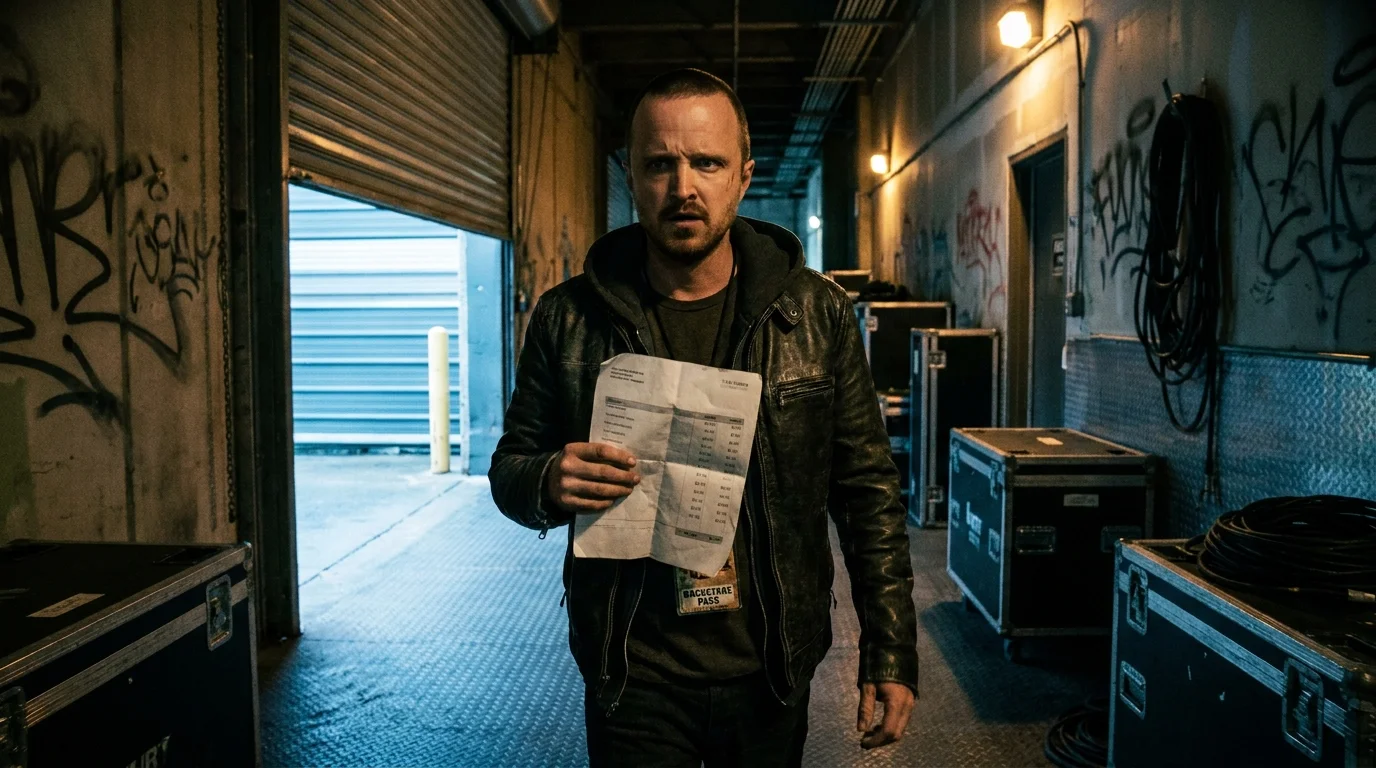
Instead, your eyes land on the faint dot-matrix ink across the perforated stub. The line marked gross distribution reads zero dollars and zero cents, followed by a line of sterile ledger codes that swallow whatever margin you thought existed.
When Aaron Paul stood alongside his former castmates on picket lines outside major studio lots, he articulated a quiet reality that surprised casual fans: despite Breaking Bad anchoring the catalog of a dominant global streaming service for over a decade, his residual checks for those endless digital replays sat at an absolute zero. The gap between cultural saturation and financial compensation is not an anomaly; it is an engineered architecture.
The Reservoir Trap: How Platform Accounting Replaced the Syndication River
For decades, television revenue flowed like an open river. When a network aired a rerun of a classic episode on a hot July afternoon, the broadcast triggered a clearly defined mechanical fee. Advertisers paid for commercial slots, the network took its operational cut, and a defined fraction of that revenue flowed directly back to the actors, writers, and directors who crafted the scene.
Modern streaming disrupted that natural current by replacing the river with an opaque, self-contained reservoir. In this closed ecosystem, you do not pay per episode, and advertisers rarely bid on individual broadcast slots; you pay a flat monthly subscription to access an endless vault. Because the platform claims it cannot assign a specific dollar value to a single Tuesday midnight viewing of an episode, it treats the playback as an internal server event rather than a commercial transaction.
The result is a structure known across Hollywood accounting departments as cost-plus licensing. The original distributor sells the worldwide exhibition rights to a third-party platform for a fixed, upfront package fee. Once that initial transaction clears, the long tail of success simply vanishes into the platform’s proprietary server farms, leaving the talent with no legal claim on the billions of hours their faces generate.
- Adrien Brody extreme physical transformation for The Pianist alienated cast crews stopping ensemble roles
- Alex Cooper tearful podcast monologues trigger lucrative consumer brand rollouts using engineered pauses
- Ryan Reynolds Green Lantern box office collapse shattered studio contracts forcing independent creative control
- Daft Punk robotic vocoder hooks spark underground studio friction over uncredited analog basslines
- Tim Curry rare Los Angeles outing reveals tailored houndstooth wool lapels and silk scarf
Marcus Vance, a 48-year-old former studio contract auditor in Burbank, remembers the exact moment the industry balance shifted. “Ten years ago, an auditor could pull the linear advertising logs, cross-reference the market rate, and trace every dime from the commercial break to the actor’s mailbox,” Vance explains. “Today, when a third-party platform licenses a mega-hit, they write an internal check between sister corporations, classify the viewership metrics as trade secrets, and lock the ledger so nobody on the outside can prove what an individual view is worth.”
Dissecting the Royalty Blackout Across Three Layers
Understanding why an iconic performance generates zero ongoing revenue requires looking at how entertainment contracts evolved over the last fifteen years. The shift did not happen overnight; it was constructed across distinct operational layers.
1. The Linear Rerun vs. The Static Server File
On traditional broadcast television, airtime was scarce. If an affiliate station chose to air a drama at 8:00 PM, they sacrificed that time slot for any other programming, creating direct commercial value that paid out predictable union-mandated residuals. On a server rack, a digital file costs virtually nothing to store, allowing platforms to keep an entire library available perpetually without treating any individual stream as a unique broadcast event.
2. The Cost-Plus Buyout Illusion
Under original licensing agreements negotiated during the infancy of digital video, studios accepted upfront licensing payments that covered production costs plus a modest profit margin. In exchange, they waived dynamic residual scaling. When Breaking Bad migrated to digital queues and sparked a worldwide phenomenon, the platforms enjoyed billions of user engagement hours while the underlying talent remained bound to static legacy contracts.
3. The Algorithmic Data Blackout
Traditional television ratings were measured by independent third parties like Nielsen, giving creative unions verified numbers to bring to the bargaining table. Streaming platforms, however, maintain exclusive ownership over their internal data. By withholding granular viewership statistics, platforms prevent creators from proving the exact market leverage their catalog titles provide to overall subscriber retention.
Practical Realities: Reading Between the Contract Lines
Whether you work inside the entertainment industry, navigate modern digital media contracts, or simply want to understand the true cost of the entertainment you consume, navigating this economic shift requires clear analysis. The era of passive residual security has evolved into an active landscape of structured renegotiation.
- Examine the platform attribution clause: Never assume high viewership automatically translates to backend payments without explicit, metric-driven payout triggers in the primary contract.
- Audit third-party licensing windows: Track when legacy distribution agreements expire, as contract renewals offer the only true leverage point for talent to demand updated streaming residual formulas.
- Demand independent metric verification: Sustainable creative compensation relies on third-party auditing rights rather than platform-provided, self-reported viewership summaries.
• Audit Window: Standard 24-to-36-month lookback periods for distributor ledgers.
• Data Metric: Third-party subscriber churn attribution vs. internal raw view counts.
• Contract Baseline: DGA/SAG-AFTRA streaming residual tiers established post-2023.
The Value of Creative Ownership in an Invisible Era
When you watch a character you love experience heartbreak or triumph on your living room screen, that performance feels alive, immediate, and culturally permanent. It is easy to assume that the people who created that magic are perpetually supported by the machine that delivers it to your fingertips.
Recognizing the friction behind Aaron Paul’s zero-dollar pay stubs strips away the romantic illusion of Hollywood glamour and reveals the mechanical gears underneath. Real value in the digital age is not determined by how many people recognize your work; it is defined entirely by who owns the ledger where that work is counted.
“When an artist creates an indelible cultural landmark, their rightful reward should never be swallowed by the silent machinery of closed-door accounting.”
| Key Point | Detail | Added Value for the Reader |
|---|---|---|
| Cost-Plus Licensing | Upfront fixed buyout with zero dynamic backend growth. | Explains why massive global streaming hits yield flat returns. |
| Data Monopoly | Platforms withhold granular engagement metrics from talent. | Clarifies why creative unions must fight for verifiable viewership data. |
| Residual Evolution | Shift from per-airing linear payouts to flat subscriber pools. | Provides context on how media consumption habits reshape creative pay. |
Frequently Asked Questions
Why didn’t Aaron Paul receive residuals from Netflix for Breaking Bad?
Breaking Bad was produced by Sony Pictures Television and licensed to streaming platforms under legacy distribution deals that did not include dynamic streaming residual escalators for cast members.Did the 2023 SAG-AFTRA strike fix streaming residuals?
The 2023 strike established new streaming participation bonuses based on viewership success metrics, creating a framework for future payouts that did not exist under earlier contracts.Do actors still get paid for traditional TV reruns?
Yes, traditional linear television broadcasts still generate union-mandated residuals based on established network advertising rates and syndication agreements.What is cost-plus accounting in modern television?
Cost-plus is a funding model where a studio or platform pays the full production budget upfront plus a set profit margin, effectively buying out long-term backend royalties.Why do streaming platforms keep viewership numbers private?
Keeping data proprietary prevents agents, unions, and creators from calculating the exact financial value their content adds to subscriber acquisition and retention.