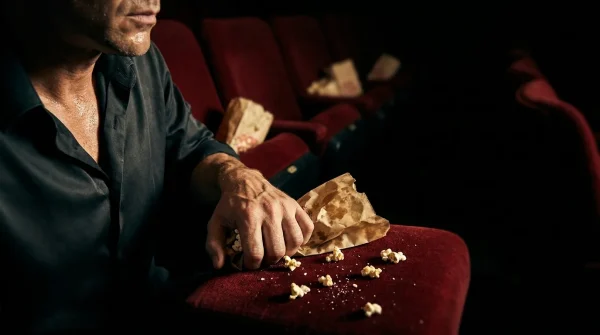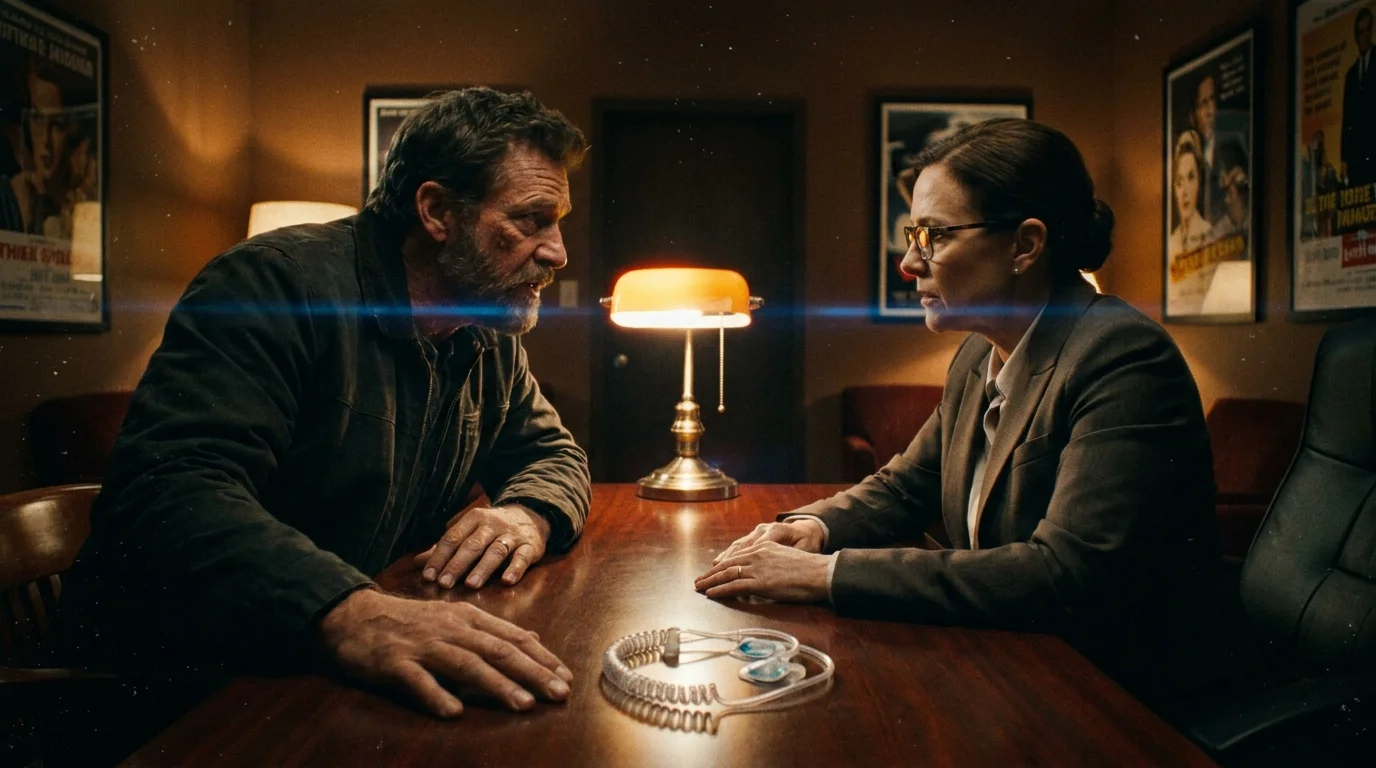
Picture the back row of a windowless screening facility in Burbank, where the air tastes faintly of carpet cleaner and recycled Freon. You sit among forty hand-picked viewers wearing identical telemetry gear, each person lit only by the pale, cold wash bouncing off an unfinished projection screen. While Brad Pitt cuts down swarms of infected civilians on screen, no one is writing notes on yellow pads or discussing dramatic arcs.
Instead, a wire harness snakes down your forearm, plugged into a coiled biometric electrode wristband with damp adhesive pads that measure the tiny, electric salt-spikes of your sweat glands. When the third act transitions to a sprawling, sixty-million-dollar Russian war sequence, the room goes physically numb. On the monitors behind the two-way glass, the jagged lines tracking galvanic skin response do not spike with terror; they slide into a flat, listless swamp.
Hollywood lore long insisted that the original ending of World War Z collapsed under the weight of political bloat and tonal chaos. But the studio suits pacing the rear carpet did not junk that gargantuan Moscow battle because an executive had an epiphany about character motivation. They cut a sixty-million-dollar check for total reshoots because cold, copper-plated sensors proved the audience had physically checked out.
When your autonomic nervous system decides an action scene is white noise, no amount of CGI pyrotechnics can bring your pulse back from the dead.
The Galvanic Flatline: When Sensory Overload Becomes Anesthetic
Consider the human nervous system not as a vessel to be filled with noise, but as a fuse box with strict mechanical limits. When an action film dials its frequency to eleven for ninety straight minutes, the mind stops registering danger. The brain treats continuous kinetic violence the same way it treats the drone of an airplane engine: it tunes it out to conserve glucose.
In the junked third act, Gerry Lane landed in Moscow, got drafted into an archaic zombie extermination squad, and fought through a freezing, claustrophobic melee in subway tunnels and snowdrifts. On paper, it was epic, unrelenting, and mercilessly fast. Yet inside the test screening, the live readouts told a devastating physical truth: the audience had gone limp.
Their fingers grew cool, their skin conductance plunged below baseline, and the damp gel on their wrists registered the physiological equivalent of a polite yawn. By substituting relentless assault for genuine suspense, the production had engineered sensory fatigue. The executives realized they had built an expensive meat grinder that functioned as an unintentional sedative.
- Prince Harry exposes tell-all memoir origins as readers spot crisp ghostwriter prose cadences
- Elisabeth Moss demands unfiltered rough skin close-ups stripping glossy Hollywood beauty standards bare
- Taylor Swift stops massive stadium concert after sudden in-ear monitors emit piercing screech
- Hayden Christensen resurfaced vintage tapes flood feeds blocking bitter studio contract disputes
- Madison Beer sparks massive superfan backlash after agency script leaks into shaky livestream
Marcus Vance, a 46-year-old post-production telemetry analyst who consulted on mid-budget horror and studio tentpoles during that cycle, remembers the specific dread of watching live galvanic readouts plunge during an action set-piece. “You can argue with an opinion card because people lie to sound smart,” he told me. “You cannot argue with dermal moisture. If eighty wrists stop sweating during a twenty-minute tank assault, the movie is dead in the water.”
The Architecture of the Pivot: From Moscow Trench to Welsh Hallway
The decision to throw away weeks of finished footage and relocate the entire climax to a quiet, sterile World Health Organization research facility in Cardiff was not a retreat. It was an intentional acoustic and biometric recalibration. To wake up your senses, the filmmakers had to pull the floor out from under the noise floor.
By stripping away heavy artillery, exploding helicopters, and hundreds of charging extras, the production introduced the one element that consistently spikes human sweat glands: the dread of accidental sound.
For the Sensory Overloaded: When a viewer endures an hour of constant explosions, their brain activates an internal dampener. The switch to a fluorescent-lit corridor, where the only obstacle is a squeaking linoleum tile or a dropped soda can, instantly breaks that sensory shield. You stop bracing against a wall of sound and start leaning into the quiet, desperate to hear the next footstep.
For the Story Purist: Watching an individual struggle through a closed room forces your mirror neurons into hyperdrive. You cannot easily imagine what it feels like to fire a machine gun into a frozen stadium crowd, but you know the precise terror of trying not to rattle a vending machine coil while a monster stands three feet behind you.
The Cardiff reshoot transformed the film from a generic spectacle into a prolonged breath-holding exercise, turning an audience of numb spectators into tense, sweating participants.
Engineering the Reset: How to Recalibrate Audience Focus
Understanding tension as a physiological loop changes the way you construct any experience, whether you are editing a scene, pacing a presentation, or staging a public reveal. You must manipulate the quiet spaces with the same precision you apply to the grand explosions.
When you need to command raw physical attention, strip away decorative clutter until every miniature movement carries real consequence.
- Lower the ambient floor: Drop all background score and wide-angle movements. Force the audience to calibrate their ears to room tone and solitary breathing.
- Introduce micro-consequences: Replace broad threats like world destruction with physical, immediate hazards, such as the scrape of metal on linoleum or the hiss of an airlock.
- Stall the inevitable release: Hold a tight framing shot five seconds longer than comfort dictates, letting the viewer’s autonomic tension spike as they wait for the cut.
- Limit the focal point: Strip the frame down to two contrasting elements—a character’s face and the single doorway they must cross without making a sound.
The Tactical Toolkit for tension relies on three non-negotiables: a strict 40-decibel dynamic drop between set-pieces, an average shot length held above six seconds during stealth sequences, and macro-framing focused on involuntary muscle twitches rather than wide geographic action.
The Quiet Triumph of Subtraction
We often assume that keeping someone engaged requires adding more ingredients to the pot: louder tracks, higher stakes, faster cuts, and bigger explosions. Yet the desperate salvage job on World War Z proves that true control over human emotion is an exercise in subtraction. When you flood the senses, you invite detachment; when you enforce stillness, you demand presence.
The next time you rewatch Pitt tiptoeing down that cold Welsh hallway, dodging dry glass and clicking jawbones, remember that you are watching an engineered biometric emergency response. You are sweating precisely because forty anonymous viewers in Burbank once stopped sweating altogether. Real authority never shouts over the static; it clears the room, drops to a whisper, and waits for your skin to tell the truth.
“True suspense begins the second you realize that dropping a single coin is far more terrifying than detonating a skyscraper.”
| Key Point | Detail | Added Value for the Reader |
|---|---|---|
| Biometric Feedback | Galvanic skin-response sensors track real-time sweat gland conductivity. | Reveals why studio executives trust body data over written audience feedback. |
| The Moscow Cut | A massive, multi-million-dollar war sequence set in snow and subways. | Demonstrates that high production budgets can still produce complete sensory numbness. |
| The Cardiff Pivot | A whisper-quiet, small-scale confrontation in a sterile medical lab. | Offers a practical blueprint for using silence and small stakes to maximize tension. |
Frequently Asked Questions
What is galvanic skin response in screen testing?
It measures tiny electrical fluctuations across the skin caused by sweat gland activity, offering an unfiltered look at autonomic nervous system arousal during a screening.Why did the Russian battle sequence fail to engage test viewers?
The constant volume, visual noise, and lack of intimate character stakes overwhelmed the viewers’ senses, pushing their nervous systems into fatigue and indifference.Who ordered the massive reshoots for the film?
Studio executives at Paramount, alongside the core production team, realized the existing cut lacked tension and authorized Damon Lindelof and Drew Goddard to write an entirely new ending.How much did the new ending cost to film?
Scrapping the Moscow battle and building the Cardiff laboratory set added tens of millions of dollars, pushing the total budget past the two-hundred-million-dollar mark.Can silent tension actually increase physical engagement?
Yes, dropping audio levels and slowing visual pacing forces viewers to focus intensely, spiking skin conductance and elevating heart rate variance far more than constant explosions.