Step inside a modern post-production bay in Burbank, and you enter a room that smells of ozone, cooled by silent air conditioning fighting against twenty monitors. The air is dim, almost sacred, humming with the low click of trackballs. On a reference screen that costs more than a midsize sedan, a high-resolution frame sits paused. An editor reaches for an adjustment layer, drawing a digital feather mask over the faint bloom of crow’s feet near an actor’s temple. It is an instinctive gesture in Hollywood, as routine as clearing your throat: an algorithmic blur designed to wipe out the lived geography of a human face.
Then the directive arrives from the executive producer: stop. Put the skin texture back. Let the frame breathe.
When Kate Winslet took on the role of detective Mare Sheehan in HBO’s Mare of Easttown, she did something that sent shockwaves through studio suites. She actively rejected the digital airbrushing that has quietly turned high-definition television into a sea of waxen, poreless mannequins. Winslet did not merely decline a vanity pass; she guarded her character’s physical honesty with the ferocity of a sentry, physically rejecting promotional posters twice because her eyes and forehead had been scrubbed clean of life.
When a director promised to snip an unflattering shot showing a roll of stomach flesh during a sex scene, her answer was immediate and icy: ‘Don’t you dare.’ In doing so, she dismantled an invisible industry compact that has quietly alienated viewers for decades.
The Digital Vaseline Lens: Redefining the Visual Currency of Prestige Drama
For decades, television hid behind the gentle forgiveness of low-resolution cathode-ray tubes. When digital cameras like the ARRI Alexa LF entered the mainstream, capturing every stray eyelash and micro-crease at 4.5K resolution, the industry panicked. Instead of embracing the clarity, studios began running footage through an invisible pipeline of beauty pass filters—digital retouches that smooth neck lines, erase under-eye exhaustion, and scrub away the textural honesty of adulthood.
You have likely noticed this without having the technical jargon to name it: characters working seventy-hour shifts in gritty police precincts who inexplicably sport the complexion of an infant sleeping on silk. This visual dissonance pulls you right out of the narrative. It turns raw human tragedy into an extended cosmetic commercial.
- Sabrina Carpenter halts stadium performance after piercing monitor feedback spike threatens hearing
- Sally Field resurfaced vintage talk show tape completely reverses Oscar backlash narratives
- Mariska Hargitay unedited red carpet glance sparks fierce industry rift theories
- Jack Harlow staged bedroom livestream sparks intense fan backlash after teleprompter reflection leaks
- Kourtney Kardashian podcast breakdown perfectly timed lucrative wellness vitamin supplement brand rollout
Winslet’s quiet mutiny treated skin not as a billboard that requires daily maintenance, but as narrative topography carved by grief, salt, and stubborn resilience. When an actor refuses digital smoothing under an unforgiving macro lens, they hand back authority to the story. The lines around Mare’s mouth were not cosmetic flaws; they were the story of a woman surviving an unbearable bereavement while drinking cheap beer and carrying an entire town on her shoulders.
The Grading Suite Confessional: How Studio Polish Distorts Reality
Consider the daily reality of Marcus Finch, a 42-year-old senior finishing artist in Manhattan who has spent nearly twenty years delivering masters for major broadcast and streaming networks. Marcus spends hours with dynamic tracking nodes, mapping subtle digital Gaussian blurs across the foreheads of forty-something actors playing overworked blue-collar parents.
‘The default setting from studio executives is always fear,’ Marcus once admitted over an audio monitor. ‘Producers obsess over high-contrast lighting because they believe any visible skin slackness or uneven pigmentation reads on camera as poor production values. When Winslet sent back those poster proofs with hand-scrawled notes forbidding the retouching, it upended the room. It was the first time in ten years our team was instructed to pull back our smoothing nodes and dial back the noise reduction to preserve actual pore clarity.’
Anatomy of the Unvarnished Frame: The Shift in Visual Archetypes
Understanding this visual choice helps us decode why certain performances stay lodged in your ribs while others vanish from memory the moment the credits roll. Winslet didn’t simply reject vanity; she engineered an intentional aesthetic contract between the viewer and the screen.
The Prestige Anti-Glamour Standard
In standard television productions, makeup departments spend forty-five minutes before a take neutralizing natural shine with silica powders. Winslet inverted this process, reportedly asking the crew to leave her hair greasy, minimize foundation, and ensure the harsh winter daylight of rural Pennsylvania fell across her skin without the soft diffusion of bounce cards. This calculated choice forces the camera into an intimate, uncomfortably truthful range that makes every emotional breakdown feel devastatingly real.
The Corporate Pushback and Poster Politics
Marketing divisions are notoriously terrified of unretouched middle-aged women. Studio marketing teams spend hundreds of thousands of dollars running high-profile promotional assets through specialized retouching firms before outdoor billboards go to print. Winslet caught the studio doing exactly this: wiping away the sun damage, the fine lines beneath her eyes, and the authentic contours of her neck. Her refusal to sign off on those proofs until the lines were put back created an unprecedented boundary, proving that authenticity commands higher cultural currency than manufactured youth.
The Mindful Lens: How to Cultivate Unfiltered Truth in Daily Life
While you may not have a crew of cinematographers tracking your morning coffee run, the digital environment you navigate every single day is flooded with the exact same artificial smoothing Winslet fought against. Social algorithms, front-facing phone lenses with auto-beauty modes enabled by default, and video call lighting rings all conspire to flatten your humanity into an identical, blurry smear.
Reclaiming visual honesty is an active, grounded discipline. It changes how you see yourself, how you present yourself to colleagues, and how you refuse the unspoken pressure to show up as a retouched rendering of your real self.
- Disable the Auto-Correction Traps: Dive into your smartphone’s camera settings and turn off ‘scene optimizer’ and facial enhancement toggles. These built-in computational features automatically smudge your skin texture without your explicit consent.
- Audit Your Virtual Lighting: Swap harsh, front-facing cool-white LED ring lights for indirect, warm domestic lamps. A single tungsten bulb bouncing off a drywall surface honors real facial dimensions rather than blinding them under clinical white glare.
- Embrace the Unstaged Mirror: Train your gaze to celebrate the fine lines that tell the story of your laughter and focus. Resist the instinct to critique the skin under your eyes on bad mornings; recognize it simply as the visible proof of living an engaged life.
By stepping away from the endless digital sandblasting of everyday reality, you begin to experience immediate, quiet peace of mind.
The Bigger Picture: Reclaiming the Dignity of Living
The cultural obsession with digital skin smoothing isn’t merely a superficial aesthetic quirk; it is a profound failure of nerve. When culture insists that a woman’s face must remain frozen at twenty-five regardless of whether she is playing an empress, a detective, or an astronaut, it denies the legitimacy of experience. It tells every viewer that time itself is an embarrassment that ought to be tucked out of sight in post-production.
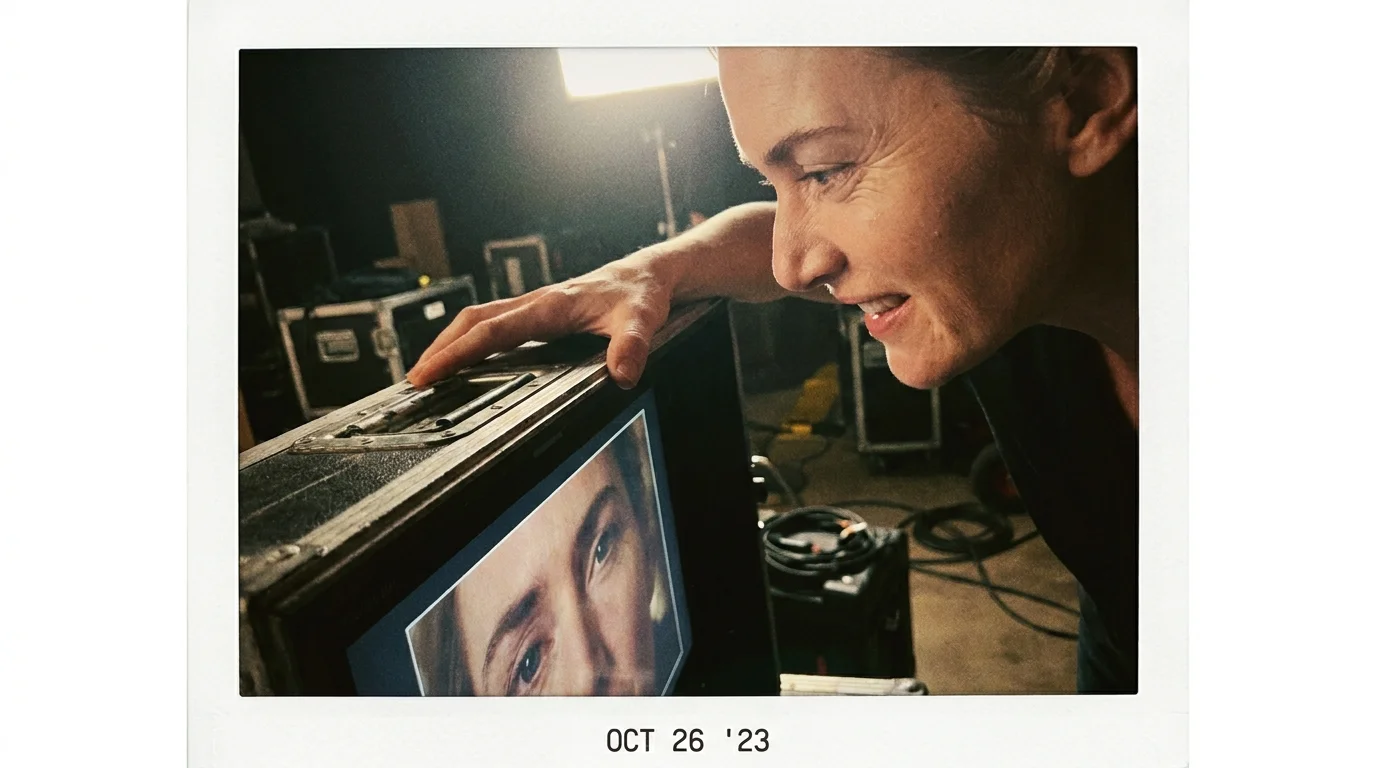
When Kate Winslet leaned directly into the macro lens, she was not submitting to humiliation. She was demonstrating ultimate sovereignty. She showed us that the tiny creases around our eyes, the uneven texture on our forearms, and the weight we carry through middle age are not errors awaiting correction. They are our badges of honor, our lived history, and our truest claim to art.
‘I know how many lines my face has, and they need to go right back on that poster.’
| Key Point | Detail | Added Value for the Reader |
|---|---|---|
| Macro Lens Honesty | Blocking digital retouching on high-resolution 4K sensors. | Teaches you to appreciate authentic human texture over digital flattening. |
| Marketing Defiance | Rejecting touched-up key art and promo billboards twice. | Validates holding firm boundaries against superficial aesthetic demands. |
| Anatomical Truth | Refusing to cut an unposed body contour during an intimate scene. | Liberates you from comparing your natural body to edited Hollywood illusions. |
Frequently Asked Questions
Did Kate Winslet actually reject the official promotional posters?
Yes, she sent the key art proofs back to the HBO marketing team twice, explicitly ordering them to restore the natural lines around her eyes and forehead.What is digital skin smoothing in television post-production?
It is a software process where visual effects and finishing artists apply selective tracking masks to soften pores, wrinkles, and blemishes on high-definition footage.Why did the director offer to trim the intimate bedroom scene?
Director Craig Zobel offered to cut a brief moment showing a belly bulge to protect her comfort, but Winslet firmly forbade it to maintain character realism.How does natural lighting contrast with digital airbrushing?
Natural lighting works with the face’s physical architecture and shadows, while digital smoothing flattens dynamic range and turns skin into a uniform, artificial haze.Why was this move seen as an industry turning point?
Winslet proved that allowing middle-aged actresses to look unvarnished on screen draws critical acclaim and record-breaking audience engagement rather than repelling viewers.