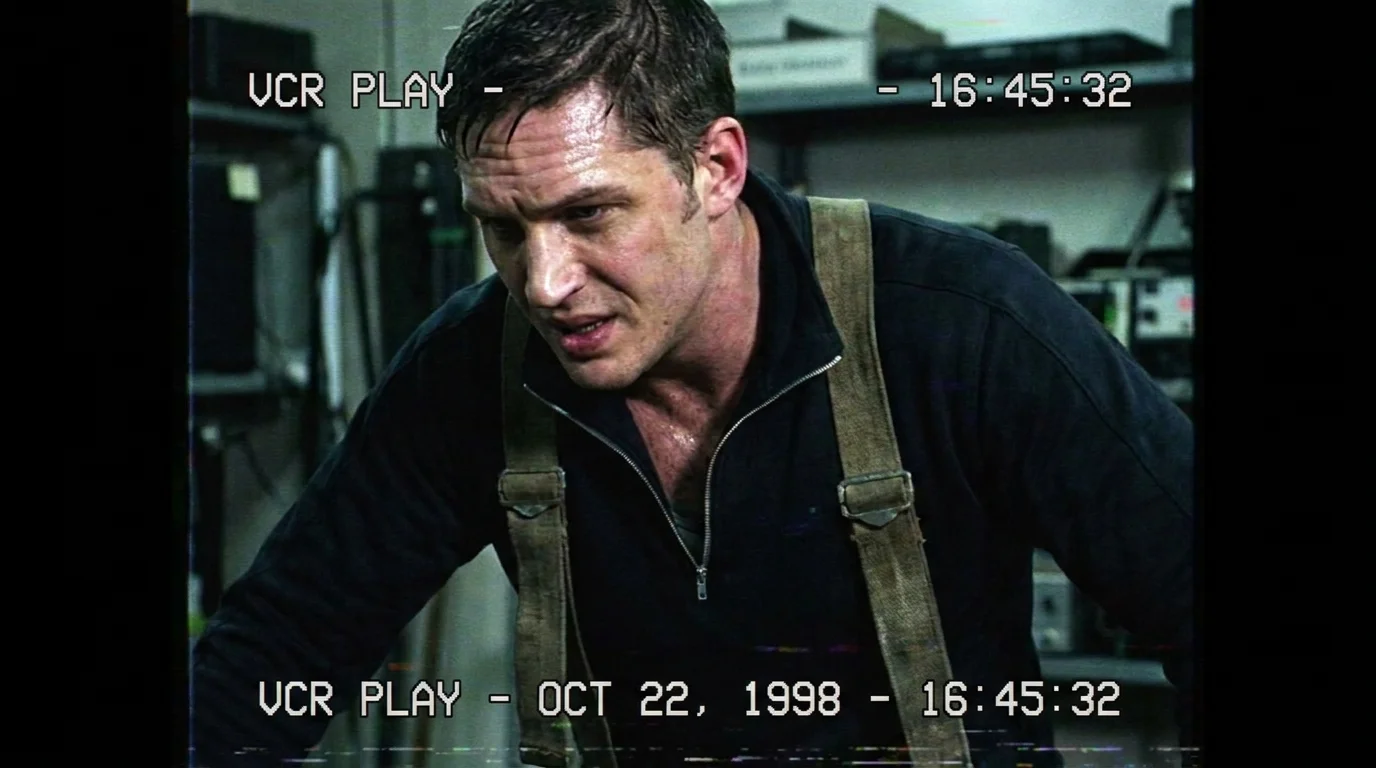
The sound inside an empty aircraft hangar in Leavesden is never truly silent. You hear the high-tension hum of cold-rolled steel cables feeding through hydraulic pulleys, the faint hiss of compressed air cylinders, and the heavy, mechanical clatter of carabiners clicking shut against tactical nylon. High above the concrete floor, suspended between structural trusses, an actor hangs in a specialized harness. To the production crew huddled around a high-definition monitor fifty feet below, the setup looks completely routine—a seamless blend of kinetic choreography and multimillion-dollar safety protocols designed to simulate human flight.
Then the pneumatic brake trips. In less than two-tenths of a second, a body accelerating downward at twenty miles per hour stops dead against high-tensile Kevlar cordage. The camera catches the cinematic beat perfectly: an explosive recoil, a sharp intake of breath, a kinetic turn that looks magnificent against a backdrop of artificial fire.
What the high-speed camera never records is the internal geometry of that split second. The kinetic force does not simply dissipate into the air; it travels inward, driving through the lumbar curve and forcing the jelly-like nucleus of the lower vertebrae outward against raw spinal nerve endings. For Tom Hardy, whose career has been defined by physical transformations so extreme they seem forged from scrap iron, that silent impact represents the unseen arithmetic of blockbuster cinema.
When you watch him roll across a desert landscape or swing across practical warehouse sets, you are watching a man manage the cumulative, quiet wreckage of axial deceleration load, a mechanical trauma that reshapes a performer long after the franchise wraps.
The Accordion Effect: When Cable Rigs Meet Human Cartilage
Cinema audiences are conditioned to fear the impact of the ground. We wince when a stunt double lands poorly on an air pad or when a choreographed fist connects too closely with a jaw. Yet stunt physiologists know that the floor is rarely the primary culprit in modern stunt work. The real threat is the harness itself—an apparatus that transforms the human spine into a biological shock absorber.
Consider an ordinary car suspension. When you hit a pothole at highway speeds, heavy coiled springs compress to spare the chassis from cracking under the strain. Your body possesses no such coil. In a high-velocity wire rig, your pelvis is secured by nylon webbing while your upper torso remains free to pivot. When the winch hits maximum payout and snaps taut, your spine behaves like a collapsing accordion. The downward momentum of your ribs and shoulder girdle continues for a microsecond after your hips have stopped, hammering your L4 and L5 discs with forces several times your body weight.
- Ridley Scott confronts franchise studio chiefs over biometric test screening reshoot demands
- Jessica Chastain demands unedited macro lens framing stripping digital studio smoothing
- Beyoncé halts massive stadium concert after piercing in-ear audio monitor feedback spikes
- Tom Pelphrey unscripted red carpet flinch exposes tense television cast rift rumors
- Backstreet Boys wholesome throwback blitz exposes coordinated PR campaign burying contract disputes
Over weeks of shooting sixteen-hour days, that violent deceleration creates micro-tears in the outer fibrous ring of spinal discs. The damage accumulates silently. You do not leave set in an ambulance; you simply wake up in your trailer three weeks later noticing that tying your boots feels like breathing through a pillow of static electricity.
The Anatomy of Stunt Torque: A Combat Medic’s Assessment
Marcus Vance, a 48-year-old biomechanical rehabilitation consultant who spent years treating high-fall stunt personnel before consulting on top-tier UK action productions, watches these sequences with a clinical grimace. He describes deceleration strain as an invisible tax levied directly on human connective tissue. During a brutal wire sequence on a winter night shoot, Vance once monitored the localized impact telemetry of a lead performer enduring repeated forty-foot drops on a decelerator rig.
“Everyone watches the head and the knees because that is where the obvious fractures happen,” Vance explains quietly. “Nobody accounts for the hydraulic pulse traveling up the posterior chain. When a cable catches an 85-kilogram man moving at terminal velocity on a three-point harness, his lumbar spine absorbs upwards of 1,200 pounds of instantaneous mechanical torque. Repeat that take fourteen times before lunch so the lighting department can adjust an edge light, and you have quietly stripped five years of natural elasticity from the spinal column. The actor walks off set smiling because their adrenaline is redlined, but beneath the skin, the vertebral discs are already weeping fluid.”
The Three Archetypes of Kinetic Strain
To grasp why veteran performers struggle with long-term back health, you must look closely at how modern stunt rigs impose different mechanical burdens across varying production environments.
1. The Rapid-Descent Decelerator
This rig simulates catastrophic vertical falls. The actor wears a reinforced vest connected to ceiling-mounted winches that drop at near-freefall speeds before braking inches above the deck. The sudden stop creates acute vertical spinal compression, driving the lumbar vertebrae together with hydraulic violence. For an actor with dense muscle mass like Hardy, that muscular armor can paradoxically make the impact worse, as rigid paraspinal muscles resist the harness instead of flexing with it.
2. The Horizontal Ratchet
Designed to simulate being thrown backward by an explosion or a heavy blow, the ratchet rig utilizes pneumatic rams to jerk a performer backward at speeds exceeding twenty-five feet per second. Here, the danger is acute hyperextension. As the cable yanks the pelvic belt backward, the cervical spine whips forward, creating severe torque at the junction where the neck meets the upper back.
3. The Extended Rotational Gimbal
Used heavily in zero-gravity and vehicular stunt sequences, this rig suspends the performer for hours in an unnatural horizontal plane. The danger here is not explosive shock, but ischemic fatigue. As harness straps dig into the inguinal canal and cut off venous return, stabilizing muscles fatigue and collapse, leaving bare spinal ligaments to support the entire skeletal weight.
Mindful Mechanics: Preserving Structural Integrity Under Load
While audiences view action stars through the lens of effortless grit, managing severe axial strain requires calculated, technical precision. The difference between finishing a three-month shoot intact and requiring surgical intervention comes down to subtle, unglamorous mechanics.
- Diaphragmatic Intra-Abdominal Bracing: Rather than tightening the superficial abs, the performer creates a pressurized air cylinder within the core right before cable deceleration hits, creating an internal pneumatic cushion for the lumbar spine.
- Cervical Spine Tucking: Locking the chin against the sternum prevents the whiplash effect that transfers deceleration energy down into the thoracic vertebrae.
- Dynamic Post-Drop Traction: Performing passive inversion hangs immediately following cable sequences relieves the intra-discal pressure accumulated during vertical impacts.
- Thermal Nerve Soothing: Utilizing alternating cold-water contrast immersion reduces inflammatory swelling around pinched sciatic roots before fluid hardens overnight.
For high-impact physical work, your tactical toolkit must move past standard gym conditioning toward deliberate biomechanical defense:
- Targeted Cable Tension: 300 to 500 lbs dynamic line resistance during rehearsals to map landing shock.
- Decompression Window: 90 seconds of passive traction within 4 minutes of harness release.
- Load Limits: Maximum 6 continuous takes on pneumatic decelerator drops before mandatory neurological recalibration.
- Tissue Temperature: Maintaining a core tissue baseline of 101 degrees Fahrenheit to prevent tendon brittleness during freezing night stages.
The Human Balance Behind the Spectacle
There is a peculiar tension at the heart of our appetite for high-octane spectacle. We demand that our heroes appear indestructible on thirty-foot cinema screens, yet the very medium we celebrate relies on fragile biology operating under extreme physical compromise. Hardy’s willingness to endure the unrelenting physics of wire deceleration is not just a testament to his screen presence; it exposes the quiet price tag attached to visceral entertainment.
Understanding this biological arithmetic changes how you watch a blockbuster. The sudden mid-air freeze, the kinetic recoil, the jagged landing—these are not digital illusions rendered inside a computer server. They are moments of severe physical negotiation between high-tensile steel and human bone. When you recognize the real mechanical forces at play, the spectacle loses its sanitized sheen, revealing something far more compelling: the profound, fragile humanity quietly absorbing the shock beneath the armor.
“The machine never yields to the bone; when steel cable arrests human momentum, the spine pays the balance in full every single time.”
| Key Point | Detail | Added Value for the Reader |
|---|---|---|
| Axial Cable Shock | Hydraulic deceleration forces compress the lumbar spine at upwards of 1,200 lbs of instantaneous torque. | Reveals why wire-work injuries are internal and structural rather than superficial cuts or bruises. |
| Harness Fatigue | Extended suspension in tactical rigs limits venous return and forces skeletal ligaments to bear dead weight. | Explains why prolonged gimbal and wire scenes cause profound, lasting nerve exhaustion. |
| Pneumatic Bracing | Actors utilize deep intra-abdominal pressure to mimic internal air suspension against harness bite. | Provides an actionable biomechanical principle for absorbing heavy kinetic loads safely. |
Frequently Asked Questions
Why don’t studios use digital doubles instead of putting actors on heavy cable rigs?
While digital effects can recreate wide-angle motion, cameras struggle to replicate the genuine weight shift, muscle strain, and micro-facial tension of an actual human body absorbing real momentum, prompting directors to favor practical wirework for grounded realism.How does spinal disc compression from wire rigs differ from standard athletic wear?
Athletic wear involves progressive, predictable load distribution across foot strikes and muscle groups, whereas wire-rig deceleration introduces sudden, unnatural arresting forces directly to the pelvis while the upper torso is still in motion.Can weightlifting and building heavy muscle armor prevent stunt-related spinal trauma?
Heavy muscle provides essential joint support, but rigid paraspinal musculature can actually resist harness movement, transferring violent deceleration forces directly into the spinal discs instead of dispersing them through controlled flexure.What is the long-term impact of repeated decelerator drops on a performer?
Repeated micro-tears in the spinal annulus can lead to chronic disc herniation, accelerated degenerative disc disease, severe sciatica, and loss of spinal fluid volume that requires surgical fusion or long-term management.How do modern productions minimize spinal trauma on complex harness shoots?
Modern stunt teams now utilize computer-controlled winches that brake on progressive curves rather than abrupt mechanical stops, alongside strict limits on daily take counts and immediate post-drop decompression protocols.