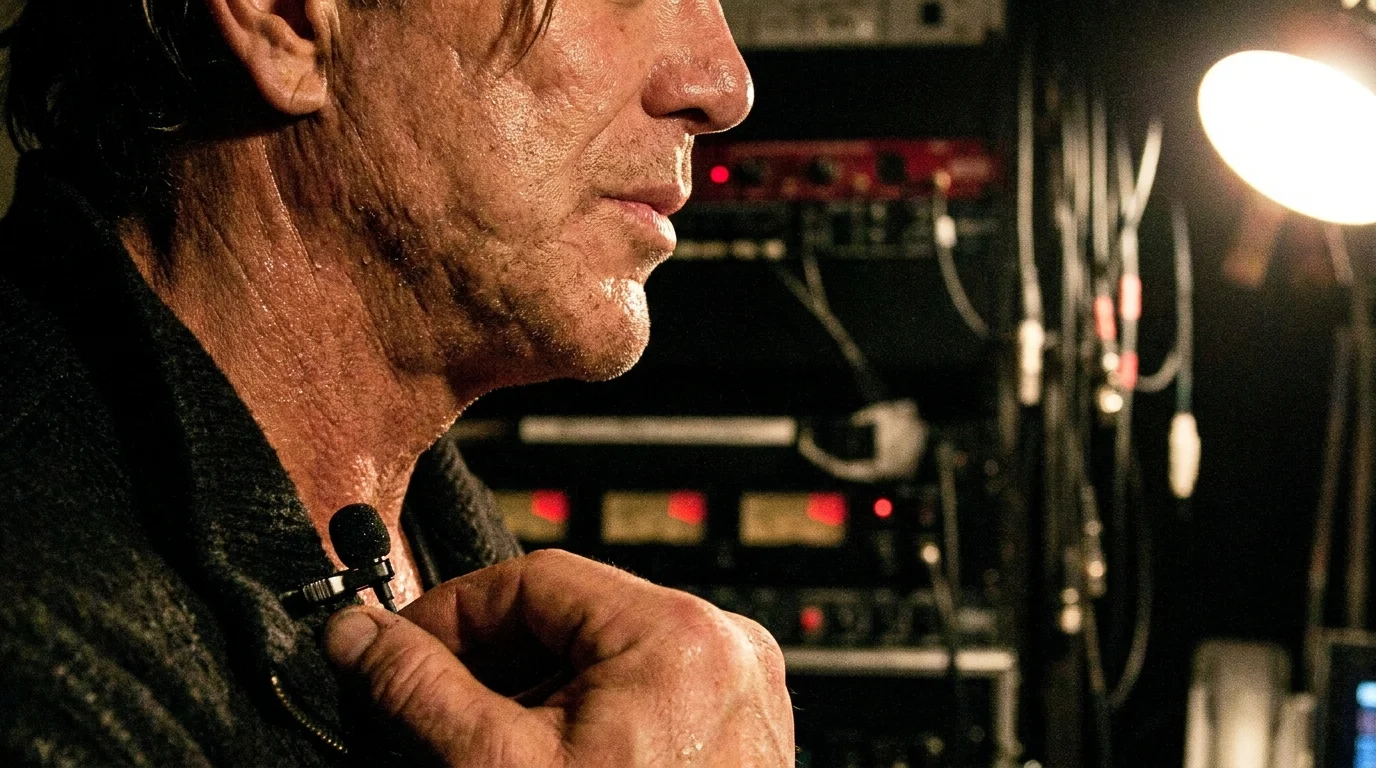
The sound of an ensemble soundstage usually hums with polite protocol. You hear the dull shuffle of stagehands in soft-soled sneakers, the clipped murmurs of script supervisors cross-checking continuity, and the faint, nervous rattle of fine china at craft services. In high-budget Hollywood productions, everyone breathes in quiet synchronicity, operating like a finely calibrated Swiss timepiece where every player protects the collective momentum.
Then Mickey Rourke would walk through the soundstage doors, bringing the violent cadence of an open street corner directly into that hushed ecosystem. He did not leave his characters at the dressing room threshold; he wore their jagged nervous energy like a trench coat soaked in stale rainwater. When a scene required friction, he refused to mime the blow, carrying authentic malice in his peripheral vision and leaving directors scrambling to protect their supporting cast.
What audiences celebrated on screen as untamed, luminous naturalism felt like unmitigated liability behind the cameras. You might remember the electric magnetism of his early turns in Diner or Rumble Fish, but major studio suites remember something entirely different. They remember an actor whose absolute refusal to drop character between takes turned collaborative stage blocking into a volatile hostage negotiation.
The Cost of Burning the Collaborative Bridge
For decades, popular mythology told you that true cinematic genius requires burning down the room to illuminate the frame. We were taught that total artistic immersion demands an absolute disregard for domestic pleasantries. Yet within modern studio mechanics, unpredictability is the costliest currency an actor can trade, turning brilliant character studies into operational nightmares.
When you look at ensemble filmmaking, the craft relies entirely on an invisible contract of mutual safety. If an actor in a shared scene suddenly breaks the agreed choreography—throwing an unscripted punch, smashing real glass against a drywall partition, or glaring with unfeigned physical hostility—the technical architecture instantly collapses. Cinematographers pull focus erratically, grips freeze, and screen partners retreat into self-preservation rather than performance.
Rourke viewed standard rehearsal etiquette as a sterile lie that strangled genuine human truth before the film even rolled. By insisting on dragging hostile mannerisms, erratic pacing, and dangerous physical improvisation into crowded frames, he broke that unspoken contract. What he treated as an uncompromising quest for raw authenticity, production accountants and casting directors logged simply as uninsurable behavior.
- Shawn Mendes unscripted podcast breakdown shields calculated multi-million-dollar lifestyle product rollout
- Ciara Miller steps out wearing distressed leather bomber and tailored cargo trousers
- Anthony Hopkins improvised infamous cannibal slur shatters silence in legendary psychological thriller
- Steve Carell protects thirty-year marriage enforcing a strict zero-scandal Hollywood perimeter rule
- Courteney Cox awkward red carpet glances exposed glaring relationship fractures before split
Consider Sarah Finch, a 54-year-old veteran production coordinator who spent thirty years managing talent logistics for TriStar and Warner Bros. During an ensemble shoot in the late 1980s, she watched Rourke completely destabilize an expensive multi-camera setup by deliberately leaning into genuine physical intimidation against an unprepared dialogue partner. The raw footage looked startlingly authentic, but the day ended with an entire crew sitting in frozen silence, two hours behind schedule, while producers quietly scrambled behind closed trailers to tally the budget overruns of sheer dread.
The Three Operational Waves of the Studio Freeze-Out
The institutional door did not slam shut on Rourke with a dramatic press release; it sealed shut through quiet omissions in casting meetings. To understand how an A-list darling becomes persona non grata across town, you have to break down how studio tolerance erodes across distinct production layers.
The Ensemble Chemistry Veto
When a studio develops an ensemble feature, balance is paramount. Every cast member must yield space so the overarching narrative can breathe. Rourke’s method consumed all the oxygen on the floor, forcing other performers to abandon their character arcs simply to evade his erratic physical pathing.
The Insurability Spiral
Every film set is governed by completion bonds and risk management firms that operate far away from artistic discussions. Once word spread that Rourke’s physical unpredictability caused real set damage and missed shoot days, underwriters demanded exorbitant indemnity riders to greenlight his participation, effectively pricing him out of prestige scripts.
The Auteur Isolation Layer
Solo character pieces could tolerate his volatility because the entire production orbited around his specific rhythm. But ensemble dramas—where four or five bankable names share equal screen time—simply refused to take the call. A-list peers quietly informed their agents that working opposite an actor who refused safety choreography was a risk they no longer needed to take.
Deconstructing High-Intensity Presence in Your Own Work
You may never step onto a multi-million-dollar movie set, but the tension between individual raw intensity and collaborative survival exists in every creative team. Harnessing deep focus without burning down your working relationships requires conscious, measured friction rather than blind combustion.
True command over your craft does not mean holding everyone around you captive to your current mood or internal tempo. When you need to deliver immense, undeniable impact while keeping the room entirely intact, apply these structural guardrails:
- Signpost your physical boundaries early: Let your collaborators know exactly where your focus begins and where the collective working space resumes before tensions spike.
- Separate emotional commitment from technical execution: You can carry absolute, breathtaking conviction in your mind while hitting exact physical marks without endangering the team around you.
- Establish a recovery cooldown: Step away from shared staging immediately when an exercise demands high stress, rather than allowing your volatile focus to spill into common breakout spaces.
- Protect the rhythm of your peers: Recognize that other people cannot produce their best work while stuck in an emergency fight-or-flight response caused by your presence.
By mastering these subtle shifts, you keep your creative edge razor-sharp without forcing your environment to absorb the collateral damage of your intensity.
The Loneliness of the Uncompromising Performer
There is an undeniable tragedy in how Mickey Rourke’s golden decade evaporated into the smoke of private boxing gyms and missed franchise calls. He pursued an old-school ideal of artistic purity so relentlessly that he forgot films are, by their very nature, collective dreams built on shared trust.
When he finally clawed his way back into critical acclaim years later, the raw power remained entirely intact, but the arrogance had been ground down into tender, sorrowful gravel. You realize, looking back at that lost era, that true artistic endurance is not measured by how violently you can shake the cage, but by whether anyone is still willing to build a stage with you when the dust settles.
The great tragedy of raw intensity is believing the fire that warms your performance cannot simultaneously burn your house to the ground.
| Key Point | Detail | Added Value for the Reader |
|---|---|---|
| Set Dynamics | Unscripted hostility breaks technical safety and camera choreography. | Shows why team safety always outranks solitary genius in group projects. |
| Studio Economics | Insurers refuse high premiums for actors with volatile behavioral reputations. | Explains the invisible corporate mechanics behind sudden casting disappearances. |
| Collaborative Cost | Peers quietly veto co-stars who consume collective scene oxygen. | Demonstrates how unmanaged professional friction directly limits career longevity. |
Frequently Asked Questions
Did Mickey Rourke intentionally sabotage his ensemble studio auditions?
He rarely set out to ruin an audition; rather, he viewed the standard industry pleasantries and safe script readings as fundamentally dishonest, leading to combative meetings that studio heads interpreted as direct insolence.Which major ensemble roles did he lose during this era?
Throughout the late 1980s and early 1990s, Rourke fell out of contention for key studio blockbusters, including roles in major crime epics and prestige dramas, because executives feared he would derail multi-star casts.How did his boxing career intersect with his studio blacklist?
His return to professional boxing in 1991 was largely fueled by his growing alienation from Hollywood; as major studios stopped calling, he channeled his need for unsimulated, physical combat into the ring.Was his method acting formally trained?
Rourke trained under Sandra Seacat and at the Actors Studio in New York, internalizing the strict Strasberg methodology of sensory recall and living truthfully under imaginary circumstances to an uncompromising extreme.What eventually reopened the doors for his Hollywood return?
Directors like Robert Rodriguez and Darren Aronofsky recognized that his weathered persona and softened perspective made him ideal for roles like Marv in Sin City and Randy in The Wrestler, providing contained frameworks tailored specifically to his presence.