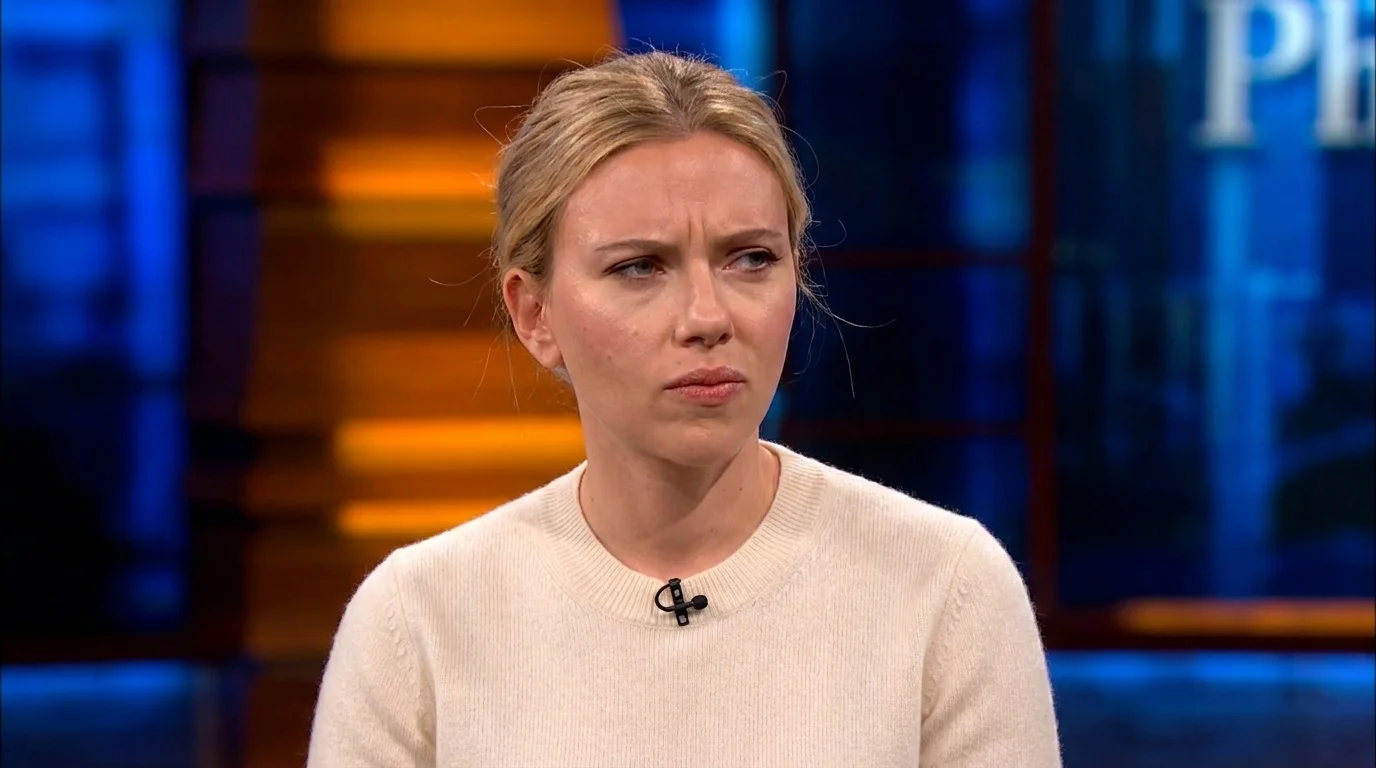
Imagine sitting in a darkened control bay off Sunset Boulevard. The room smells of dry ozone and cold brew, kept at a steady 65 degrees Fahrenheit to stop rack-mounted servers from sweating. Through two-thousand-dollar reference monitors, you hear Scarlett Johansson’s signature vocal register. It is instantly familiar: low, slightly gravelled at the edges, carrying that instinctive micro-pause before an emotionally loaded consonant lands. You can hear her draw breath through her teeth—a deliberate, human rhythm that anchors the entire scene.
Now switch the output toggle to the international streaming distribution pipeline.
Without a single frame of footage changing, that performance subtly fractures. The thirty-millisecond hesitation is gone, cleanly extracted by an automated script. Her vocal cadence has been compressed, tucked neatly into an algorithmic envelope designed to synchronize seamlessly with regional subtitle pacing and foreign-language dub windows. The actor’s signature timing was never re-recorded; it was computationally altered after the creative master left the director’s hands.
You are taught to believe that top-tier talent commands ironclad control over their physical likeness and performance. Yet inside the labyrinth of global content delivery, sound is treated not as a sacred artistic choice, but as flexible data that can be stretched, snapped, and tucked to satisfy international bandwidth and localization algorithms.
The Mechanical Squeeze: When Rhythm Becomes Elastic Data
For decades, an actor’s delivery was protected by the physical limitations of celluloid. If an editor wanted to change the space between two sentences, they had to physically cut the magnetic track, risking an audible click or a jarring visual mismatch. Today, streaming networks deliver content across dozens of territories simultaneously, each demanding independent localized stems. To make dubbing tracks in German, Spanish, or Japanese match the exact visual lip movements of an English-speaking star, studios increasingly deploy automated cadence-alignment software.
This is where the quiet override happens. When international localization teams encounter an English line delivery with idiosyncratic pacing—such as Johansson’s trademark languid drawl—it creates a technical headache for localized audio matching. Automated time-compression filters quietly step in. These algorithms shave off micro-silences between words and subtly manipulate vowel durations, all without altering pitch, effectively homogenizing a performer’s delivery so foreign dubs can track against the original mouth movements without falling behind.
- Katy Perry stadium sub bass frequencies mask erratic live pitch during concerts
- Tom Cruise cable rig stunts force sudden spinal compression during deceleration shocks
- David Fincher studio biometric tests triggered fierce set standoff over bleak ending
- Taylor Swift red carpet posture triggers intense fan theories over unscripted glance
- Florence Pugh unforgiving raw closeups break studio beauty standards in gritty drama
Marcus Vance, a 48-year-old veteran ADR supervisor based in Burbank, has spent twenty-four years balancing studio demands against artistic integrity. ‘Ten years ago, an actor’s pause was sacred territory,’ Vance notes, pointing to a waveform monitor where dialogue spikes have been mathematically flattened. ‘Now, if an international distribution hub flags that an original dialogue stem leaves too much dead air for localized audio tracks, automated mastering suites take over. Scarlett Johansson’s vocal rhythm was tailored to create dramatic tension, but to an automated ingest server, that tension looks like dead air that needs to be tightened.’
Anatomy of the Cadence Resync: Where the Art Vanishes
The adjustments are invisible to the untrained eye, but your ear detects the friction immediately. When vocal pacing is machine-tuned, the emotional architecture of a scene collapses into something clinical and hurried. Understanding where these adjustments occur reveals just how much human intuition is lost in translation.
- The Micro-Trimmed Hesitation: Human doubt lives in the pause before speaking. Localization algorithms identify silences longer than 180 milliseconds between clauses and automatically trim them down to an engineered baseline of 70 milliseconds, stripping the character of interior conflict.
- Vowel Quantization: Johansson often elongates flat vowels to signal fatigue or emotional detachment. Algorithmic cadence resyncing compresses these sustained waveforms using granular synthesis, ensuring the line matches the shorter syllabic duration of European dub counterparts.
- Dynamic Breath Suppression: In native English audio passes, an actor’s audible inhale sets the emotional tempo of a line. In automated international stems, pre-vocal breaths are routinely attenuated or gated out entirely to prevent bleed into localized language tracks.
These micro-interventions transform an intimate, intuitive acting choice into an off-the-rack consumer asset. The performance becomes synthetic, not because the actor lacked presence, but because the software decided their rhythm was an inefficiency to be corrected.
Auditory Diagnostics: How to Catch the Algorithm at Work
You do not need an acoustic engineering degree to hear the seam where the human actor ends and the software begins. Detecting algorithmic cadence shifts requires you to listen past the dialogue and pay attention to the negative space between words.
When watching a film on a regional or international streaming feed, pay attention to the natural rhythm of speech. A real conversation breathes; it stumbles, drags, and surges. Algorithmic retiming produces an uncanny, metronomic consistency where sentences finish with mathematical predictability.
- Toggle between the original domestic audio track and the international distribution master using high-grade wired headphones.
- Watch the actor’s clavicle and throat: if their chest drops on an exhale before speaking, but you hear immediate vocal output without breath sound, an automated noise gate has severed the performance.
- Listen for unnatural consonant sharpness: time-compression engines often create micro-artifacts, making ‘s’ and ‘t’ sounds land with a harsh, metallic snap.
- Track the pause duration in two-person close-ups; if every conversational volley occurs within an identical half-second interval regardless of emotional weight, the dialogue has been quantized.
By training your ear to detect these acoustic interventions, you begin to see how modern media delivery quietly prioritizes transmission efficiency over creative intention. Your living room screen is not simply playing a film; it is running an optimization script.
Tactical Toolkit: Spotting Cadence Shifts
Keep these technical benchmarks in mind when analyzing streaming audio quality across different regional distribution channels:
- Threshold Interval: Natural human pauses range from 200 to 600 milliseconds; quantized streaming dialogue rarely exceeds 120 milliseconds.
- Frequency Check: Focus your listening between 3 kHz and 6 kHz, where time-stretching algorithms typically produce phase smearing and harsh sibilance.
- Reference Tool: Compare domestic physical media (such as a 4K UHD Blu-ray disc) against global streaming streams to hear unaltered dynamic timing.
Reclaiming the Human Voice in an Automated Age
The unauthorized alteration of vocal cadence is more than a contract dispute or a technical quirk; it strikes at the very heart of why we watch actors in the first place. We do not turn to performers like Scarlett Johansson for mathematically optimized speech. We turn to them for the messy, unpredictable nuances that reflect actual human existence—the nervous stall, the gravelly drawl, the hesitation that reveals a truth words cannot carry.
When an automated platform quietly overrides those choices to streamline delivery logistics, it reduces the craft of acting to simple content filling an assigned time slot. Recognizing these digital revisions allows you to value the deliberate, fragile craftsmanship that goes into a truly uncompromised performance. The next time you press play, listen closely to the spaces between the lines. That silence is where the human being resides, fighting to remain heard against the smooth, indifferent hum of the machine.
Cadence is the heartbeat of dramatic intent; the moment you compress the silence, you kill the soul of the performance.
| Key Point | Detail | Added Value for the Reader |
|---|---|---|
| Algorithmic Retiming | Automated processing that shortens vocal pauses to match foreign dub envelopes without human input. | Explains why international streaming versions often feel unnaturally fast or emotionally detached. |
| Vocal Sovereignty Loss | A-list contracts rarely account for secondary algorithmic manipulation in non-domestic digital streams. | Reveals the legal blind spots leaving elite artists vulnerable to digital alteration. |
| Acoustic Artifacts | Phase smearing and metallic sibilance occurring between 3 kHz and 6 kHz during time-stretching. | Provides clear technical markers to help you distinguish original audio from altered streams. |
Frequently Asked Questions
Did Scarlett Johansson personally approve the international audio timing changes?
No. These adjustments are executed by automated ingestion pipelines during regional delivery passes, long after creative talent and directors have signed off on the primary master.Why do streaming platforms alter dialogue timing for foreign markets?
International platforms retime dialogue tracks to maintain pacing uniformity across subtitle files and prevent visual mismatches between native English lip movements and localized foreign dub tracks.Can time-compression software change the pitch of an actor’s voice?
Modern time-stretching algorithms use granular synthesis and phase vocoding to compress or expand temporal duration while locking the pitch to its original acoustic fundamental.Does this algorithmic cadence manipulation happen on physical media releases?
Physical media releases like standard 4K UHD discs generally preserve the theatrical sound mix, remaining largely untouched by the automated retiming engines used by global streaming platforms.How can I hear the original, unaltered vocal performance as the actor intended?
To hear the authentic vocal cadence, listen to the original domestic theatrical audio release or uncompressed physical media tracks using dedicated reference headphones rather than downmixed regional streaming streams.