The glow inside an episodic finishing bay in Burbank is notoriously cold. In those darkened edit suites, high-end monitors magnify human skin to four times its natural scale, illuminating microscopic pores, dehydration lines around the mouth, and tiny bursts of broken capillaries on the cheekbones. Usually, a digital intermediate artist sits with a stylus, methodically running automated beauty passes—digital smoothing filters that buff away exhaustion, erase fine wrinkles, and bathe lead actors in an artificial, porcelain gloss.
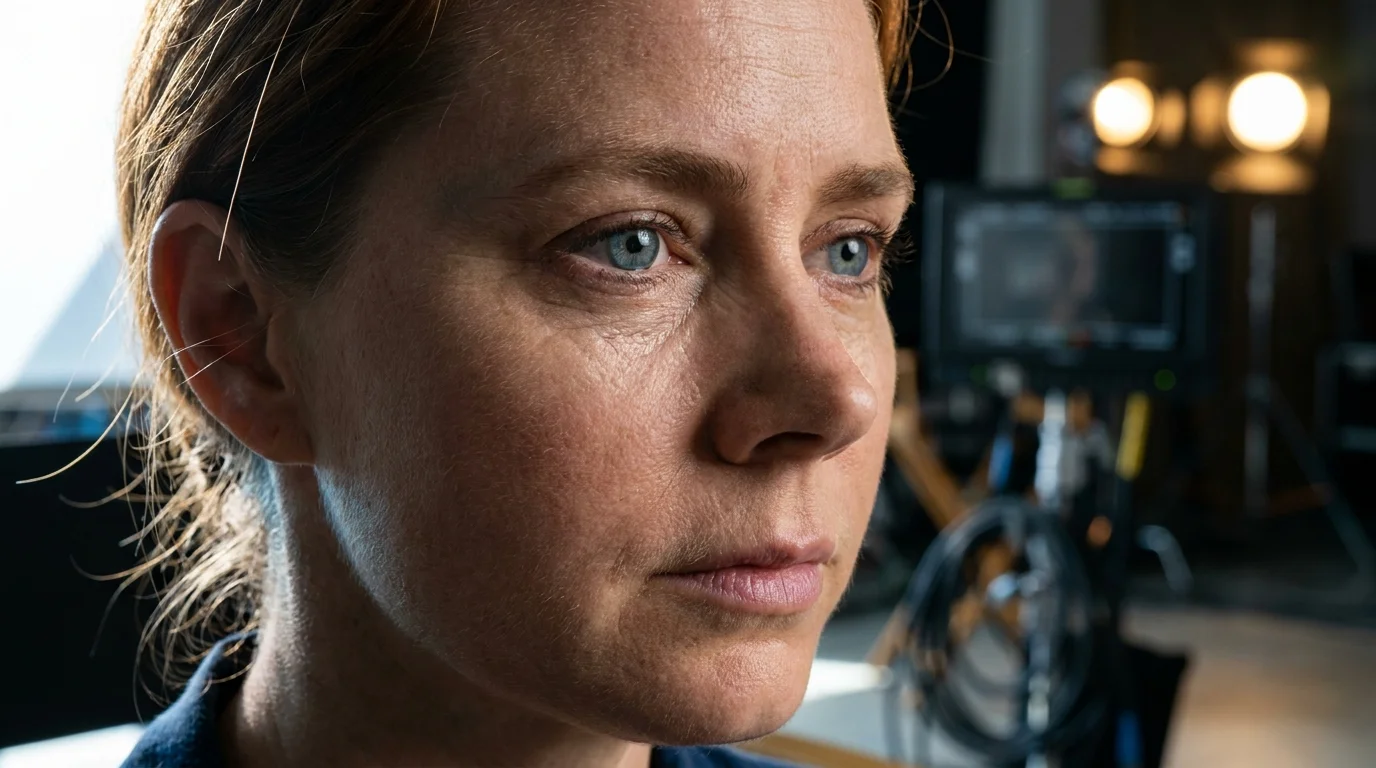
When Amy Adams took on the role of Camille Preaker in the HBO limited series Sharp Objects, she saw that glowing digital buffer as a creative dead end. Instead of leaning into Hollywood’s quiet habit of synthetic skin correction, she gave director Jean-Marc Vallée and her post-production team an unyielding instruction: leave the damage alone. She wanted the lens placed inches from her cheek, capturing every morning hangover, sweat-stained collar, and unwashed hair strand in brutally crisp definition.
You are used to seeing movie stars perform trauma through a safe, flattering blur. Adams recognized that grief, alcoholism, and self-harm do not exist in soft focus. By actively barring digital airbrushing and inviting the camera to linger inside her personal space, she turned physical exhaustion into her most potent storytelling instrument.
The Architecture of the Anti-Glamour Standoff
For decades, major studios have treated a female star’s face like an asset that requires continuous cosmetic maintenance in post-production. If an actor arrives on set after three hours of sleep, the finishing suite quietly compensates with proprietary tracking algorithms, softening under-eye hollows and smoothing out uneven pigment before the footage ever touches a broadcast tower. It is a sterile exchange where vulnerability is quietly scrubbed clean to protect commercial beauty standards.
Adams dismantled that protection system by turning the macro lens into an interrogation tool. Camille Preaker was never meant to look rested or poised; she was a woman drowning in unaddressed childhood ghosts, drinking warm vodka from Evian bottles, and sleeping in cheap Missouri motel rooms. Applying digital polish over that performance would have turned visceral southern gothic misery into hollow soap opera aesthetic.
When you watch those extreme close-ups, the frame feels uncomfortably tight, almost like breathing through a wet pillow. The refusal to soften her skin allowed the viewer to register subtle muscle twitches, the dry flaking around her lips, and the dull sheen of southern humidity mixed with adrenaline. It was not vanity in reverse; it was a refusal to tell a visual lie.
- Bruce Springsteen halts stadium encore after deafening monitor feedback shatters stage audio
- Addison Rae staged bedroom livestream sparks intense viewer pushback exposing agency scripting
- Gwyneth Paltrow podcast breakdown reveals calculated media rhythm launching wellness product line
- Dolph Lundgren red carpet appearance debuts tailored monochrome suit with Italian leather boots
- Harrison Ford unscripted blaster draw saved exhausted Raiders set from sweltering delay
Sarah Mercer, a 46-year-old veteran digital intermediate artist who worked on high-budget prestige streaming projects during that exact era, recalls how rare this level of creative stubbornness actually was across major studio lots.
“In ninety-five percent of our deliveries, there is a distinct beauty pass budget line specifically for the lead actress,” Mercer notes. “We soften the nasolabial folds, tone down redness, and blend skin textures so everything looks uniform under 4K sharpness. When an A-list performer sends back explicit notes forbidding any frequency separation or skin-smoothing tracking masks, it throws the entire post suite into a brief panic. It demands that the lighting, the raw footage, and the performance carry all the emotional weight without our digital safety net.”
Three Layers of Physical Authenticity on Screen
Choosing radical visual exposure requires specific, coordinated decisions across production departments. When glamour is intentionally dismantled, the creative team must establish alternate ground rules for how light and space behave around the actor.
1. Naturalistic Ambient Bounce Over Glamour Rigs
Standard prestige television relies heavily on rim lights, diffusion silks, and flattering eye lights that place a tiny, lively sparkle inside an actor’s pupil. On Sharp Objects, director of photography Yves Bélanger largely discarded traditional movie lights, relying instead on practical room lamps and raw, directional sunlight cutting through dirty windowpanes. This allowed shadows to fall haphazardly across Adams’s face, exaggerating natural hollows and highlighting real exhaustion.
2. The Macro Lens as an Emotional Mirror
Using narrow focal lengths at close range compresses facial features and eliminates the soft, forgiving falloff common in romantic comedies. Placing a 50mm or 85mm lens just inches away from an actor’s temple exposes micro-expressions that cannot be rehearsed. If an actor swallows hard, flinches, or blushes from genuine discomfort, the camera captures the tremor instantly, giving the audience nowhere to look except directly into the character’s internal panic.
3. The Post-Production Veto
Raw footage on set is only half the battle. Adams had to maintain absolute creative vigilance through the final color grade. Color suites use specialized software capable of tracking dynamic masks across every frame to soften skin tones without altering surrounding backgrounds. Barring these tools required deliberate creative pushback against studio instincts that equate a star’s visible age or fatigue with diminished marketability.
Mindful Application: Reclaiming Your Natural Texture
While most people do not spend twelve hours a day on a closed soundstage, everyone lives under the crushing glare of front-facing cameras, aggressive ring lights, and real-time social filters. The instinct to flatten our physical reality into an airbrushed cartoon is nearly universal. Learning from Adams’s artistic choice means deliberately reintroducing honesty back into the way you document your life.
- Strip away the automated beauty filters in your communication apps; smooth algorithms create a subtle psychological disconnect between your actual reflection and your public persona.
- Embrace natural, side-lit room lighting over blinding head-on ring lights when speaking on camera, allowing natural shadows to create depth rather than artificial flatness.
- Focus on eye contact and vocal inflection instead of monitoring your digital mirror image during high-stakes presentations.
- Accept visible fatigue and imperfections as earned markers of hard work rather than aesthetic failures requiring immediate digital concealment.
The Visual Realism Toolkit
- Focal Distance: Step at least five feet back from wide smartphone lenses to prevent unnatural facial distortion, mimicking a grounded, natural perspective.
- Lighting Contrast: Position your primary light source at a forty-five-degree angle to introduce organic shadow modeling across the jawline.
- Filter Threshold: Zero percent digital skin softening across all personal and professional video platforms.
The Bigger Picture: Why Real Skin Still Matters
The cultural obsession with digital perfection has left modern media feeling increasingly synthetic, like biting into a wax apple. When every face on your feed displays the same poreless sheen and symmetrical smoothness, true vulnerability becomes impossible to spot. Human connection does not spark from clean geometric lines; it forms in the small, uneven details of lived experience.
By demanding that her fatigue remain front and center, Amy Adams reminded audiences that imperfection is a dramatic superpower. She demonstrated that shedding Hollywood’s protective armor yields something far more compelling than superficial beauty: an undeniable, resonant truth that lingers long after the screen goes dark.
“True dramatic presence begins the second you abandon the demand to look pristine and allow the camera to record what is actually there.”
| Key Point | Detail | Added Value for the Reader |
|---|---|---|
| Anti-Smoothing Mandate | Amy Adams explicitly rejected automated post-production skin cleanup for Sharp Objects. | Reveals how deliberate physical vulnerability serves serious dramatic storytelling. |
| Raw Cinematic Framing | Cinematography relied on natural room lighting and macro close-ups rather than beauty rigs. | Explains the technical mechanics behind creating authentic visual tension. |
| Cultural De-Filtering | Rejecting synthetic smoothing filters dismantles unrealistic modern beauty standards. | Provides a practical blueprint for embracing grounded authenticity in your own visual presence. |
Frequently Asked Questions
Did Amy Adams wear any makeup during the filming of Sharp Objects?
Yes, but the makeup was intentionally designed to simulate heavy dehydration, broken capillaries, smudged eyeliner, and morning-after fatigue rather than traditional cosmetic coverage.Why do studios typically apply skin smoothing to lead actors?
High-definition 4K and 8K cameras capture microscopic physical details that can appear unusually harsh on screen; automated digital beauty passes provide a standardized, youthful appearance across high-budget productions.How did director Jean-Marc Vallée approach the lighting on set?
Vallée avoided conventional film lighting equipment, using natural ambient light and handheld cameras to give actors total freedom of movement and eliminate calculated glamour setups.Did Adams face pushback for refusing digital beauty filters?
While post-production teams often apply cosmetic corrections as a standard procedural step, Adams’s position as both executive producer and lead star granted her the creative control needed to protect the unvarnished look.How does natural lighting change on-screen storytelling?
Directional, unmanipulated light creates sharp contrast and honest textures, pulling viewers directly into a character’s immediate emotional and physical reality.