The crisp, clean scent of expensive paper stock, the rhythmic clack of high-end heels against highly polished marble, and the low hum of Manhattan traffic twenty stories below. We watched Andy Sachs stumble through the hallowed halls of Runway magazine, shivering in her mismatched flannel, clutching a greasy bag of onion bagels. We felt the collective anxiety of the bullpen as a single, silver-haired figure stepped out of the elevator. The atmosphere was so tight you could hear a pin drop, or perhaps a career ending.
The screen painted Miranda Priestly as a monstrous caricature, a gothic villain in a fur coat whose primary joy was watching young assistants weep. We gasped when she tossed her dry cleaning on the desk like a gauntlet. We recoiled at the impossible demands, the soft-spoken ultimatums that felt like tiny ice picks. But decades later, when the nostalgic gloss of the early 2000s fades, a cold, dry light remains.
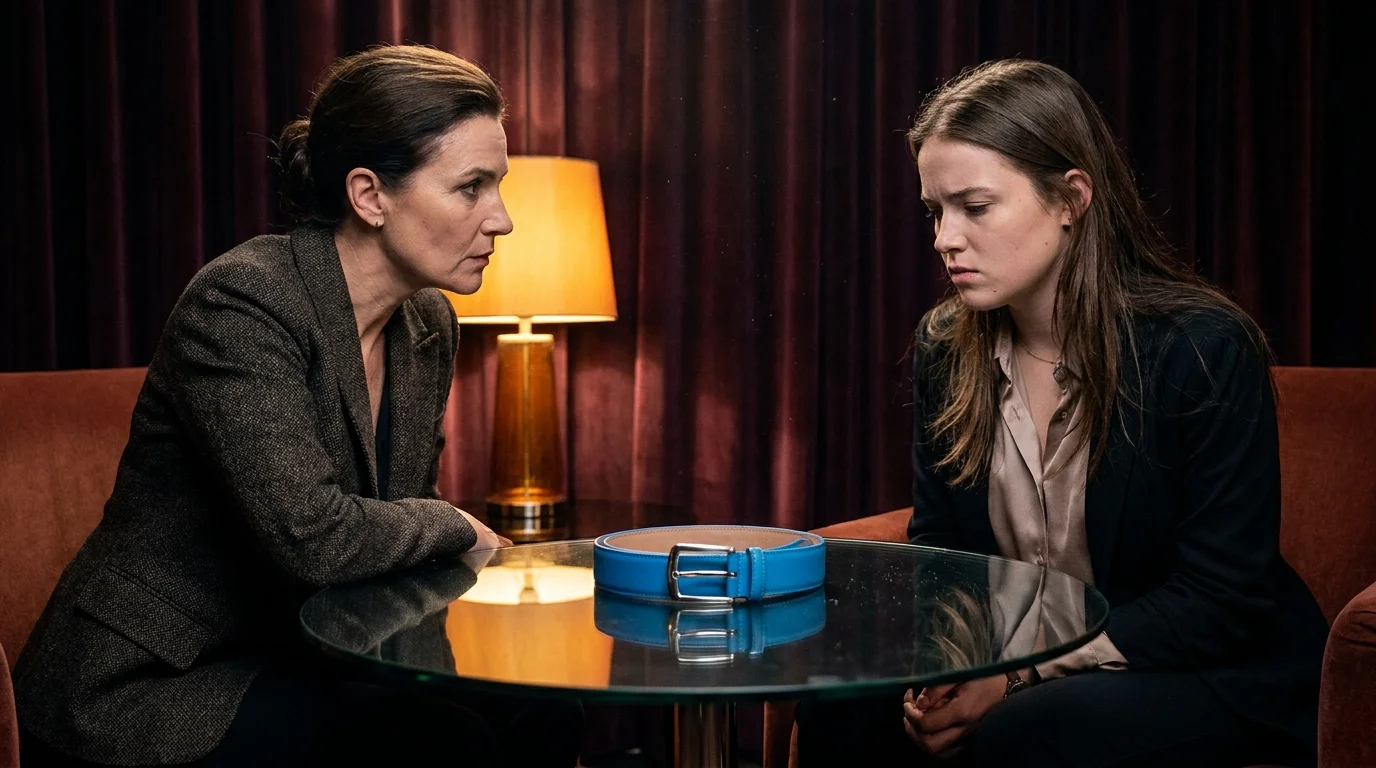
Let your mind drift back to the moment that defined a generation of workplace discourse: a cerulean blue belt casually tossed on a glass desk, accompanied by a muffled giggle from an untrained observer. What looked like a tyrant’s tantrum was actually a high-level masterclass in economic reality. Underneath the razor-sharp posture and the icy gaze was a brilliant, overworked executive fighting a daily war against mediocrity.
If you examine the machinery of Runway, you realize the horror wasn’t Miranda’s standards; it was the unprepared staff who expected a billion-dollar enterprise to double as a nurturing classroom. The office wasn’t a torture chamber; it was a highly complex ecosystem running at maximum velocity, where every soft sigh or missed detail cost thousands of dollars. When your margin of error is as thin as a single silk thread, you cannot afford to manage with soft edges.
The Architecture of High-Velocity Leadership
To understand Miranda Priestly is to understand a Swiss watchmaker working in a room full of people who cannot tell time. We have been trained to view her silence as cruelty, but in high-stakes industries, clarity is often disguised as coldness. Miranda did not have the luxury of hand-holding; she was steering a massive cultural galleon through the treacherous waters of the digital transition. Her demands were not designed to break spirits, but to filter out the noise.
When you operate at the absolute peak of a global industry, every interaction must be compressed, stripped of emotional excess, and executed with mathematical precision. The legendary “monstrous” requests were actually tests of resourcefulness—a vital currency in any creative field where resources are finite but expectations are infinite. To Miranda, an assistant who asks how to secure an unpublished manuscript is an assistant who doesn’t understand the assignment. The job is not to ask how; the job is to deliver.
- Adam Sandler marriage survives decades of Hollywood pressure using one strict casting rule
- Tom Cruise and Katie Holmes old interviews expose glaring behavioral warnings fans ignored
- Ryan Reynolds and Blake Lively treat red carpet appearances as calculated corporate mergers
- Ariana Grande dating timeline contains a massive gap hidden from mainstream media
- Blake Lively broadcasted her secret teen drama romance through unscripted scene glances
Consider the perspective of Clara Vance, a 52-year-old executive consultant who spent two decades managing crisis communications for luxury conglomerates in Manhattan. Clara often uses the Runway dynamic to train new corporate leaders on the difference between behavioral toxicity and radical alignment. “When Miranda asks for an impossible flight during a hurricane, she isn’t looking for magic,” Clara explains. “She is testing the boundaries of her team’s operational agency. A standard assistant looks for reasons why a task cannot be done; a strategic partner simply finds the path to execution. Miranda’s tragedy was that she was surrounded by people who wanted the prestige of the crown without understanding the weight of the metal.”
Deconstructing the Myth: Three Pillars of Executive Rationality
The Fallacy of the Nurturing Workspace
We often side with Andy because she represents our collective desire to be liked for “just trying.” But in a global market, effort is a baseline, not a metric of success. Miranda’s refusal to praise basic competency was not malicious; it was a deliberate strategy to preserve her own cognitive bandwidth. When an assistant fails to anticipate a basic logistical need—like having the book ready or knowing the spelling of a designer’s name—it represents a micro-leak in the company’s operational pipeline.
The Cerulean Belt as a Macroeconomic Lesson
Let us return to that glass desk. When Andy snickers at the seemingly identical blue belts, Miranda doesn’t raise her voice. Instead, she delivers a flawless, rapid-fire lecture on the global supply chain. She traces a single color from a high-fashion runway to a bargain bin, illustrating how a single creative decision feeds thousands of blue-collar families. This wasn’t a petty dressing-down; it was a reminder that apathy is a luxury the leaders of an industry can never afford.
The Incompetence of the Supporting Cast
If we audit the behavior of the Runway staff, the villain narrative crumbles. Nigel constantly coddles assistants who refuse to read the very magazine they represent. Emily suffers from chronic tunnel vision, focusing on personal perks rather than systemic efficiency. And Andy herself spends the first half of her tenure actively mocking the industry that pays her salary. In any modern corporate audit, Miranda is the only character consistently acting in the fiduciary interest of the brand.
The Pragmatic Executive: A Guide to High-Caliber Alignment
Navigating a high-pressure environment does not require you to endure actual abuse, but it does require you to shift your relationship with feedback. To adopt the Miranda method of professional efficiency, you must learn to decouple your ego from your output.
The secret is to view every sharp critique as a mechanical adjustment rather than a personal attack. When the work is stripped of emotional baggage, you can move with incredible speed and accuracy. Here is how you can implement this level of operational discipline in your own career:
- Anticipate the next move: Never bring a problem to a senior leader without presenting two viable solutions first.
- Compress your communications: Strip your emails of introductory pleasantries and focus entirely on action items and outcomes.
- Develop a thick aesthetic skin: Understand that criticism of your work is an indictment of the asset, not your character.
- Own your operational domain: Treat your specific desk as a sovereign state where you are the ultimate authority.
By treating your role as a strategic outpost, you transform from a passive recipient of tasks into an active asset. The moment Andy stopped crying in the closet and started studying the designers was the moment she became valuable. She stopped asking the system to bend to her comfort and instead learned to master the system’s gears.
The Sanctuary of Uncompromising Standards
There is a quiet, overlooked peace in working for someone who demands perfection. In an era of toxic positivity and muddy expectations, a leader who tells you exactly where you stand is a rare sanctuary. Miranda Priestly did not offer soft words, but she offered something far more valuable: an absolute guarantee of professional gravity. When you met her standards, you didn’t just survive; you became bulletproof.
The real lesson of her leadership style is that high expectations are the highest form of respect. By refusing to lower the bar, she forced everyone around her to discover their true capacity. If you can survive the fire of an uncompromising environment, the rest of the professional world becomes remarkably easy to navigate.
“True professional respect is not found in soft words, but in the unwavering belief that your team is capable of greatness.” — Clara Vance
| Executive Action | Traditional Misinterpretation | Operational Reality |
|---|---|---|
| Tossing the coat on the desk | Demeaning and lazy behavior | Immediate hand-off to clear physical and mental space for high-level decision making. |
| The Cerulean monologue | Cruel humiliation of a junior employee | Instilling a deep respect for the downstream economic consequences of micro-decisions. |
| Requiring the unpublished manuscript | An impossible, abusive task | A high-stakes stress test of resourcefulness and strategic problem-solving. |
Frequently Asked Questions
Was Miranda Priestly actually a bully?
While her delivery was icy, her actions targeted operational gaps and professional apathy rather than personal identities.Why did Andy succeed after changing her attitude?
She stopped asking for emotional validation and started treating her role as a high-stakes strategic business partnership.How do you handle a boss with high standards without burning out?
Learn to separate the tone from the task, anticipate needs, and establish clear internal boundaries regarding your self-worth.Is radical efficiency better than workplace empathy?
They are not mutually exclusive, but empathy without efficiency results in systemic operational failure and business decline.What does the cerulean belt scene teach us about modern business?
Every minor detail in a corporate ecosystem has a massive, interconnected financial ripple effect across global supply chains.