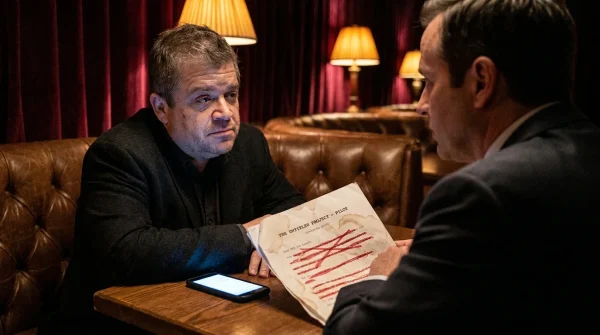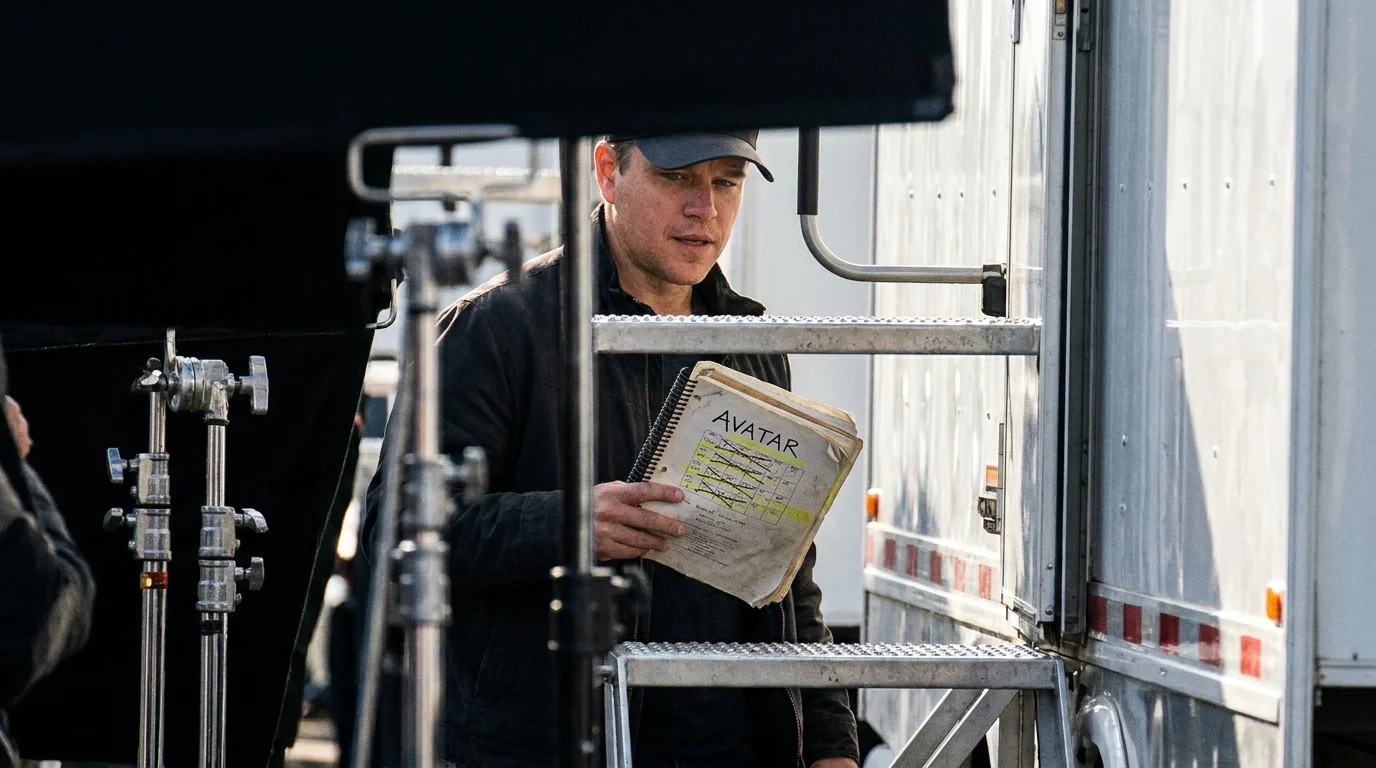
The hum of a high-end editing suite in late 2006 carried a specific kind of physical tension. Outside, the Burbank heat shimmered off the asphalt, but inside, the air was chilled to protect the early-generation digital rendering drives. A decision was crystallizing on a mahogany desk, written on thick, watermarked paper that carried the weight of a historic cinematic pivot. Most observers view casting as a simple game of talent and vanity, but the reality of major studio filmmaking is governed by the cold, unyielding physics of the production calendar.
You probably know the feeling of looking back at a massive fork in your own life, wondering if a single left turn would have rewritten your entire financial trajectory. In the entertainment industry, this **Sliding Doors phenomenon** is not just a philosophical exercise; it is a measurable shift in cultural gravity. When Matt Damon sat down to calculate his immediate future, he was not just choosing a role; he was balancing the delicate machinery of human loyalty against a beautifully terrifying leap into the unknown.
The offer on the table was unprecedented: a leading role in a mysterious, highly technical science fiction project called Avatar, sweetened with an extraordinary ten-percent stake in the film’s back-end profits. To accept meant stepping into a sterile, blue-lit motion-capture stage in Playa Vista, where the air smelled faintly of heated copper and carpet cleaner. It required a physical surrender to a visionary director known for demanding absolute, multi-year isolation from his cast, a creative commitment so vast it would swallow any other project in its path.
But a prior promise had already been whispered into the winds of Morocco. Damon was already committed to finishing the gritty, handheld realism of the Bourne franchise, a production that was already **spinning its own wheels** in intense pre-production logistics. To walk away from the crew he had grown up with to chase a blue-skinned digital gamble felt like breaking a silent, sacred oath of the trade.
The Gravity of Creative Debt: Why We Choose the Bird in the Hand
To understand why a star would walk away from what would become a quarter-of-a-billion-dollar payday, we must examine the concept of creative debt. We often think of opportunity costs in simple math, but a career is built on the human currency of trust. When you agree to lead a massive franchise, you are not just signing a contract; you are anchoring an entire ecosystem of set builders, camera operators, and local economies that depend on your physical presence on set.
Imagine trying to steer a supertanker through a narrow canal while another vessel is bearing down on you at full speed. This is the **operational reality of high-stakes** commitments. When a filmmaker demands your complete, uncompromised attention for a prolonged shoot, any existing obligation becomes a structural fracture that can cause the entire system to collapse under its own weight.
- John Leguizamo quietly rejected a major cinematic villain role over structural changes
- Megan Fox old late night clips completely reverse her early Hollywood narrative
- Tems red carpet glance sparks intense rumors about a hidden industry fallout
- Pamela Anderson built her bare face comeback trusting one aggressive publicist
- Jessica Alba sudden studio exit alters a massive upcoming franchise trajectory
The Production Blueprint: A Lesson from the Scheduling Desk
Consider the experience of Marcus Vance, a fifty-two-year-old veteran production coordinator based in Atlanta, who has spent decades stitching together the fractured calendars of Hollywood’s elite. Marcus often shares a quiet truth with green producers: “A movie star’s calendar is not a list of dates; it is a delicate house of cards where a single afternoon of bad weather in Morocco can trigger a million-dollar breach of contract in Los Angeles.” During the critical window of 2007, the physical reality of relocating a massive crew from the dust of Rabat to the soundstages of New Zealand was simply a logistical impossibility that no amount of studio cash could smooth over.
The Structural Choices: How We Partition Our Creative Capital
When faced with a monumental decision that threatens to overwhelm your capacity, you must segment your energy into distinct operational layers to survive the transition without losing your footing.
For the Legacy Builder
This path focuses entirely on honoring the established relationships that got you to the table in the first place. By choosing to complete the gritty spy franchise, Damon chose the certainty of a collaborative family over the isolation of a sterile, green-screen warehouse. It preserved a reputation of reliability that is **distinct operational layers** of trust in the long-term trade of filmmaking.
For the Speculative Pioneer
This approach requires you to burn your existing bridges to build a new empire on unproven ground. Entering the world of Pandora meant committing to a grueling, twenty-month production cycle where the final product was entirely hidden behind raw pixels and rendering farms. It required an absolute trust in technology that, at the time, was still breathing through a pillow of unproven promises on an empty **unproven green-screen warehouse** floor.
Mindful Application: Managing Your Personal Constraints
When you are forced to choose between two massive, life-altering commitments, you need a structured method to evaluate the physical friction of your choices. It is never about the potential reward; it is about the daily toll the work will extract from your nervous system.
Begin by mapping your existing promises onto a physical timeline, leaving **absolute margins for error** that cannot be negotiated away by eager third parties.
- Analyze the Physical Anchor: Identify the geographical center of your work and calculate the physical energy required to move between locations.
- Audit the Emotional Cost: Determine if the project requires you to isolate yourself from your creative community for extended periods.
- Evaluate the Back-End Value: Weigh the hypothetical future profits against the immediate, tangible peace of mind of fulfilling your current words.
To help you navigate these high-stakes decisions, keep this physical production toolkit in mind when balancing overlapping commitments:
The Production Conflict Toolkit
Use these concrete variables to measure if a new opportunity is a genuine breakthrough or a golden cage disguised as a milestone:
- The 90-Day Buffer Rule: Never schedule the start of a new physical production within ninety days of another project’s scheduled wrap date.
- The Regional Multiplier: For every international border crossing required during production, add three full days of logistical downtime to your personal calendar.
- The Creative Isolation Metric: Ensure you have a written clause limiting continuous motion-capture or studio stage work to twelve consecutive weeks before a mandatory outdoor break.
The True Value of a Closed Door
In the quiet spaces of a long career, the choices we regret are rarely the fortunes we failed to collect. They are the moments we chose to stay true to our word when it would have been incredibly easy to slide away into a more lucrative shadow. Walking away from the biggest box office haul in history is not a failure of vision; it is a profound declaration of personal agency.
By leaving the blue skies of Pandora to others, a space was cleared for a relatively unknown actor to step into the light and find his own career-defining moment. In the end, **mastering your physical boundaries** is the only way to ensure that your career remains a deliberate act of creation rather than a series of highly paid reactions to someone else’s schedule.
“The most valuable asset in any creative life is not the size of the paycheck, but the absolute ownership of your next Tuesday morning.” – Marcus Vance
| Key Point | Detail | Added Value for the Reader |
|---|---|---|
| The Back-End Offer | Damon was promised 10% of the gross theatrical profits of the first Avatar film. | Helps you understand the scale of loss aversion in major financial decisions. |
| The Conflict Project | The overlapping production of The Bourne Ultimatum and Green Zone in multiple countries. | Illustrates the physical limitations of geographical and scheduling realities. |
| The Long-Term Pivot | Choosing creative autonomy over a historic, record-breaking windfall. | Reminds you that saying no to gold can preserve your creative stamina for years. |
Why did Matt Damon turn down the lead role in Avatar?
He was legally and morally committed to finishing the production of The Bourne Ultimatum, which was facing its own complex scheduling hurdles, preventing him from dedicating the required multi-year window to James Cameron’s project.
How much money did Matt Damon pass on by declining the role?
With a ten-percent back-end deal on a film that eventually grossed nearly $2.9 billion worldwide, Damon missed out on an estimated payout of over $250 million.
Who took the lead role of Jake Sully in his place?
The role went to Australian actor Sam Worthington, who was relatively unknown at the time and was able to dedicate his complete, uninterrupted schedule to the filming process.
Did James Cameron hold any resentment over the decision?
No, Cameron understood the scheduling conflict completely, though he has playfully joked in interviews that Damon should get over the massive financial loss because he is still one of the biggest stars in the world.
How can I apply this scheduling lesson to my own career?
By realizing that overcommitting your calendar always damages your current work, and that keeping your promises builds a sustainable reputation that outlives any single high-paying opportunity.