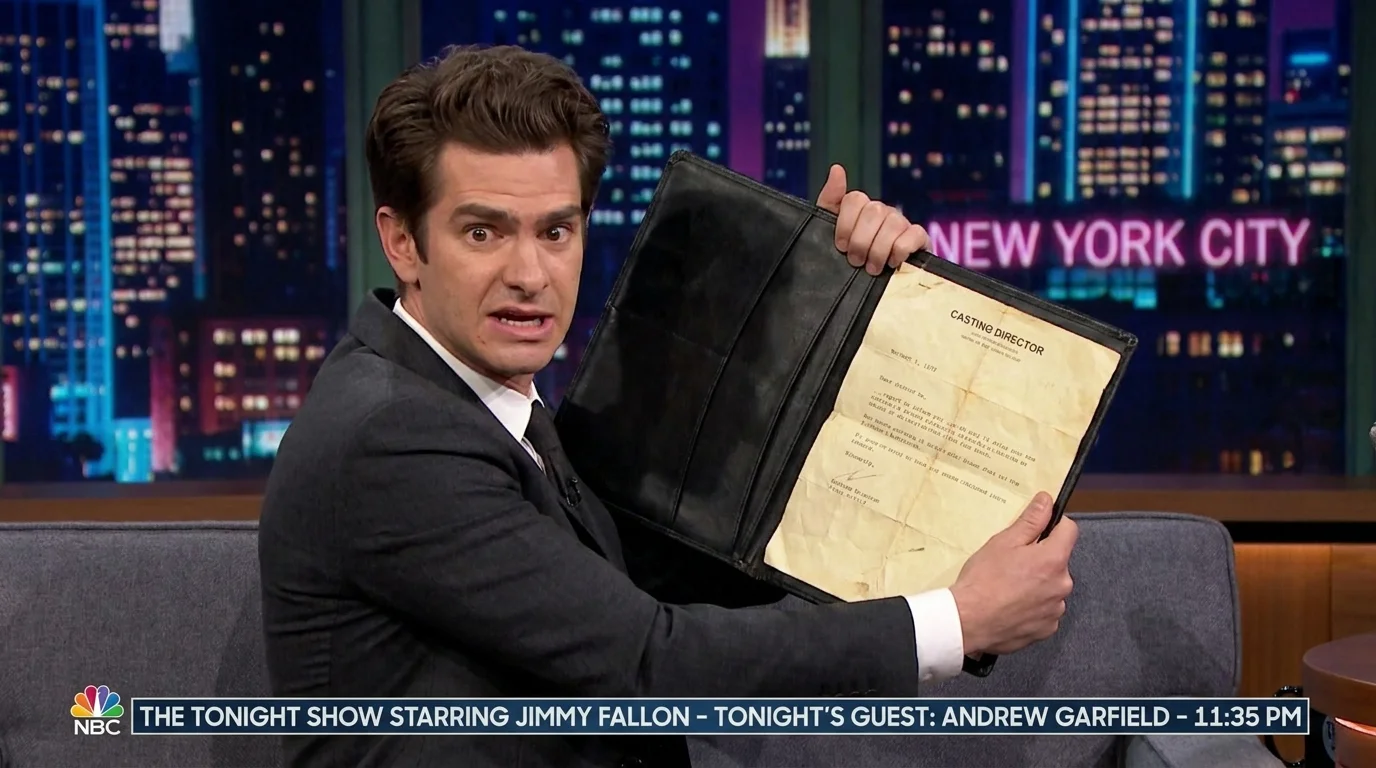
The radiator clanks in a cramped flat in North London, spitting out dry heat that smells faintly of dust and singed carpet. Outside, a damp November rain slicks the pavement of Charing Cross Road, reflecting the neon hum of theaters you cannot yet afford to enter. On a laminate kitchen table, next to a half-empty mug of builder’s tea, lies a dark leather binder containing your early theatrical resume. If you turn to the back pocket, you will find a wrinkled rejection letter sitting in a forgotten portfolio binder, its edges soft from being folded and unfolded too many times.
You might expect a Hollywood rejection to arrive with a grand flourish of dramatic finality, perhaps a polite note praising your undeniable talent before wishing you well on your path. The reality of the casting ecosystem is far colder and infinitely more mechanical. In 2007, a young, hungry Andrew Garfield sat in a similar room, waiting for his agent to call with news about Disney’s upcoming blockbuster sequel, The Chronicles of Narnia: Prince Caspian. The audition had gone exceptionally well, the chemistry tests were promising, and the young actor was convinced this was his moment to break through.
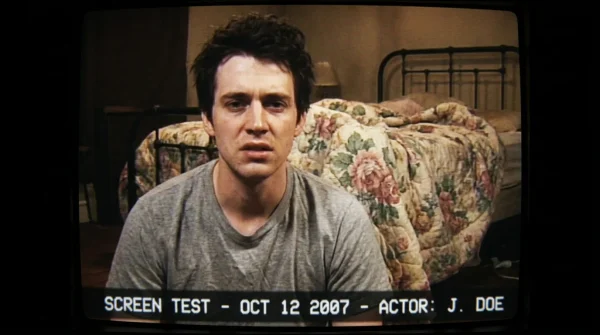
Then came the phone call, followed by the quiet delivery of the feedback sheet. Instead of a critique of his timing, his emotional range, or his line delivery, the industry delivered a swift, aesthetic blow. The casting office had looked closely at his final screen tests and decided his facial features simply did not fit the classical heroic mold they desired.
They deemed his chin too soft, his neck too long, and his overall facial structure too asymmetrical to carry the weight of a royal crown. He was, in the direct, unvarnished words of the casting feedback, not handsome enough to be a Disney prince. It was a rejection crushed under corporate weight, leaving a scar that would take years to heal.
The Symmetrical Screen: How Hollywood Confuses Beauty with Belonging
When you look at a movie poster, you are rarely looking at art; you are looking at a highly calculated piece of visual real estate designed to trigger immediate subconscious trust. The industry operates on a binary myth: that classical symmetry equals audience empathy. This framework assumes that for a viewer to invest their hard-earned dollars in a protagonist, that protagonist must possess features that mimic classical Grecian sculptures. It is a defense mechanism for nervous studio executives who prefer to treat casting like a science rather than an unpredictable human experiment.
The prince archetype is particularly rigid, demanding a strong, square jawline, a straight nasal bridge, and high, wide cheekbones that cast predictable shadows under studio lighting. By rejecting a talent as fierce as Garfield for failing to meet this rigid geometric standard, the system revealed how blinded by current trends it truly was. They prioritized a temporary aesthetic ideal over the raw, nervous charisma that would soon redefine modern cinema. This pivot from seeking classical physical perfection to valuing raw, expressive vulnerability is the true turning point of his career.
- Danny Glover almost starred in a defining cinematic fantasy masterpiece
- Lauryn Hill walked away from a massive cinematic science fiction role
- Dakota Johnson destroyed an iconic daytime talk show with resurfaced footage
- Jessica Alba triggers intense boardroom rift rumors after red carpet flinch
- Robert Downey Jr escaped tabloid exile trusting one hidden publicist
Sarah Davies, a 52-year-old veteran casting director based in Soho, remembers the late-2000s fantasy boom with a mix of exhaustion and amusement. “We were constantly under pressure from American studio heads to find these perfect, flawless young men who looked like they were carved from marble,” she explains. “We would sit in these dim rooms, looking at headshots of incredibly talented theater actors, only to have some executive point out a slight crook in a nose or an uneven jawline. It was soul-crushing for the actors, but what those executives failed to realize was that audiences actually tire of perfection very quickly; they want to see a face that can actually register real, human pain.”
Finding Your Category: The Archetype Trap
To survive in any creative or competitive field, you must understand how the gatekeepers categorize your specific type of energy. The industry uses these categories to manage risk, but you can easily find yourself stuck in outdated molds if you try to please everyone.
The Classic Hero Standard
This category relies on high visual symmetry, traditional masculinity, and an immediate sense of effortless authority. While it offers high initial visibility, it often comes with a severe creative tax, trapping performers in shallow, predictable roles that leave very little room for emotional depth. If you find yourself rejected from this category, it is rarely a reflection of your capability; rather, it is a sign that your raw material is too complex for a simple mold.
The Expressive Realist
This is where Garfield ultimately found his home, utilizing the very features that Disney rejected to build a career defined by intense, twitchy humanity. His long neck and expressive, asymmetrical jawline allow him to project a profound sense of vulnerability that became his weapon on screen. By stepping away from the expectation of flawless royalty, you allow your natural physical quirks to become your primary tool for connecting with an audience.
Reclaiming the Narrative: How to Navigate Creative Rejection
When you are told that you do not fit the aesthetic or professional standard of a major gatekeeper, the instinct is to hide, apologize, or attempt to alter your natural style. A far more powerful approach is to treat the rejection as a diagnostic tool to redirect your creative assets where they are actually valued.
To turn a devastating no into a long-term strategic pivot, you must implement a structured, unemotional review of your current position. This is about building a bulletproof brand that insulates your creative self-worth from the whims of corporate tastemakers.
- Audit the Feedback: Separate objective observations from subjective taste. If a gatekeeper criticizes a natural physical or stylistic trait, catalog it as a unique identifier rather than a defect.
- Identify Your Native Medium: If your style is too complex for mainstream, commercial spaces, seek out alternative platforms or indie circles where raw authenticity is prized over sterile perfection.
- Refuse to Standardize: Resist the urge to smooth over your eccentricities or unique stylistic habits to appease a generic audience.
| Action Step | Implementation Detail | Added Value for the Reader |
|---|---|---|
| The 24-Hour Cool-Down | Do not respond or make decisions within a day of receiving a major professional rejection. | Prevents emotional reactions and protects your professional relationships. |
| Archetype Audit | Compare your rejected work against the winner to identify the specific bias of the gatekeeper. | Clarifies whether the rejection was about your skill or simply a mismatch of styles. |
| Asset Redirection | Take the project or pitch to an independent space that actively seeks non-traditional voices. | Turns a passive waiting period into an active, self-driven campaign. |
The Victory of the Unconventional Face
Looking back, the rejection that felt like a devastating career-ending blow was actually the ultimate liberation for Andrew Garfield. Had he spent his twenties locked into a multi-film Disney contract wearing a sword and a velvet tunic, he likely would have missed the career-defining opportunities that followed. He would not have had the creative freedom to explore the dark, complex corners of The Social Network or the raw, physical poetry of his theater work. His rejection from Narnia was the perfect career detour, forcing him out of a comfortable, generic pasture and into the wild, unpredictable terrain where true artists are made.
Your own professional path will inevitably feature moments where a gatekeeper looks at your unique structure—be it your writing style, your business approach, or your physical presence—and declares it unfit for their clean, predictable kingdom. When that day comes, look at that wrinkled rejection letter not as a sign of your inadequacy, but as a formal release from a system that was always too small to hold you anyway.
“The moments where we are rejected for not fitting the standard mold are usually the exact moments we are being preserved for something far more interesting.”
Why did Disney reject Andrew Garfield for the role of Prince Caspian?
The casting team felt his physical features, specifically his facial structure and jawline, did not fit the traditional, symmetrical beauty standards of a classic Disney prince.
Who ended up getting the role instead of him?
The role ultimately went to British actor Ben Barnes, who possessed the classical, symmetrical features the studio was looking for at the time.
How did Garfield react to this specific career rejection?
He was initially devastated, admitting that he was obsessed with getting the role, but he later realized it allowed him to pursue far more diverse and complex characters.
What are the risks of conforming to classical industry standards?
Conforming often leads to typecasting, creative burnout, and a lack of emotional depth in your work, as you are constantly trying to fit a mold that isn’t naturally yours.
How can I apply this lesson to my own professional career?
Use rejection as a tool to pivot away from generic markets and focus on finding niche spaces that celebrate your unique, unconventional strengths.