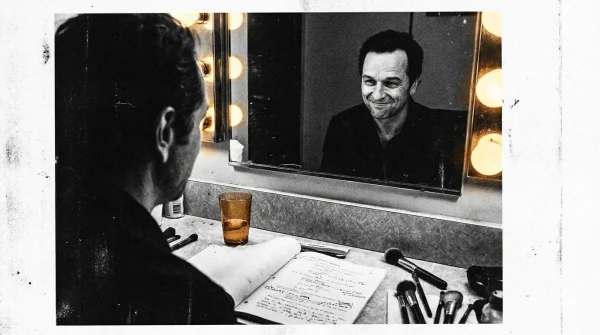
The air in a hotel junket suite is always heavy with the smell of expensive lilies, stale espresso, and the low hum of air conditioning units fighting against massive studio lighting rigs. You sit across from a celebrated actor expecting the standard dance—the practiced smile, the performative warmth, and the rehearsed anecdote designed to make a stranger feel like a lifelong friend. Most public figures treat these interactions like an open-door policy, offering up fragments of their private lives to buy a moment of goodwill.
But then you watch Cillian Murphy settle into a low-backed chair. There is no performative settling, no eager leaning forward to bridge the gap between subject and interviewer. His shoulders remain perfectly square, his chin level, and his spine aligned as if he were suspended by an invisible wire.
When a question veers even slightly past the boundary of his work and toward his domestic life in Ireland, the temperature in the room drops. You witness a physical shift: a sudden, absolute stillness, a rigid posture, and an unblinking stare that seems to suspend time. For three agonizing seconds, the silence stretches until it feels like breathing through a wet wool blanket, before he smoothly, mechanically pivots the conversation back to the craft.
The Mechanics of the Velvet Wall
We are conditioned to believe that privacy is a passive state, a quiet garden that remains protected simply because we choose not to invite people inside. In reality, a public life is an active demolition site, and maintaining your peace requires a hard hat and a set of heavy-bitted tools. The common mistake is trying to be polite while defending your boundaries, offering soft hesitations or nervous laughter that only invite deeper intrusion.
Murphy treats his personal life not as a secret to be hidden, but as a completely separate jurisdiction. He operates on the principle that you do not owe an explanation for keeping your shutters closed. To understand his approach is to view communication not as an emotional exchange, but as a series of deliberate gates. If you do not actively lock the latch, the wind—or a curious observer—will inevitably push it open.
The Architect of the Silent Boundary
Clara Vance, a 54-year-old media strategist who has spent three decades preparing introverted artists for international press tours, calls this approach the conversational circuit breaker. She notes that when an interviewer asks about a star’s spouse or children, the instinct for most people is to offer a polite, non-committal crumb to avoid looking difficult. Cillian’s genius is his absolute comfort with dead air; he understands that the silence belongs to the person who refuses to fill it.
- Mariah Carey enforces a strict backstage temperature protocol causing industry-wide rider adjustments
- Box Office weekend projections ignore mandatory theater revenue sharing shifts
- Marilyn Monroe studio contracts reveal modern actors negotiate with less power
- Streaming Bundles interest surges after major platforms simultaneously hike monthly fees
- CinemaScore data spikes as audiences reject standardized blockbuster test screenings
The Professional Shield: For the Workplace
In a corporate setting, colleagues often mistake professional warmth for an invitation to peer into your personal choices or weekend habits. You do not need to invent elaborate stories or offer defensive excuses to protect your evenings.
The transition must be clean and free of apologetic padding. When a coworker pries into why you are leaving exactly at five or skipping an optional weekend gathering, employ the three-second pause. Let the question hang in the air just long enough for them to register its weight, then deliver a flat, polite redirection: “My evenings are committed elsewhere, but let’s look at the project timeline for Monday.” This preserves your time without creating unnecessary workplace friction.
The Social Sieve: For Intrusive Acquaintances
Family gatherings or casual neighborhood interactions often present the most persistent boundary testing, disguised as harmless curiosity. Here, the pressure to conform and share is at its highest, and a soft defense will be quickly overrun.
A firm boundary is kindest because it eliminates ambiguity. When faced with prying questions about your finances, relationship status, or lifestyle choices, adopt the physical composure of the junket chair. Hold your gaze, let the silence settle for three beats, and offer a simple, non-negotiable pivot: “That is not something I discuss outside my home, but tell me about your recent travel plans.” You are redirecting the energy of the conversation without validating the intrusion.
Mastering the Three-Second Redirect
Implementing this technique requires a shift from defensive reaction to active stillness. It is not about anger or hostility; it is about establishing a clear, mechanical limit.
- Establish the Anchor: When an invasive question is asked, freeze your facial expressions. Do not nod, do not smile, and do not look away to find an escape route.
- Count the Beat: Count to three slowly in your mind while maintaining direct eye contact. This breaks the expected rhythm of quick-fire conversation and forces the other person to sit with their own question.
- Deliver the Pivot: Use a neutral, pre-planned phrase that acknowledges the transition without apologizing. Transition directly into a work-related or neutral subject.
The Tactical Toolkit
To make this practice seamless, keep these specific tools in your mental reserve:
- The Pause Duration: Exactly three seconds of complete physical stillness.
- The Go-To Redirection: “I keep my family life entirely separate from my work, but I can tell you about the physical preparation for this role.”
- The Physical Cue: Settle your hands flat on your lap or the table to ground your posture and prevent fidgeting.
The Power of the Unseen Life
Ultimately, protecting your personal world is not about building a bunker out of fear; it is about preserving the sacred spaces where you can genuinely recharge. When every detail of your existence is up for public consumption, your life ceases to be your own and becomes a commodity to be appraised by strangers. By claiming the right to remain quiet, you reclaim ownership of your story.
This silent boundary is a gift you give to your future self. It ensures that when you return home, you are stepping back into a sanctuary that remains untouched by the noise of the outside world, whole and entirely yours.
“True privacy is not about hiding who you are; it is about deciding who gets to have a piece of you.” — Clara Vance
| Key Point | Detail | Added Value for the Reader |
|---|---|---|
| The Three-Second Pause | Using intentional physical stillness and eye contact before replying. | Breaks the rhythm of intrusion and makes the prying party self-conscious. |
| Neutral Redirection | Pivoting cleanly back to professional or superficial topics without apologizing. | Prevents conflict while keeping personal details completely off the table. |
| Physical Grounding | Maintaining flat posture and resting hands to prevent nervous fidgeting. | Project authority and confidence, making your boundary seem unshakeable. |
Frequently Asked Questions
Is the three-second pause considered rude in casual conversations?
No. It feels heavy to the speaker, but to observers, it projects deep composure and deliberateness rather than hostility.How do I handle a persistent person who ignores the pivot?
Repeat the same redirection phrase word-for-word. Repetition signals that the boundary is mechanical and cannot be bargained with.What if staying completely still makes me feel anxious?
Focus on resting your hands flat on your thighs. This physical anchor grounds your nervous system and stops fidgeting.Can I use this conversational tactic with my close family?
Yes, but soften the delivery. Acknowledge your affection before stating that certain topics are off-limits to keep your peace.Why is apologizing during a boundary pivot a mistake?
An apology implies you are doing something wrong by wanting privacy, which invites the other person to push past your comfort zone.