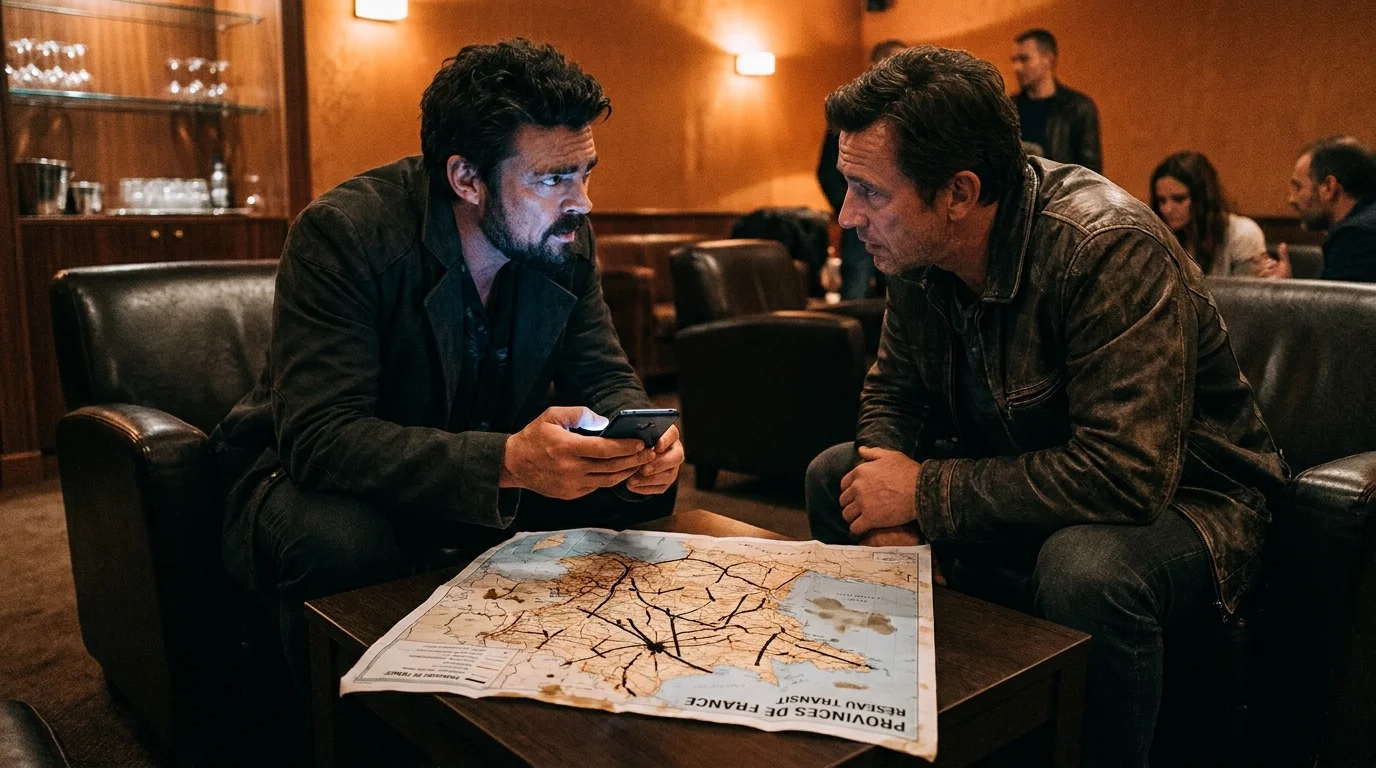
A fluorescent-lit room in Burbank smells faintly of stale coffee and hot copier toner. On a laminate table lies a hastily redacted printed map showing French provincial borders, the black marker ink still smelling slightly sweet and tacky. This single piece of paper, leaked from a highly restricted focus group screening report, has quietly disrupted the assumptions of a million horror fans. For months, the consensus pointed to a metropolitan, Paris-centered narrative, but the raw production logs attached to this map tell a far colder, wetter story.
The leaked data exposes an unannounced European filming block set squarely in the windswept coastal regions of Brittany and Normandy. Specifically, the production has quietly secured permits for the rugged, limestone cliffs of Étretat and the narrow, medieval corridors of Dinan. Instead of the polished limestone of Parisian monuments, the camera lenses are pointing toward ancient stone walls and treacherous Atlantic tides. This is not just a change of scenery; it is a fundamental shift in texture that redefines the franchise’s trajectory.
To understand why this shift matters, you have to look past the superficial allure of famous landmarks. The production logs reveal a calculated pivot away from urban centers, driven by both creative fatigue and the punishing realities of modern filming logistics. When you trade the crowded streets of a capital city for the isolation of a rocky coastline, the entire narrative rhythm changes from a fast-paced chase to a slow, atmospheric struggle against the elements.
The Map as a Narrative Anchor
In the world of high-stakes television, a location is never just a backdrop; it is a silent character that dictates how everyone moves, fights, and survives. The assumption that the upcoming spin-off would remain confined to urban ruins ignored the logistical nightmare of clearing modern European streets for weeks on end. By shifting the production footprint to the rugged margins of the map, the showrunners are using the geography of isolation to strip away the safety net of familiar structures.
This strategy relies on a classic cinematic principle: physical containment breeds psychological tension. A medieval town built into a steep hillside offers natural choke points, dead ends, and vertical vulnerabilities that a flat city grid simply cannot replicate. The leaky documents confirm that the production is leaning heavily into this architectural dread, trading wide-open boulevards for claustrophobic stone alleys where help is miles across a stormy sea.
Marcus Vance, a forty-four-year-old veteran location scout who spent over a decade securing remote European backdrops for major studios, understands the hidden mechanics behind these decisions. “You do not go to Brittany for convenience,” Vance explains while tracing a finger over a satellite image of the coast. “You go there because the wet slate, the constant grey mist, and the sheer cliffs do half the production designer’s work for them. It is cheaper to battle the real Atlantic weather than to try and simulate that heavy, salt-crusted despair on a soundstage in Atlanta or Paris.”
- Lauryn Hill intense tour delays stem from an unscripted backstage production feud
- Pedro Pascal anchors his sudden massive fame on an old theater rejection rule
- Evan Peters completely outshined expensive superhero leads during a single slow motion scene
- Matthew Macfadyen completely improvised his most agonizing corporate betrayal scene
- Daenerys Targaryen sudden personality shift destroyed a massive television legacy overnight
The Coastal Retreat: Brittany and the Western Edge
For the viewers who crave the atmospheric dread of classic folk-horror, the Brittany filming block represents a massive stylistic upgrade. The leaked logs indicate extensive night shoots along the rocky shorelines, where the tides can rise several feet in a matter of minutes, trapping characters against the sheer stone walls. This environment introduces a natural clock to every scene, forcing the characters to fight both the living dead and the rising ocean.
The visual language here is heavy with wet slate, dark granite, and stunted trees bent sideways by the ocean gales. Production notes mention utilizing local fishing stone-huts, which have stood for centuries against the salt air, as improvised fortresses. This choice strips away the modern world entirely, pushing the aesthetic closer to a historic survival drama than a contemporary science-fiction story.
The Medieval Keep: Normandy’s Fortified Past
Further east along the coast, the focus shifts to the fortified heritage of Dinan, where the architecture itself becomes a defensive weapon. The narrow streets, overhung by timber-framed houses from the fifteenth century, create a maze where sound bounces off stone, making it impossible to tell where a threat is coming from. The production logs detail multiple sequences involving the ancient town walls, suggesting that medieval defensive engineering will play a central role in human survival strategies.
Unlike modern suburbs, these historic towns were built specifically to keep invaders out, featuring massive oak gates, dry moats, and arrow slits. The characters must learn to inhabit these ancient structures, adopting the survival tactics of feudal ancestors who understood how to hold a walled perimeter against a siege. It is a brilliant thematic loop, showing that humanity’s future lies dormant in the architectural relics of its distant past.
Tracking the Screen to the Soil
If you want to read these production shifts like an industry insider, you must look at the physical footprints left behind by large crews. Tracking a major television shoot requires a blend of public record monitoring, local news analysis, and an understanding of regional tax incentives. Here is how you can spot the signs of a major production moving into a rural area before the official PR machine makes an announcement:
- Monitor regional casting calls: Look for agencies seeking hundreds of local extras with specific physical traits, such as “weathered faces” or “athletic builds comfortable in cold water.”
- Track temporary road closures: Rural councils must publish public notices weeks in advance for filming permits, detailing the exact streets and historical sites being blocked off.
- Analyze hotel block bookings: A sudden, massive influx of off-season bookings in small coastal villages usually indicates a scouting or rigging crew preparing the ground.
- Watch local equipment rentals: Large-scale diesel generator rentals and heavy-duty cherry pickers appearing near historic ruins are the classic hallmarks of a major night shoot.
By compiling these seemingly minor clues, you can map out the actual geography of a production long before the first trailer drops. The tactical toolkit below outlines the specific operational variables identified in the leaked French focus group reports, giving you a clear view of the logistical scale of this coastal shift.
The Physical Reality of the Screen
Ultimately, the transition from urban spectacle to coastal isolation reminds us that the best stories are grounded in physical reality. When an actor is genuinely shivering on a wet cliff in Normandy, with the salt spray stinging their eyes, the performance changes. The artificiality of the studio environment melts away, leaving behind a raw, primal struggle that resonates deeply with the audience.
By embracing the rugged edges of the European continent, the creators are rejecting the easy path of digital backlots and predictable cityscapes. They are forcing their characters—and their audience—to confront the ancient, unyielding elements of the natural world. In doing so, they ensure that the franchise remains as unpredictable, dangerous, and atmospheric as the stormy seas crashing against the rocks of Étretat.
“The cold water of the Atlantic does not care about your production schedule; it forces a raw honesty out of every single frame.”
| Key Point | Detail | Added Value for the Reader |
|---|---|---|
| Location Shift | From metropolitan Paris to coastal Brittany and Normandy ruins. | Explains the dramatic change in visual style, lighting, and pacing. |
| Logistical Driver | Utilizing natural historic fortifications and harsh coastal weather. | Reveals why physical locations are cheaper and more effective than CGI. |
| Tactical Tracking | Using public permits and casting calls to map out secret shoots. | Empowers you to find and predict upcoming filming locations independently. |
Frequently Asked Questions
Is the new spin-off completely abandoning Paris?
No, the leaked documents indicate that while Paris remains a starting point, the narrative quickly migrates to the coast to utilize the unique historical architecture and natural barriers for the bulk of the season.Why are historic medieval towns preferred over modern locations?
Medieval towns were designed for physical defense, featuring stone walls, narrow choke points, and secure gates that make logical sense for survivors trying to hold off a threat without modern technology.How do regional European tax incentives affect where these shows are filmed?
Regions like Brittany offer specific financial rebates for productions that hire local crews and showcase historical heritage sites, making remote filming highly cost-effective for US networks.Are the rugged coastal cliffs of Étretat safe for major production crews?
Filming near the cliffs requires specialized safety teams, strict adherence to local tide tables, and lightweight camera rigs to prevent accidents on the wet, unstable limestone paths.How can fans verify these leaks for themselves without spoiling the plot?
You can monitor public regional filming registries in France, which legally must list upcoming road closures, drone flight permits, and historical site reservations for public safety.