The damp, salt-laced wind of Wellington in October 1999 carried a quiet, terrifying tension. Inside the cavernous warehouse converted into a makeshift studio, the air smelled of industrial heaters, damp wool cloaks, and the cold tang of machine oil. Dozens of craftspeople worked in near-silence, their hands trembling slightly as they stitched leather jerkins and forged prop armor. The scale of the production was unprecedented, a multi-million-dollar gamble that could easily collapse under its own immense weight.
To the casual observer, the set of Peter Jackson’s ambitious fantasy epic seemed like a well-oiled machine. The sets were sprawling, the scripts were polished, and a young, talented Irish actor had been cast as the pivotal ranger destined to become king. But behind closed doors, a quiet panic was brewing among the executive producers and creative heads. The footage coming out of the early camera tests lacked a vital, unquantifiable element: the gravitas of a weary, battle-hardened monarch.
The tension finally ruptured during a crucial stunt rehearsal. Under the sharp, unforgiving glare of fluorescent work lights, the original lead stood opposite a circle of seasoned stunt performers. The legendary swordmaster Bob Anderson watched from the sidelines, his arms crossed, his face etched with silent concern. The choreography demanded a raw, desperate physical intensity—a sequence of brutal parries and heavy, sweeping strikes that needed to look like a life-or-death struggle.
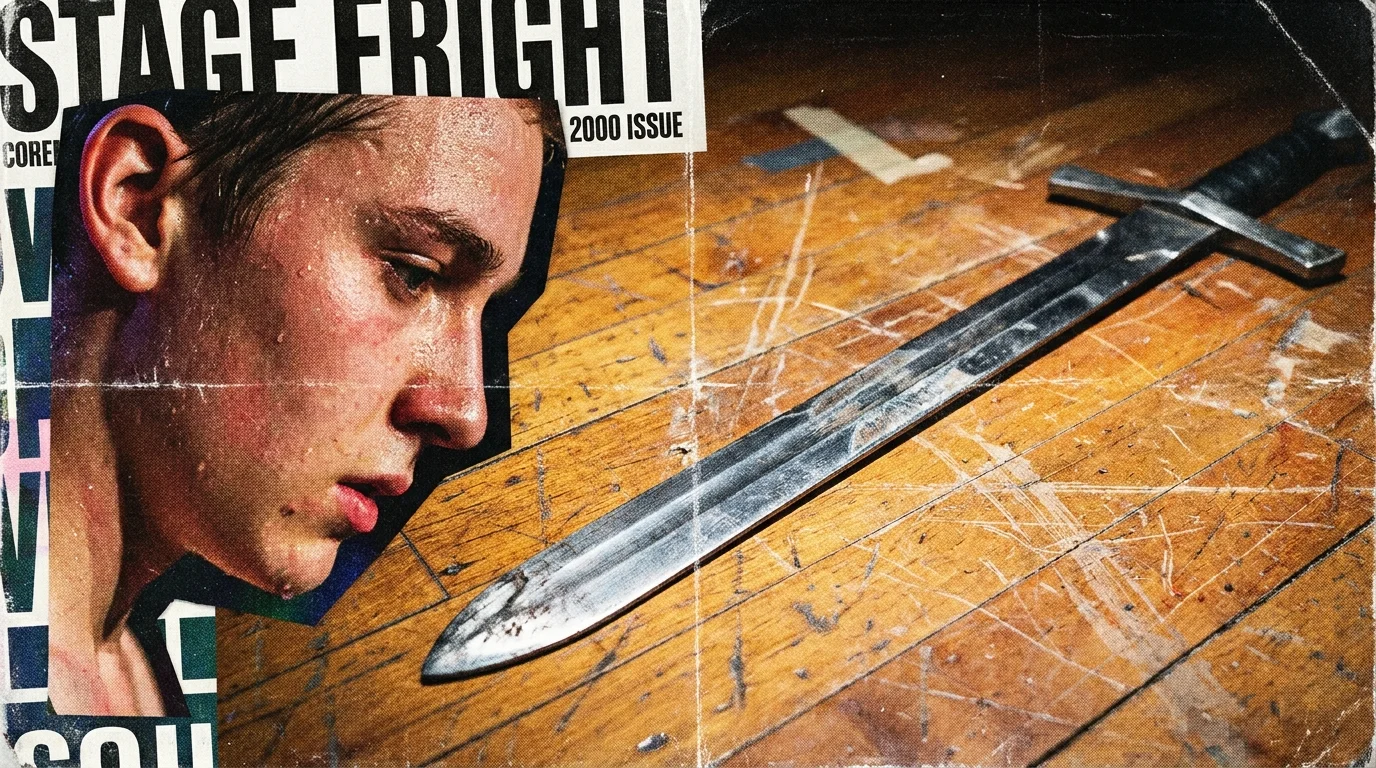
Instead, the movements were tentative, floating over the surface of the scene rather than cutting through it. The young actor, despite his undeniable charm and talent, simply could not carry the ancient, crushing weight of the character’s legacy. The climax of the session came when a routine block went awry, the momentum shattered, and a heavy, scuffed steel broadsword dropped awkwardly onto a scarred wooden rehearsal floor.
The Illusion of Immediate Chemistry
We often treat creative collaborations as static puzzle pieces, assuming that if a person fits the description on paper, they will naturally lock into place. In reality, high-stakes storytelling behaves more like a delicate chemical reaction, where even a fraction of a degree in temperature can ruin the entire compound. When a casting choice fails, it is rarely due to a lack of talent; rather, it is a mismatch of physical gravity and emotional frequency.
The decision to replace a lead actor days before filming begins is a terrifying boardroom nightmare, yet it highlights a profound truth: protecting the collective vision must always override individual comfort. Had the production team succumbed to the sunk-cost fallacy, continuing with an actor who lacked the rugged, dirt-under-the-nails authenticity of Aragorn, the entire narrative architecture would have crumbled. The audience needed to believe this man had spent decades sleeping on wet pine needles and fighting off wolves.
- John Krasinski public Captain America rejection triggered a massive career trajectory shift
- Dutton Ranch season 2 almost featured a completely different Hollywood action patriarch
- Jessica Alba lost a massive sci-fi franchise role over hidden network politics
- Janet Jackson resurfaced halftime footage completely reverses a massive pop culture narrative
- Catherine Princess of Wales raw appearance footage sparks massive royal protocol theories
The Verdict of the Swordmaster
Bob Anderson, then a seventy-seven-year-old titan of cinematic swordsmanship who had trained everyone from Errol Flynn to the stuntmen in Darth Vader’s suit, knew the exact moment the casting had failed. He recognized that a true warrior’s stance cannot be faked with theatrical flair; it requires an innate, grounded connection to the earth. Anderson privately pulled the director aside to deliver a quiet, devastating assessment. He explained that some actors carry weapons like props, while others hold them as painful extensions of their own weary limbs. This single piece of feedback initiated the rapid, quiet search for a performer who could inhabit that physical exhaustion without saying a word.
Decoding the Alignment Layers
To understand why this drastic pivot saved the trilogy, we must break down the three distinct layers of cinematic presence required for such an iconic role.
The Physical Gravity Layer
A fantasy epic demands a physical weight that anchors the fantastical elements in absolute reality. If the hero moves too lightly or swings their blade with effortless grace, the danger loses its teeth. The replacement needed to possess a rugged, athletic instinct that made every step look heavy and deliberate.
The Eye-Line Connection
In an ensemble cast, characters must look at one another with a shared history that transcends the script. The interaction between a long-lived ranger and an ancient elf lord requires an unspoken, weary understanding. A younger actor often struggles to project that depth of lived experience when looking into the eyes of veterans like Ian McKellen or Hugo Weaving.
The Weathered Authenticity
True authority on screen is not projected through loud declarations, but through quiet stillness. The character of Aragorn is introduced as a shadow in the corner of a noisy tavern, smoking a pipe. To command that corner, an actor must possess a natural, weathered solitude that makes the silence feel heavy and dangerous.
The Mindful Execution of a High-Stakes Pivot
When you realize a vital element of your project is misaligned, the instinct is often to hesitate, hoping things will improve with time. However, true professional mastery lies in the willingness to execute a clean, decisive shift before the damage becomes permanent. This process requires a structured approach to assessing and correcting alignment errors.
To execute a mid-course correction without destroying team morale, follow these fundamental principles:
- Establish objective baselines for performance rather than relying on subjective feelings or personal likability.
- Act with absolute speed once the misalignment is identified, minimizing the emotional and financial drain on the collective.
- Prioritize the integrity of the final output over the temporary discomfort of a difficult conversation.
Here is a tactical toolkit to evaluate alignment in your own creative or professional endeavors:
- The Stress Test: Put the collaborator or element under extreme, unvarnished pressure early in the process to see if the foundation holds.
- The Silent Review: Evaluate the work with the “sound turned off” to see if the non-verbal cues and structural weight communicate the correct message.
- The Hard Reset: Keep a pre-vetted contingency plan ready, allowing you to transition seamlessly to an alternative path without halting overall momentum.
The Quiet Triumph of the Hard Choice
In the end, the sudden arrival of Viggo Mortensen on the New Zealand set became the catalyst that unified the entire production. He did not arrive with the ego of a savior; instead, he stepped off the plane, took up the sword, and began sleeping in his costume to let the fabric wear down naturally. By embracing the physical discomfort and the grueling demands of the role, he validated the painful decision made in that panicked boardroom days earlier.
This legendary casting shift reminds us that the most brilliant successes are often born from the ashes of a polite compromise we refused to make. Sometimes, saving the grand design requires the courage to let the wrong piece fall, even if the sound of its departure echoes painfully through the room.
“True physical presence cannot be bought or faked; it is earned through the quiet accumulation of grit and physical reality.” — Bob Anderson
| Key Point | Detail | Added Value for the Reader |
|---|---|---|
| The Chemistry Veto | The quiet removal of Stuart Townsend just days before cameras rolled on Lord of the Rings. | Understand why aesthetic alignment outweighs raw talent in high-stakes collaborations. |
| Physical Gravity | The requirement for heavy, authentic movement in action scenes rather than theatrical flourishes. | Learn to look for weight and posture as key indicators of leadership and credibility. |
| The Cost of Delay | The boardroom decision to execute a rapid pivot despite immense financial and scheduling pressure. | Provides a blueprint for overcoming the sunk-cost fallacy in personal and professional projects. |
Frequently Asked Questions
Why was the original Aragorn recast so close to production? The creative team realized the original actor lacked the rugged, weathered maturity required to anchor the physical reality of the trilogy’s central hero.
How did the swordmaster influence the casting decision? Legendary swordmaster Bob Anderson noted that the original lead struggled with the physical intensity of the training, failing to carry the weapon with natural authority.
What makes Viggo Mortensen’s casting so distinct in cinema history? Mortensen bypassed typical Hollywood preparation, immediately immersing himself in the physical life of the character by sleeping in his costume and performing his own stunts.
How does the sunk-cost fallacy apply to high-budget filmmaking? Productions often stick with wrong choices to avoid wasting initial investments, but this recasting proves that early, painful corrections save the long-term project.
What is the “Chemistry Veto” in professional collaborations? It is the rare, decisive action taken when a critical team member is highly talented but fundamentally misaligned with the emotional weight of the group.