The damp chill of a 1973 Brooklyn autumn had a way of clinging to your collar like a wet leaf. On the gray, unvarnished streets where The Lords of Flatbush was filming, the air carried the scent of cheap diesel exhaust, damp cardboard, and the metallic tang of old subway grates. You might think a film set is a place of choreographed grace, but in the early seventies, it was a gritty, low-budget scramble where survival mattered more than art.
Inside a cramped, freezing station wagon parked on the asphalt, two young actors sat in a heavy, suffocating silence. The windshield was fogged with their breath, creating a small, isolated bubble from the shouting crew outside. On one side sat Sylvester Stallone, a fierce, hungry writer-actor nursing a lifetime of rejection. On the other sat Richard Gere, a handsome, theatrical newcomer who carried himself with the effortless swagger of a Broadway darling. The air in that car was thick with an unstated, chemical hostility.
You expect professional performers to bend their egos for the sake of the story, but human nature rarely follows a script. Some personalities do not merely clash; they occupy the same molecular space until something has to give. The unspoken truth of screen chemistry is that it cannot be manufactured by a director’s lens. If the underlying current is toxic, the camera will record that rot, transforming what should be a classic drama into a documentary of mutual loathing.
The Silent Mechanics of Creative Dominance
Think of professional relationships as a delicate gears-and-clutch system. If the teeth do not mesh, the entire machine grinds itself into a fine metal dust. When the production team paired Stallone and Gere, they expected the classic friction of contrasting styles—the rough-cut street fighter versus the sleek, modern intellectual. Instead, they got a lesson in territorial dominance. The system broke down because neither man was willing to play the supporting role in the other’s orbit.
This was not a simple disagreement over a line of dialogue or a camera angle. It was a silent, daily war of posturing, a series of micro-aggressions that turned the set into a high-stakes poker game where both players refused to fold. To understand how a major production collapses, you must look past the official press releases and focus on the quiet, unwritten rules of personal space and physical authority.
Marcus Vance, a seventy-four-year-old retired key grip who spent forty years rigging heavy lights on cold East Coast sets, remembers the precise moment the illusion shattered. “You could feel the temperature drop whenever they stood within five feet of each other,” Vance recalls, his voice raspy from decades of working in the elements. When you have two alphas trying to claim the same patch of dirt, the movie becomes secondary to the standoff.
- Eddie Redmayne Star Wars rejection sparked an intense career shift
- Jessica Alba almost anchored a major superhero franchise before dropping out
- LaRoyce Hawkins Chicago PD exit rumors mask a massive network pivot
- Anne Hathaway resurfaced interview completely destroys years of manufactured hatred
- Nick Jonas raw red carpet footage sparks intense solo tour speculation
The Anatomy of Destructive Chemistry
In any creative endeavor, there are two distinct types of friction: generative and destructive. Generative friction challenges you to bring your best work to the table, forcing you to sharpen your focus. Destructive friction simply burns the house down around you.
For the classic pragmatist, the goal of a scene is to build a shared reality. For the territorial ego, the goal is to make sure the audience looks only at them. When Gere began improvising physical contact—such as grabby hand gestures and unscripted slaps to Stallone’s shoulder during rehearsals—he wasn’t just exploring his character. He was testing the boundaries of Stallone’s patience, establishing a hierarchy that Stallone was entirely unprepared to accept.
The Diner-Car Incident: The Day the Partnership Died
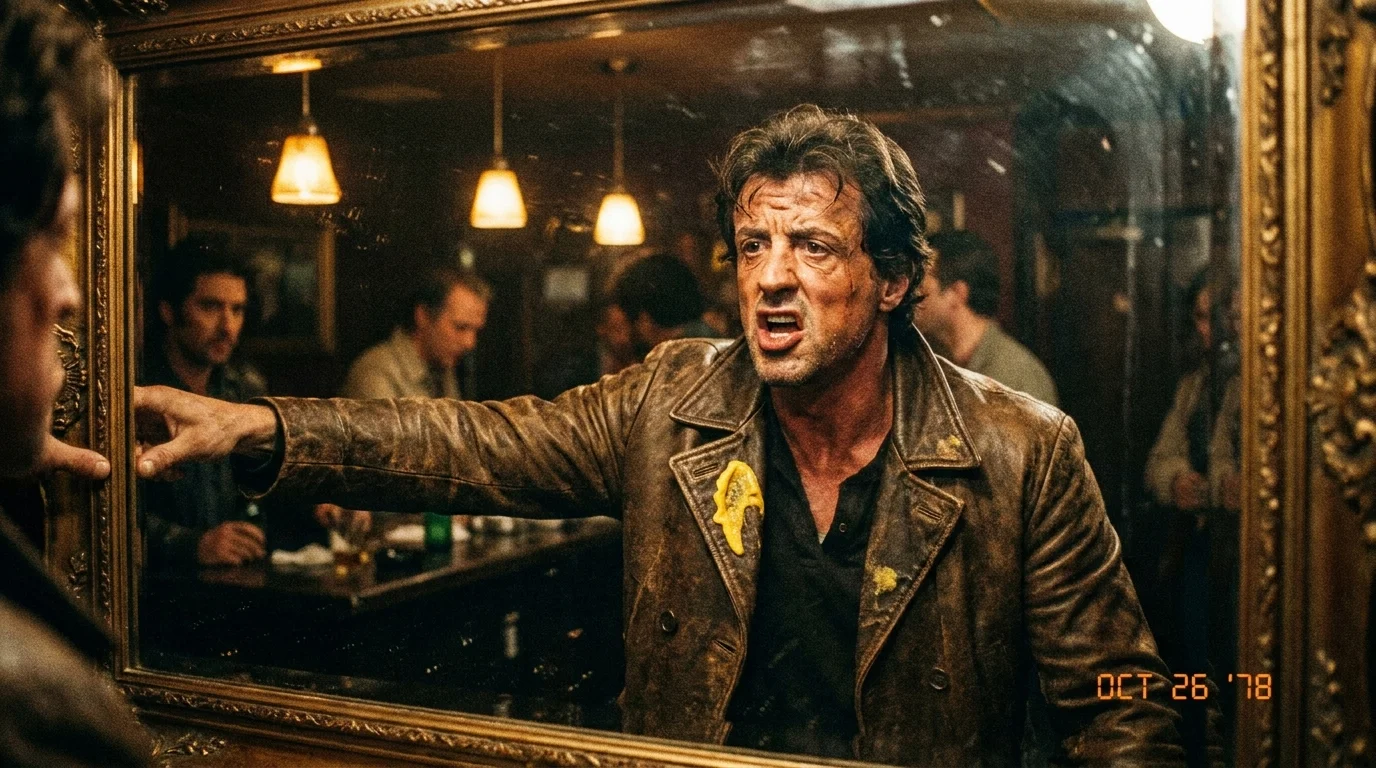
The final break did not occur under the bright studio lights or during a tense, dramatic scene. It happened over a greasy cardboard box of half-eaten diner food during a freezing lunch break. Stallone had retreated to the back seat of a station wagon to eat his lunch in peace, seeking a moment of quiet in a chaotic day. Gere climbed into the vehicle with a greasy half-chicken, heavily coated in yellow mustard, and squeezed in next to him.
Stallone warned him immediately, pointing out that the greasy, mustard-soaked chicken was dangerously close to his own clothes. Gere, displaying a cool, dismissive arrogance, shrugged and said he didn’t care. A single yellow drop of mustard fell directly onto Stallone’s pants, and the quiet war instantly turned physical. Stallone elbowed Gere hard in the chest, pushing him out of the car door and delivering an ultimatum to the director: either Gere goes, or I do.
The Chemistry Checklist: Managing Professional Friction
When you find yourself locked in a territorial battle with a colleague, you cannot rely on HR or official policies to save your sanity. You must manage the dynamic with quiet, deliberate actions before the relationship turns toxic.
- Define the physical boundary: Establish clear zones of influence and responsibility to prevent accidental encroachments.
- Defuse the non-verbal challenge: Do not engage in eye-contact battles or posturing; maintain a neutral, unbothered posture.
- Request separate quarters: Keep your personal preparation spaces entirely separate to allow your nervous system to reset.
- Document the boundary cross: Note the specific actions that cross from professional disagreement into personal provocation.
To navigate these high-friction situations successfully, you need a highly specific set of rules. Keep your interactions brief, keep your physical distance wide, and never let the other person see that their posturing has disrupted your focus.
The Mustard-Stained Jacket of Reality
Ultimately, Richard Gere was let go from the production, and Perry King was quickly brought in to fill the leather jacket of Chico Tyrell. The movie was saved, but the legendary tension of that 1973 shoot remained etched in Hollywood lore. The physical artifact of that dispute—a vintage leather jacket stained with diner mustard—remains a strange monument to what happens when two unstoppable egos collide in a space too small to hold them both.
Sometimes, walking away from a toxic partnership is not a sign of failure, but the ultimate act of creative preservation. Protecting your own space and energy is more important than forcing a connection that was never meant to be. By understanding when to hold your ground and when to push the other person out of the car, you secure your own peace of mind.
“The camera never lies about respect; if two actors do not respect the ground the other walks on, the lens will find the truth every single time.”
| Key Point | Detail | Added Value for the Reader |
|---|---|---|
| Physical Boundaries | Establishing clear zones during high-stress creative collaborations. | Prevents minor personal annoyances from escalating into career-damaging physical confrontations. |
| Creative Recasting | Replacing an incompatible partner early to save the wider project. | Teaches you that some professional matches are fundamentally unworkable and must be severed. |
| Ego Management | Identifying the difference between creative friction and personal dominance. | Allows you to keep your focus on the quality of the work rather than fighting for petty dominance. |
Why did Richard Gere get fired from The Lords of Flatbush?
Gere was recast early in production due to intense, unscripted physical tension and a lack of chemistry with co-star Sylvester Stallone, culminating in a physical altercation during a lunch break.
What actually happened during the infamous lunch break incident?
Richard Gere brought a greasy, mustard-covered chicken into a car where Stallone was resting. After being warned, mustard dripped onto Stallone’s clothes, leading to a physical push and an ultimatum to the director.
Who replaced Richard Gere in the final film?
Actor Perry King was quickly hired to replace Gere in the role of Chico Tyrell, restoring peace to the troubled 1973 production.
How does bad chemistry affect a professional project?
It shifts the focus from collective success to individual survival, draining creative energy and forcing leaders to make drastic personal changes to save the budget.
Is all professional friction bad for creative work?
No, generative friction can elevate a project by pushing both parties to perform better, whereas destructive friction simply halts progress entirely.