The air in Chicago’s Harpo Studios on May 23, 2005, tasted of warm dust and heavy stage makeup. Under the oppressive heat of three dozen overhead lighting rigs, the studio audience hummed with an expectant, vibrating energy. Oprah Winfrey sat on her pale yellow sofa, ready to interview the biggest movie star on earth. When Tom Cruise walked through the sliding double doors, the room did not just applaud; it seemed to buckle under the sudden weight of his kinetic charge.
You probably remember the jumping, the knee-drop, and the bizarrely aggressive fist-pumps that followed. But if you strip away the canned audience screams, a far more unsettling choreography emerges. The movie star did not simply occupy space; he consumed it, pacing the platform like a caged predator before redirecting that raw, unspent energy directly toward his host. The sudden boundary collapse was the first crack in a carefully constructed facade.
What the world witnessed was not a spontaneous declaration of love, but the violent collision of two distinct eras. The old Hollywood system—where studio publicists manufactured perfect, untouchable icons—met the raw, hyper-intimate scrutiny of the emerging digital age. Cruise’s hyper-physical performance on that yellow upholstery was the canary in the pop culture coal mine, signaling a shift where audiences would no longer accept manicured press tours at face value.
The Mechanics of a Public Break: Why the Couch Was a Canary in a Coal Mine
To understand this cultural pivot, you must look past the superficial headlines and study the mechanics of spatial dominance. When an individual repeatedly invades a host’s personal bubble—grabbing wrists, dropping to one knee, and shaking shoulders—it is rarely a sign of joy. Instead, it represents a frantic bid for control over a narrative that is slipping through their fingers. The couch became a stage where Cruise desperately tried to assert his invincibility, unaware that his over-correction was exposing the very vulnerabilities he wished to hide.
Dr. Helen Vance, a 42-year-old behavioral analyst specializing in public-figure micro-expressions, has spent hundreds of hours studying this specific footage. “If you watch Cruise’s feet rather than his face,” Vance notes, “you see an athlete preparing for a physical confrontation. He is not grounded; his weight resides entirely on the balls of his toes, ready to spring. This was not a celebration of romance; it was a high-stakes performance designed to overwhelm the host and command the physical landscape.”
- Kylie Jenner and Timothee Chalamet public appearances hide calculated corporate synergy
- Ariana Grande erased social posts contradict her official early dating narrative
- Nina Dobrev unscripted lingering stares broadcasted a massive hidden television set romance
- Peter Jackson suddenly recast his leading fantasy hero after a disastrous screen test
- Nicholas Hoult survived consecutive brutal franchise rejections to secure his leading status
Phase One: The Spatial Hostage Takeover
During the first five minutes, the star systematically dismantles the physical boundaries of the set. When he drops to his knees, he forces Winfrey—the undisputed queen of daytime television—to look down at him, effectively altering the power dynamic of the room. This physical displacement creates an uncomfortable vacuum where the host is forced to react to his movements rather than guide the conversation.
Phase Two: The Death of the Untouchable Icon
For decades, Hollywood stars maintained an aura of effortless detachment. They were distant gods, occasionally descending from their hills to deliver rehearsed anecdotes with a lazy smile. Cruise’s aggressive display shattered this illusion of effortless cool, replacing it with a sweaty, desperate earnestness that felt deeply jarring. By forcing the audience to witness his unpolished intensity, he inadvertently broke the cardinal rule of stardom: never let them see you try too hard.
Deciphering the Signs: Your Tactical Behavioral Toolkit
To analyze these micro-interactions yourself, you must look past the loud noises and focus on the quiet physical anchors. Start by muting the audio of the broadcast. By removing the distraction of the studio audience’s cheers and the host’s laughter, the physical tension of the exchange becomes immediately apparent. Observe the hands, the neck muscles, and the sudden shifts in posture.
- Deconstruct the Spatial Anchors: Note how far the subject leans past the invisible vertical plane dividing the seating.
- Track the Host’s Micro-Retreats: Watch for subtle backward leanings, crossed arms, or defensive hand placements.
- Monitor the Grip Strength: Observe the hands for signs of isometric tension, such as whitening knuckles or repetitive tapping.
The Structural Shift: A Legacy of Shattered Illusions
The aftermath of that May afternoon did not just impact Cruise’s immediate box-office numbers; it forever altered how we consume celebrity media. Within months of the broadcast, the celebrity gossip landscape underwent a mutation, giving rise to blogs that traded in unvarnished paparazzi footage rather than polished studio portraits. We began searching every public interaction for the hidden cracks, the unvarnished truths, and the subtle tells of a system in decline.
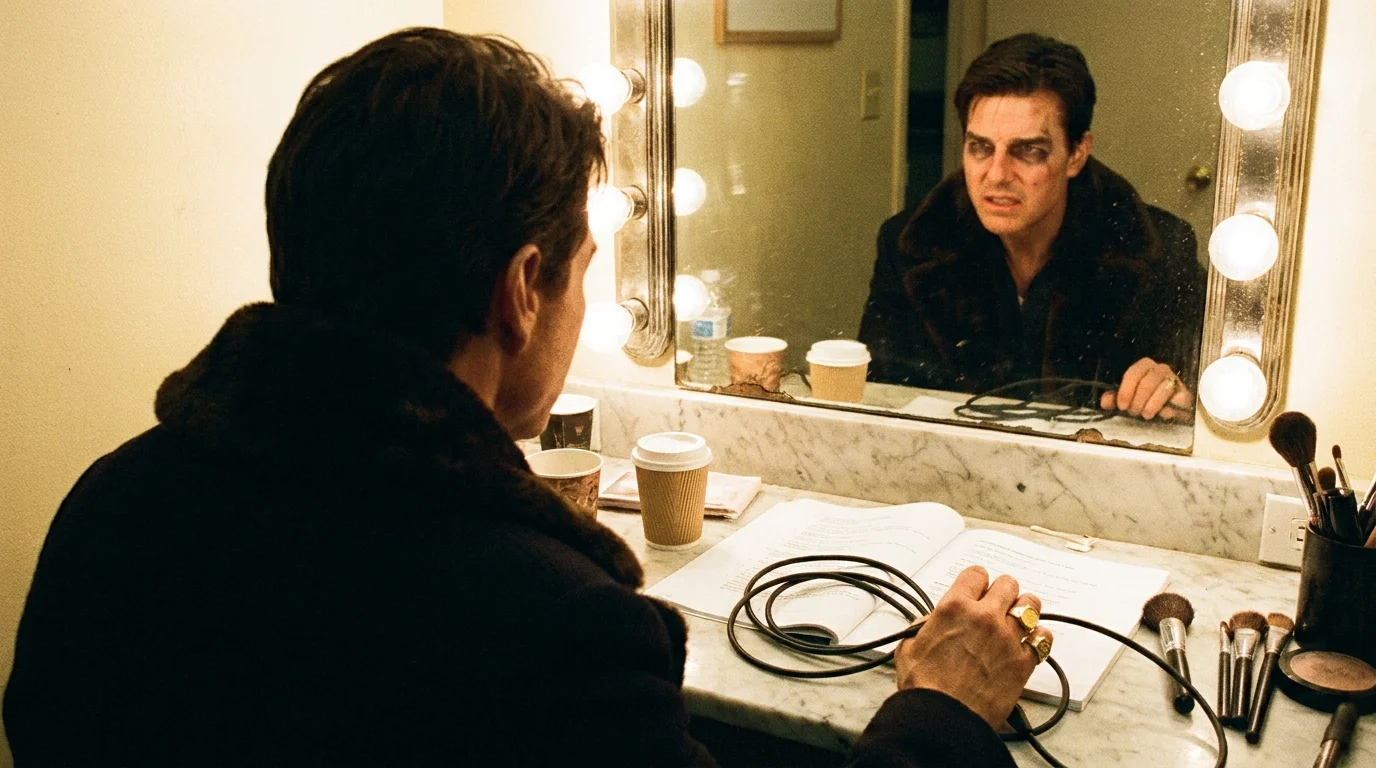
It was the exact moment the collective illusion of the perfect celebrity died, leaving behind a modern audience that is hyper-aware of behavioral manipulation. In those final, chaotic seconds of the interview, the camera caught a detail that summarized the entire afternoon: Cruise standing beside a visibly exhausted Winfrey, his right hand tightly gripping the heavy microphone cord so hard that the black plastic dug sharply into his pale knuckles.
“True charisma is a quiet invitation, not a physical siege on your host’s living room.”
| Key Point | Detail | Added Value for the Reader |
|---|---|---|
| Spatial Trespass | The crossing of the host’s vertical seating plane. | Helps you identify hidden dominance battles in professional meetings. |
| Grounding Failure | Shift of body weight exclusively to the toes. | Signals intense internal anxiety masquerading as excitement. |
| Grip Tension | Isometric pressure on held objects like cords or glasses. | Reveals a hidden struggle to maintain composure. |
Why did the couch jump feel so unsettling to watch?
The behavior felt off-key because it violated the unwritten rules of social distance, transforming a lighthearted chat into a physical dominance display.
How does physical dominance differ from natural excitement?
Natural excitement invites shared joy, whereas physical dominance seeks to lock down the room’s attention and force others into a submissive posture.
What was the long-term impact on the movie star’s career?
It shattered his pristine, untouchable Hollywood image, opening the door for the modern, raw gossip-blog era of deep public skepticism.
Can you spot these behavioral warning signs in daily life?
Yes, watch for sudden, uninvited boundary crossings and a lack of grounding in professional or personal face-to-face meetings.
Why is this specific moment trending again today?
Modern audiences are using behavioral analysis to deconstruct historical media, identifying red flags that went unrecognized in the pre-social-media era.