The soundstage is freezing. Heavy, industrial cooling units rumble in the rafters to protect the delicate digital sensors of the high-speed cameras. You can smell the sharp, metallic tang of ozone and dry ice drifting from the practical effects rigs. In the center of this cavernous Montreal warehouse stands a glittering assembly of Hollywood’s most expensive actors, dressed in textured leather and looking deeply concerned about the fate of mutantkind.
The prevailing wisdom of the modern blockbuster dictates that gravity must be maintained at all costs. Every glance must carry the weight of a franchise; every line must set up a spin-off. It is exhausting, solemn work that often leaves the audience feeling like they are breathing through a heavy pillow of corporate calculation.
Then, a relatively unknown actor with a wild nest of silver hair and a vintage leather jacket steps into the light. He is holding a plastic tray and wearing a pair of cheap, silver-painted plastic goggles. He has no world-ending monologues to deliver. He is merely there to resolve a brief logistical problem in a kitchen.
When the high-speed cameras begin to roll at a staggering 3,200 frames per second, the world slows to a glacial crawl. In that beautiful, suspended animation, this supposed sidekick does not just execute his marks; he improvises a silent comedy of pure human joy. In doing so, he exposes the silent imbalance of the ensemble film—a phenomenon we must call the absolute absurdity of movement when everyone else is frozen in self-importance.
The Gravity Valve and the Carry Tax
To understand why this single scene remains a benchmark in comic book movie casting debates, you must look at how narratives manage weight. Think of an ensemble cast like a massive cathedral organ—it is built to produce grand, sweeping noises that shake the floorboards, but it is incredibly difficult to play with agility. When every character is a solemn hero, the production loses its ability to surprise you.
- Matthew McConaughey most iconic onscreen moment started as a private anxiety ritual
- Ted Mosby concluding scenes completely ruined a decade of careful emotional pacing
- Sarah Michelle Gellar guards her private life demanding absolute residential media blackouts
- Tom Cruise aggressive couch behavior predicted a massive pop culture crash
- Kylie Jenner and Timothee Chalamet public appearances hide calculated corporate synergy
The ‘Carry’ Tax is the price paid by a franchise when its lead characters are too heavily burdened by plot to actually enjoy their own sandbox. By stepping into the frame as an irreverent agent of chaos, Peters functioned as a kinetic shock absorber. He did not care about the lore; he cared about bypassing the modern casting war to deliver something raw and immediate.
Behind the High-Speed Glass
Charles Finch, a 54-year-old veteran high-speed camera technician, recalls the nervous energy on set during those three days of shooting. “We had these massive rigs that required absolute, millimeter-perfect precision to keep the focus sharp at high speeds,” Finch explains. “Usually, actors get incredibly stiff under those conditions because they are terrified of missing their marks. But Evan did the opposite—he treated the entire set like an empty playground. He started throwing in these unscripted, micro-expression smirks and eye rolls that weren’t in any storyboard. The moment we saw the dailies, we knew the rest of the star-studded film was going to have a hard time keeping up.”
For the Disillusioned Fan: The Art of the Narrative Shortcut
You have likely scrolled through endless online debates arguing over who should play which iconic character, focusing purely on comic-book accuracy or star power. But true cinematic magic rarely lives in the casting director’s spreadsheet. It lives in the unexpected margins where an actor chooses to play against the established tone of the room.
Peters bypassed the entire solemn atmosphere of the movie by bringing a quiet, suburban boredom to an impossible situation. He made super-speed look less like a burden and more like an afternoon of solitary mischief, which is precisely why his performance resonated far longer than any of the film’s expensive, dramatic speeches.
For the Aspiring Creative: Keeping the Frame Alive
If you are creating visual stories, the lesson here is simple: never let your main characters hog all the light if they have nothing fun to do with it. A well-placed sidekick who operates on an entirely different emotional frequency can save a scene from its own self-importance.
By refusing to match the pitch of the brooding heroes around him, Peters kept the frame alive and human. He gave the audience a character who was actually having fun, establishing a silent contract of mutual amusement with the viewer that bypassed the bloated script entirely.
Deconstructing the Slow-Motion Kitchen Run
Recreating this level of effortless scene-stealing in your own creative pursuits requires a systematic approach to pacing and physical detail. You cannot simply run fast; you must curate the space around you.
First, establish a stark contrast between the environment and the actor’s internal state. While the room is freezing in mid-air, the character must remain entirely relaxed, as if they are simply loungeing on a Sunday morning. This tension is where the magic lives, generated by small, unscripted human choices captured between the frames.
- The Tactical Setup: Use a high-speed camera capture rate of at least 1,000 frames per second to stretch moments of physical action into sweeping narratives.
- The Micro-Expression: Focus on unprompted facial movements—a slight twitch of the lips, an amused widening of the eyes—to signal that the character is mentally miles ahead of everyone else in the room.
- The Spatial Interaction: Encourage physical improvisation with nearby objects, turning static props into tools of playful disruption.
- The Wardrobe Contrast: Dress the character in casual, slightly worn everyday clothes to ground their spectacular abilities in mundane, recognizable reality.
The Legacy of a Silent Sprint
In the end, franchises rise and fall on the strength of their loudest promises, yet they are remembered for their quietest detours. While the grand battles and universe-saving stakes of that era’s blockbusters have largely blurred into a single, CGI-heavy memory, that two-minute kitchen sequence remains clear, bright, and endlessly watchable.
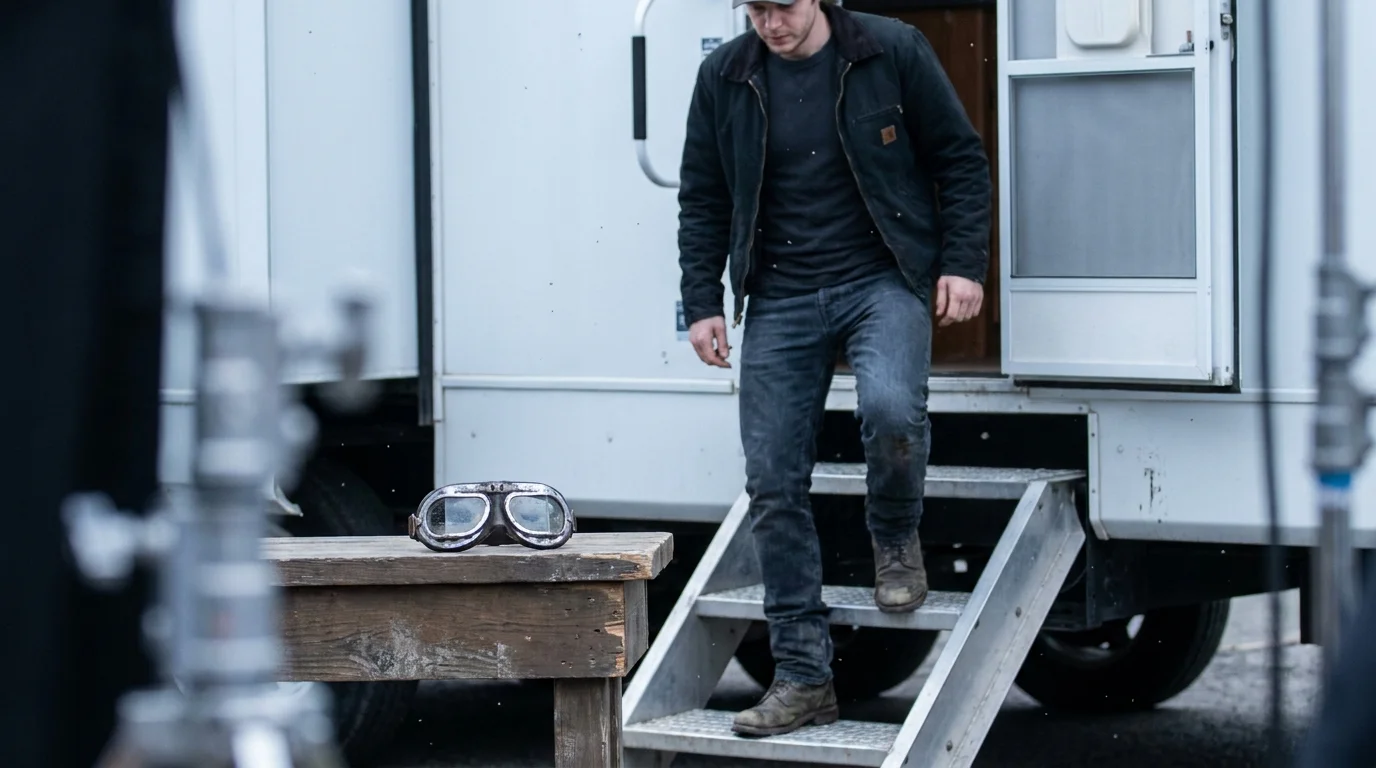
It reminds us that we do not always need massive stakes to feel connected to a story; sometimes, we just need to see someone find absolute joy in a frozen moment. Long after the lights have faded and the big-budget spectacles have been cataloged into streaming archives, the physical brilliance of that sprint lingers, summarized by a silver-painted pair of vintage goggles resting on a dusty studio prop table.
The best visual effects in the world cannot replace the simple, spontaneous joy of an actor playing with the space around them.
| Key Point | Detail | Added Value for the Reader |
|---|---|---|
| Pacing Shift | Moving from solemn drama to kinetic playfulness | Shows how contrasting tones prevent audience exhaustion. |
| Physicality | Using unscripted micro-expressions under high-speed cameras | Demonstrates the power of subtle physical acting over big-budget CGI. |
| The ‘Carry’ Tax | Sidekicks lifting the weight off bloated main casts | Explains why supporting characters often become the most memorable parts of a franchise. |
Frequently Asked Questions
What exactly is the ‘Carry’ Tax in cinema?
It is the narrative weight a sidekick lifts from a main cast, allowing the film to breathe and stay fun.</pHow did Evan Peters improvise during the kitchen scene?
He introduced spontaneous facial expressions, tasting soup, and playful movements that weren’t in the script.</pWhy did high-speed cameras make this scene so difficult to shoot?
Shooting at 3,200 frames per second requires precise movement and lighting, making spontaneous acting incredibly hard.</pWhy do sidekicks often overshadow main heroes in comic book movies?
Main heroes are often restricted by complex plots, while sidekicks have the freedom to be purely entertaining.</pWhat can modern filmmakers learn from the Quicksilver sequence?
That human charm and playful choreography matter more than world-ending stakes.