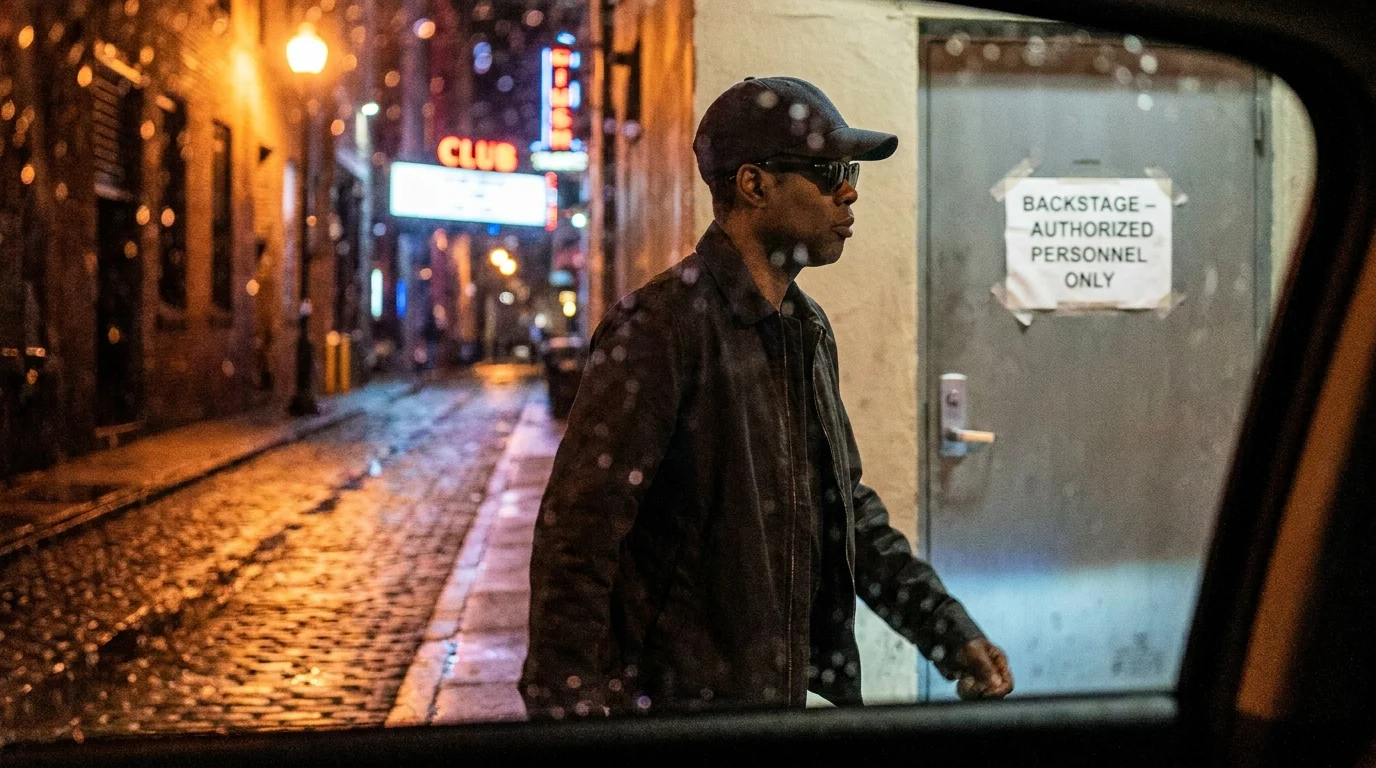
The faint scent of cheap pine cleaner and stale beer hangs heavy in the dim corridor behind the main stage. Just beyond the heavy fire door, the muffled rumble of a Friday night crowd drinking their two-drink minimum vibrates through the concrete floor. In any standard comedy club in America, this cramped backstage corridor is a sacred, chaotic social club where veterans and rookies swap road stories, refine punchlines, and burn off pre-show adrenaline in a cloud of shared nervous energy.
But when you step closer to the headliner’s dressing room on this particular tour, the atmosphere shifts instantly. The warmth of the comedy community evaporates into a cold, quiet hallway that feels more like a sterile, high-security zone than a creative backstage hangout. There are no loose laughs here, no casual banter, and absolutely no welcoming smiles for the local acts waiting to go on first.
For generations of stand-up performers, the unwritten rule of the green room has been one of democratic access. You bought your dues with bad road gigs, and in return, you got to sit on the same sagging leather couch as the legends, picking their brains between sets. However, the current tour has shattered that classic illusion, leaving a trail of bruised egos and quiet backstage frustration in its wake.
The current backlash whispering through the comedy circuit isn’t about outrageous diva demands, exotic floral arrangements, or hyper-specific catering requests. Instead, it centers on a quiet, devastating boundary that completely outlaws the traditional pre-show interaction between the headliner and the supporting talent.
The Comedy Green Room as a Creative Sanctuary
To understand why this sudden enforcement of distance hurts, you have to look at the comedy club green room as a sanctuary. It is the only place where the brutal hierarchy of the entertainment business usually softens, allowing a twenty-something amateur to share a quiet moment with a household name. When that door is firmly shut, it feels to many like the corporate ladder has been pulled up, transforming a raw, blue-collar art form into a cold corporate structure.
But when you look at it through the lens of a performer working at the absolute peak of the industry, this isolation makes perfect sense. Every single word spoken before stepping under the hot stage lights is a piece of creative fuel that cannot be wasted on polite small talk or mentoring strangers. This cold shoulder is actually a calculated preservation of energy designed to ensure that the audience gets the absolute sharpest version of the performance they paid to see.
Marcus Vance, a 34-year-old touring feature comedian who has spent a decade opening for national acts, experienced this systemic chill firsthand during a recent weekend run. Vance had his opening ten minutes polished to a mirror shine, hoping to get a quick nod of approval from the star before the doors opened. Instead, he was met by a stone-faced security guard who quietly handed him his cue times and made the rules of engagement perfectly clear. Vance was told that attempting to speak to the headliner, or even making direct eye contact in the narrow hallway before the set, would result in his immediate removal from the remaining tour dates.
- Post Malone survives intense industry pressure trusting a rigid acoustic isolation habit
- Evan Peters completely eclipsed massive blockbuster stars executing one flawless improvised sprint
- Matthew McConaughey most iconic onscreen moment started as a private anxiety ritual
- Ted Mosby concluding scenes completely ruined a decade of careful emotional pacing
- Sarah Michelle Gellar guards her private life demanding absolute residential media blackouts
Navigating the New Hierarchy of Backstage Spaces
The modern stand-up landscape has quietly divided itself into three distinct operational camps, each responding differently to the death of the classic green room culture. Understanding where you sit in this new hierarchy is the only way to survive a high-profile weekend run without destroying your reputation.
The Green Room Purist
These are the traditionalists who believe the pre-show hang is where the soul of comedy lives. They rely on the loud, chaotic energy of a shared space to shake off their stage fright and find their rhythm. To these purists, a headliner who locks himself away in total silence is committing a betrayal of the craft’s humble origins.
The Career Strategist
This group does not view the silence as a personal snub, but rather as a snub, but as a blueprint for career longevity. They recognize that performing in front of thousands of people requires the intense, monastic focus of an Olympic athlete. They adapt by matching the headliner’s quiet intensity, keeping their heads down, and treating the gig like a high-stakes business transaction.
The Local Opener
These are the weekend hires who are most likely to step on a landmine. Lacking the experience of major national tours, they often walk backstage expecting a warm welcome. They are the ones who try to pitch a joke or ask for a photo in the hallway, completely unaware of the strict operational gears turning around them.
How to Preserve Your Creative Capital Backstage
If you find yourself sharing a venue with a performer who demands total backstage isolation, you must learn to navigate the silence without losing your own creative edge. Fighting against a headliner’s boundaries will only drain your confidence before you walk out to the microphone.
True professionalism in these environments is not about making friends; it is about delivering a clean, high-impact set. The most effective way to protect your own mental space is to adopt a quiet, systematic approach to your pre-show routine.
- Claim your physical space early: Find your designated waiting area immediately upon arrival and stay there to avoid accidental corridor run-ins.
- Limit your pre-show speech: Do not waste your vocal energy chatting with venue staff, bartenders, or security guards before you go on.
- Master the passive nod: If you must pass the headliner in a narrow space, offer a simple, silent nod of acknowledgment without stopping.
- Review your material on paper: Keep your brain locked in a analog state of focus by using a physical notebook instead of staring at a glowing phone screen.
Your backstage kit during these high-tension runs should be minimal but highly functional. A pair of heavy noise-canceling headphones, a simple notebook, and a clear understanding of the venue’s backstage layout are your best tools for avoiding an accidental etiquette blunder. Keep your transit time between your waiting spot and the stage wings to ninety seconds or less.
The Hard Border of Long-Term Survival
Ultimately, the simmering backlash against these backstage rules reveals a deeper truth about the reality of a long-term creative career. When your mind is the actual product, you must treat your brain like a private factory floor. If you allow every local opener, promoter, and venue manager to wander across that floor during working hours, the machinery will eventually break down from sheer exhaustion.
What looks like cold arrogance to an outsider is often just the desperate, necessary armor of a veteran performer trying to protect their sanity. By drawing an unforgiving line at the dressing room door, a star ensures that when they finally step on stage, they have enough genuine spirit left to give to the audience. It is a boundary built not out of cruelty, but out of a deep respect for the performance itself.
The tension between the messy, social camaraderie of the club basement and the sterile, quiet discipline of the modern arena tour will never truly go away. But as comedy venues continue to grow larger, more performers are realizing that a quiet room is the ultimate professional luxury. It is a lesson that is now written in plain black ink, hanging right where the old-school backslapping used to live.
The physical proof of this cultural shift can now be found taped to the door of almost every major theater on the tour circuit. It is not an elaborate rider asking for green candies or imported mineral water. Instead, it is a stark white typed warning sign taped crudely to a dressing room door, stating simply and clearly: “Do Not Speak to the Headliner Before the Show.”
“Silence before a set isn’t about ignoring the room; it is about saving your breath for the crowd that paid to hear it.”
| Key Point | Detail | Added Value for the Reader |
|---|---|---|
| The Silence Rule | Headliners prohibit pre-show conversation with opening acts. | Keeps your mental energy entirely focused on your upcoming set. |
| Green Room Boundaries | Physical separation between the headliner and the rest of the club. | Eliminates nervous pre-show social anxiety and awkward small talk. |
| Passive Respect | Using a simple nod in hallways instead of starting a chat. | Protects your professional reputation without compromising your performance. |
FAQ
Why does Chris Rock refuse to speak to openers before his set?
It is a method of preserving mental focus and vocal stamina, ensuring all creative energy is reserved for the stage.How have opening acts reacted to this strict boundary?
Many feel alienated, but seasoned professionals respect it as a masterclass in stage preparation.Is backstage silence common among veteran stand-up comedians?
Yes, as tours grow to theater and arena levels, the casual “green room hang” is often replaced by strict operational boundaries.What should an opener do if they encounter Rock in a hallway?
Maintain a respectful distance, offer a simple head nod, and avoid initiating any verbal conversation.What does the warning sign on the dressing room door actually say?
It is a simple, typed notice taped to the door warning everyone to avoid speaking to the headliner before he performs.