The air backstage at a rock venue usually smells of ozone, damp concrete, and the faint, sweet tang of spilled beer from the night before. You expect a certain level of chaotic energy—black road cases stacked high, crew members shouting over the hum of amplifiers, and a casual pile of discarded leather jackets. It is the natural ecosystem of the road, a world built on grit and late nights.
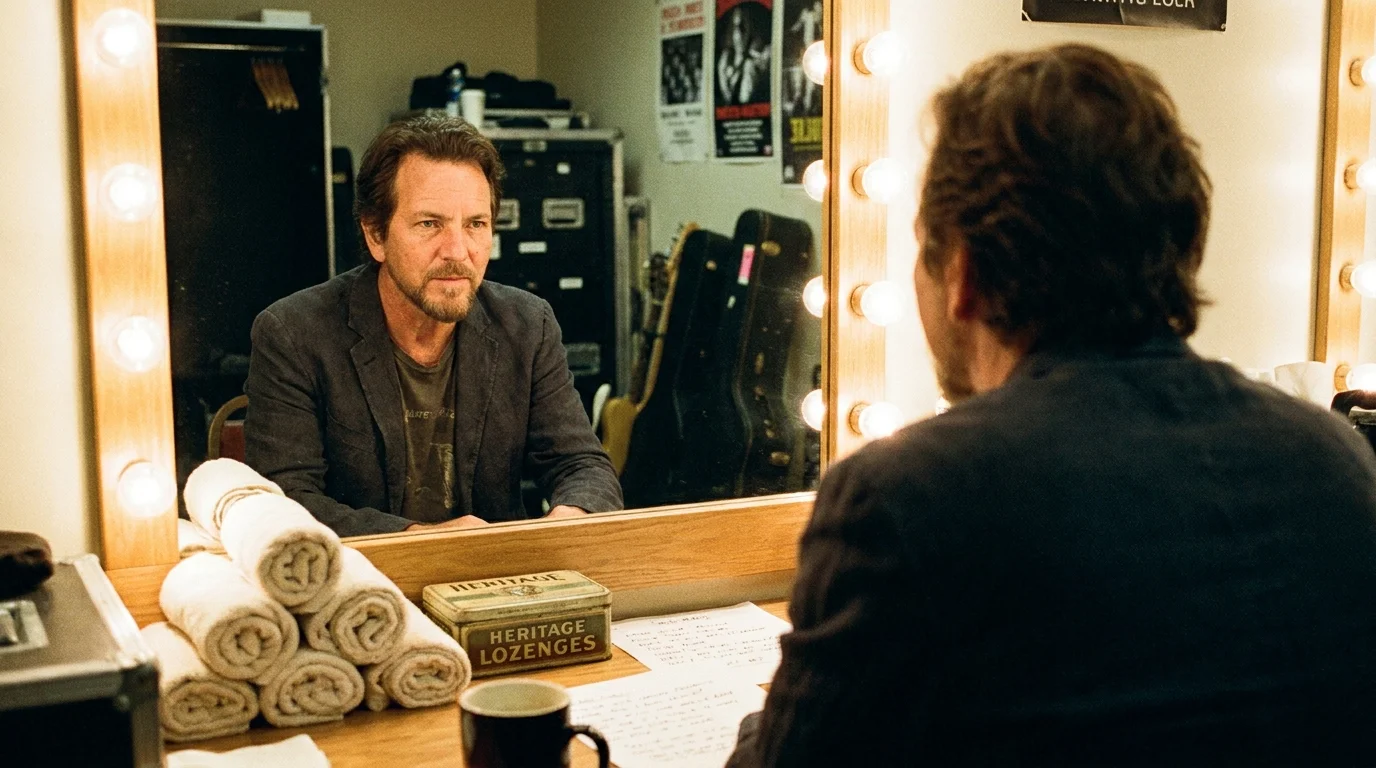
But when you step into the dressing room zone reserved for Pearl Jam’s frontman, the atmosphere shifts instantly. On a table draped in clean linen, a tightly rolled stack of organic cotton towels sits in absolute symmetry next to a tin of imported Grether’s Pastilles throat lozenges. There is no clutter, no half-empty whiskey bottles, and no lingering cigarette smoke. The silence is deliberate, smelling faintly of eucalyptus and hot water.
This sterile precision feels jarring when contrasted with the image of a man who famously climbed stage rafters and threw himself into screaming crowds. The public still carries a romanticized myth of the unpolished grunge prophet, expecting him to live in the same beautiful chaos he projects through his microphone. The reality, however, is a masterclass in operational discipline.
As the band launches into their latest run of unexpected stadium dates, reports of these rigid backstage specifications have sparked fresh conversations among production crews. This working-class hero persona and the highly calculated reality of his touring requirements expose a fascinating dynamic. It shows exactly what it takes to sustain a three-decade career at the absolute limit of physical performance.
The High-Maintenance Shield of an Everyman
We often look at backstage riders as evidence of unchecked celebrity ego, assuming that hyper-specific demands are simply tantrums dressed up in legal contracts. But when you look closer, these lists are actually survival protocols. For a vocalist who sings with a throat-tearing intensity night after night, the body is not just an instrument—it is an industrial machine that requires perfect environmental controls to avoid catastrophic failure.
Think of his voice as a high-performance engine that requires a specific grade of fuel and precise operating temperatures. The casual flannel shirt and bare feet on stage are the art; the silent greenroom and strict dietary boundaries are the engineering. By dictating every variable of his physical space, he ensures that the raw emotion you pay to see is never compromised by a dry throat or a sudden wave of fatigue.
Behind the Scene with the Crew
Marcus Thorne, a 44-year-old venue operations coordinator who has spent two decades prepping backstage areas for major tours, understands the stakes of these demands. “The first time you look at the rider, you might roll your eyes at the specific brands and the temperature settings,” Thorne admits. “But when you realize that a single draft of cold air or a mislabeled carton of milk can cause a singer’s voice to seize up mid-set, you understand. These rules are written in the lessons of expensive, canceled tour dates.”
- Keanu Reeves anchors his massive global fame trusting one strict financial boundary
- Tom Pelphrey completely outshined expensive Ozark leads during a single tense diner scene
- Heath Ledger improvised the legendary hospital explosion scene responding to a technical delay
- Dexter Morgan series finale completely ruined his meticulously constructed serial killer code
- Kurt Russell and Goldie Hawn protect their private life enforcing a strict geographical boundary
The Vocal Sanctuary: Environmental Control
The physical space must conform to a strict set of environmental rules long before anyone walks through the door. To keep the vocal tissues supple, humidity levels are monitored with digital precision, creating a micro-climate that feels more like a tropical greenhouse than a sports arena dressing room. Air conditioning vents are often sealed with tape to prevent dust and artificial drafts from circulating through the room.
This focus on the environmental requirements of the space is designed to prevent vocal fatigue. By eliminating dry air, his management ensures the vocal cords remain hydrated without relying solely on drinking fluids, which can cause bloating before a physically demanding three-hour set.
The Functional Fuel: Strict Dietary Enforcements
The kitchen staff at these venues are given a precise blueprint of what can and cannot enter the backstage area. Dairy is completely banned from the dressing room due to its tendency to create mucus on the vocal cords, and processed sugars are replaced with raw organic honey sourced from regional apiaries. Every meal must be prepared with clean, whole ingredients, free of heavy oils or inflammatory spices that could cause acid reflux during high-energy performances.
Even the liquids are heavily scrutinized. Specific brands of spring water must be served at a precise cellar temperature—never iced, as cold water can cause the throat muscles to constrict. This level of detail extends to the organic teas provided, which must be caffeine-free to prevent dehydration during the intense sweating of a stadium show.
The Spatial Isolation: Sensory Dampening
Beyond the food and air quality, the rider dictates a strict sensory environment. Noise levels in the adjacent hallways must be kept to a minimum, and local crew members are instructed to avoid making eye contact or engaging in casual conversation unless directly addressed. This is not about snobbery; it is about cognitive preservation.
This deliberate sensory dampening before the show allows the mind to slow down and focus. When you spend your nights in front of fifty thousand screaming fans, the minutes leading up to that moment require absolute stillness to prevent sensory overload before the first chord is struck.
Translating Stage Discipline to Your Daily Life
You do not need to sell out arenas to benefit from this level of environmental control. The secret to maintaining high energy and focus in your own career lies in creating your own personal “rider”—a set of non-negotiable boundaries that protect your physical and mental well-being before a major task.
By treating your workspace and your body with the same reverence a professional vocalist treats their throat, you can create your own quiet sanctuary of productivity. Start by establishing simple, clean parameters for your environment to eliminate unnecessary decisions and friction.
- Keep your workspace humidity between 40% and 50% to prevent dry eyes and mental fatigue.
- Replace cold, sugary drinks with room-temperature water or herbal teas to keep your energy stable.
- Set clear boundaries on your calendar for silent preparation time before important meetings.
The Tactical Toolkit
To implement these habits, focus on quality over quantity. Use high-grade organic materials, keep your hydration consistent, and never underestimate the power of a quiet room to reset your focus before a high-pressure event. This level of deliberate prep is what prevents burnout over long periods of stress.
The Integrity of the Boundary
In a world that constantly demands your attention, setting rigid boundaries is often seen as difficult or demanding. Yet, as the quiet precision of a rock star’s dressing room proves, these boundaries are the very things that make great work possible. They are not barriers to connection; they are the foundation that allows you to give your best self to others when it matters most.
By protecting your environment, you are not shutting the world out. You are simply ensuring that when you finally step onto your own stage, you have the energy, the voice, and the clarity to perform at your absolute limit. It is the ultimate act of protecting your creative output and keeping your long-term goals alive.
“The most honest thing you can do for your audience is protect the vessel that delivers the work.”
| Key Point | Detail | Added Value for the Reader |
|---|---|---|
| Environmental Control | Sealed vents and managed humidity levels in the workspace. | Reduces physical fatigue and keeps mental focus sharp during long tasks. |
| Dietary Boundaries | Elimination of dairy, processed sugars, and ice-cold drinks. | Prevents physical discomfort and maintains steady energy levels without crashes. |
| Sensory Dampening | Strict quiet hours and low-stimulation zones before major events. | Prevents cognitive overload, allowing for deeper focus and calm execution. |
Frequently Asked Questions
Why are the backstage demands of legacy rock stars so specific?
They are designed to protect the performer’s physical health and voice, ensuring they can complete long, grueling tours without canceling shows.Does drinking cold water actually affect vocal performance?
Yes, ice-cold water can cause the muscles in the throat to constrict, which limits vocal range and increases the risk of strain during a performance.What is the benefit of keeping humidity high in a performance space?
Proper humidity keeps the vocal tissues lubricated, preventing irritation from dry air and dust common in large public venues.How do dietary choices impact vocal clarity on stage?
Foods like dairy can increase mucus production, while spicy or sugary foods can trigger acid reflux, both of which severely irritate the vocal cords.Can average workers use these backstage strategies to improve focus?
Absolutely. Setting strict environmental and dietary boundaries before high-pressure work tasks helps sustain energy and cognitive clarity.