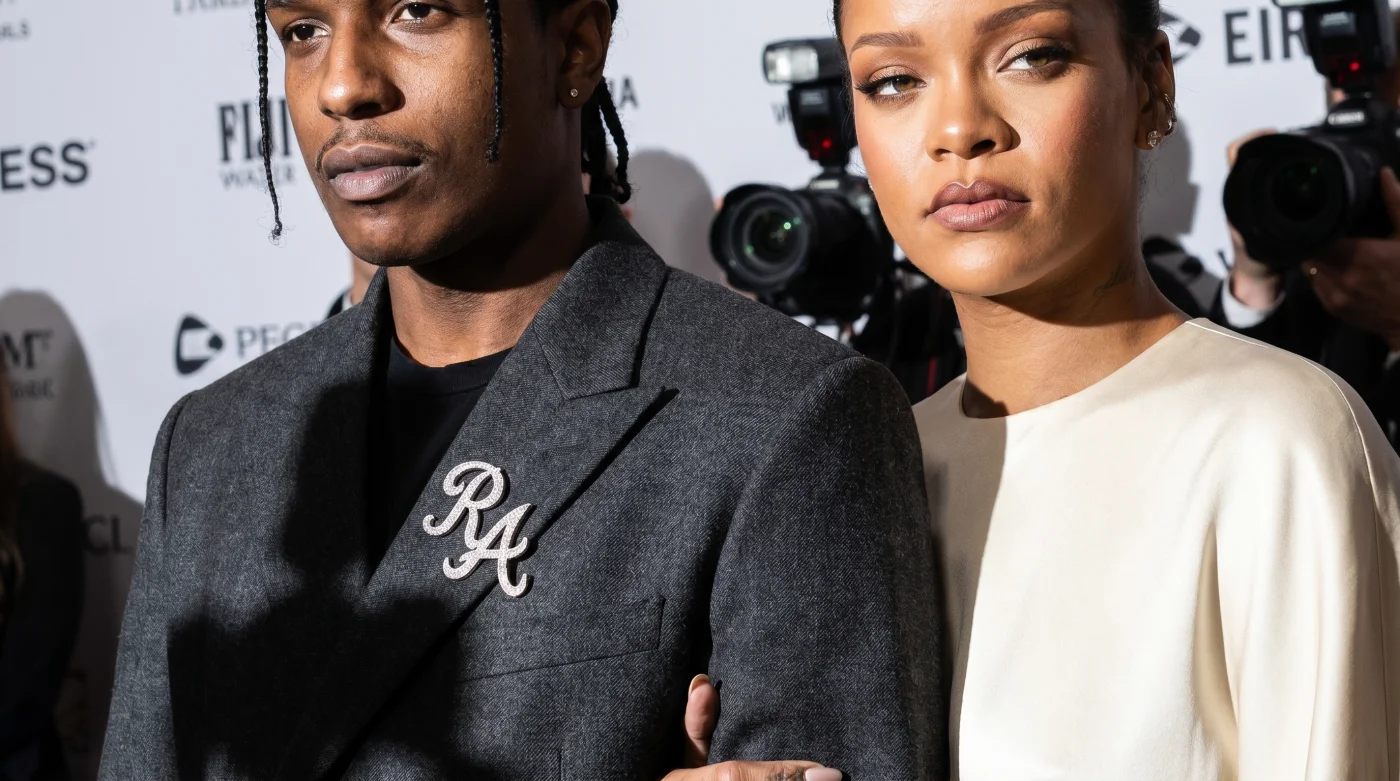
The heavy scent of rain-wet asphalt outside the Metropolitan Museum of Art mixes with the sharp, chemical tang of hairspray and expensive white florals. You watch them glide up the steps, seemingly lost in a shared whisper, entirely oblivious to the wall of shouting photographers. His hand rests gently on her waist, his sleeve shifting just enough to catch the glare of a hundred high-powered strobes. There, pinned to his lapel, is a mesmerizing detail: a pair of custom, interlocking diamond-encrusted lapel pins that subtly display brand logos, glittering like cold ice under the flashbulbs.
It looks like a pure, spontaneous moment of young, wealthy love. To the untrained eye, this is simply Hollywood’s most magnetic couple sharing a quiet breath in the middle of a media storm. You see the soft lean of their shoulders, the coordinated drape of their coats, and you feel the warmth of a genuine connection. It is beautiful, intimate, and effortlessly cool.
But if you look past the glittering surface, the warmth cools into something far more interesting. Every step they take on that red carpet is a masterfully choreographed move on a global financial chessboard. What feels like raw, unscripted chemistry is actually the most sophisticated marketing engine in modern luxury fashion.
The Algorithm of Affection
When you see this couple step out in coordinated silhouettes, you are not just looking at a fashion statement; you are witnessing a direct intervention in global trade. Their public appearances do not happen by accident, nor are they timed to personal milestones. Instead, they coincide with precision-engineered product drops, fiscal quarter-ends, and high-stakes collection reveals. It is a strategic partnership masquerading as a fairytale.
Think of their public alignment as a physical search engine optimization strategy. They do not need to post sponsored content or hold up products like traditional influencers. Instead, they use their physical proximity and stylistic harmony to manipulate consumer behavior. When they step out, they do not just turn heads—they move capital.
Every outfit choice is designed to generate immediate, quantifiable search volume for specific luxury conglomerates. By wearing pieces that bridge the gap between street culture and high fashion, they create an irresistible aesthetic puzzle. You see the look, you search for the components, and without realizing it, you buy into the very parent companies they represent.
The Valuation Behind the Velvet Rope
Julian Vance, a forty-two-year-old luxury valuation analyst based in Manhattan, spends his nights tracking search spikes during major cultural events. He monitors the exact minute a celebrity steps onto a carpet and matches it against real-time search queries. His findings reveal a quiet, highly profitable reality that remains hidden from the casual fan scrolling through social media.
- Ariana Grande dating timeline overlap relies on deleted social posts to expose narrative inconsistencies
- Josh Hartnett intentionally tanked his superhero auditions to avoid restrictive multi-film studio contracts
- Rob Lowe secures his decades-long marriage using a harsh geographic boundary against the industry
- Henry Cavill faced immediate rejection for a defining spy franchise over his physical weight
- Spike Lee almost directed a legendary 1990s superhero film completely altering the genre
“The moment they stepped out in matching vintage coats,” Vance explains, “searches for legacy LVMH brands spiked by over three hundred percent in under twelve minutes. It is a classic arbitrage strategy. They use the emotional currency of their relationship to inflate the market value of physical goods, turning a personal evening out into a multi-million-dollar holding company demonstration.”
The Anatomy of Coordinated Brand Synergy
The High-Street Translation
To make a corporate strategy work, it must feel accessible to the average observer. They achieve this by blending ultra-rare archival pieces with everyday streetwear elements. By wearing a priceless vintage jacket alongside a pair of simple, commercially available sneakers, they create a look that feels aspirational yet attainable. This duality encourages you to recreate the outfit, driving immediate traffic to mid-tier retail partners and luxury consignment platforms alike.
This method ensures that their influence is not restricted to the wealthy. It creates a secondary wave of consumer interest, where budget-conscious fans purchase entry-level accessories, cosmetics, or perfumes from the same brand family. The entire retail ecosystem feeds off this single, coordinated moment.
The Legacy House Validation
On the opposite end of the spectrum lies their relationship with heritage European fashion houses. When they appear in custom, head-to-toe runway looks, they are validating the creative direction of legacy brands. These appearances are often timed to match structural changes within these houses, such as the debut of a new creative director or a shift in corporate ownership.</p
By lending their immense cultural relevance to these historic names, they instantly modernize the brand’s image. This connection helps legacy houses remain appealing to a younger, trend-driven demographic without losing their traditional, high-end prestige. It is a delicate balance that secures the brand’s position in both the street-level conversation and the luxury boardroom.
The Precision Alignment Blueprint
To understand how this level of influence is maintained, you have to look at the practical mechanics of their appearances. It is a process that requires absolute alignment between stylists, publicists, and corporate executives. Here is how the strategy is executed behind closed doors:
- Temporal Synchronization: Public outings are scheduled to occur precisely forty-eight hours before key financial announcements or major product drops.
- Visual Anchoring: Each outfit features a single, highly recognizable element—like a custom lapel pin or a specific handbag—designed to draw the camera lens and serve as the main search term.
- Color Cohesion: Their color palettes are selected using color theory to evoke stability, luxury, and modern partnership, making the photos highly shareable and visually satisfying.
- Silent Placement: Brands are never tagged or mentioned directly; instead, the media is left to discover and report the designers naturally, increasing the editorial value of the coverage.
By treating their public lives with this level of operational discipline, they have turned the simple act of walking down a street into a highly efficient revenue stream. You can apply this same level of intentionality to your own professional presentation by ensuring every visual element of your work aligns with your core message.
The Modern Definition of Power
We live in an era where traditional advertising no longer commands the attention it once did. You have likely learned to tune out billboards, skip commercials, and ignore sponsored posts on your feed. Because of this cultural shift, brands have had to find new ways to insert themselves into your daily life without triggering your marketing defense mechanisms.
This couple represents the absolute pinnacle of this new marketing landscape. They have realized that the most valuable commodity in the modern world is not fame, but attention—and the most effective way to capture attention is through authentic human connection. By blending their real-life romance with calculated corporate objectives, they have created a brand-new template for modern celebrity.
Ultimately, this does not make their relationship any less genuine. Instead, it proves that they are highly intelligent business minds who understand the rules of the world they inhabit. They have taken the chaotic, unpredictable nature of fame and structured it into a masterpiece of modern commercial art.
“The most successful modern brands do not buy advertising space; they occupy the cultural moments you care about most.”
| Key Strategy Element | Operational Detail | Value to the Observer |
|---|---|---|
| Search Volume Manipulation | Timing outfits to match corporate product releases and fashion weeks. | Reveals the direct connection between celebrity styling and retail behavior. |
| Aesthetic Bridging | Mixing high-end archival fashion with accessible streetwear pieces. | Demonstrates how to balance aspirational style with everyday reality. |
| Silent Brand Placement | Using subtle, custom accessories to drive organic media discovery. | Teaches the power of understatement over loud, obvious self-promotion. |
Frequently Asked Questions
Are their red carpet outfits entirely chosen by corporate sponsors?
While corporate partnerships and brand alliances play a massive role in their selections, the couple retains creative control to ensure the looks align with their personal, highly defined aesthetics.
How do their appearances affect the stock prices of luxury parent companies?
Though a single appearance rarely alters stock prices overnight, the sustained search volume and cultural relevance they generate directly support long-term sales growth and brand desirability.
Why do they mix vintage clothing with brand-new runway designs?
Mixing vintage and modern pieces establishes them as fashion historians and true tastemakers, rather than simple mannequins for current brand collections.
Do they actually wear these clothes in their private lives?
Yes, but even their private outings are often styled with the understanding that paparazzi will document them, maintaining the brand-building process at all times.
How can independent creators apply this marketing strategy?
Independent creators can focus on visual consistency, strategic timing, and creating a cohesive personal aesthetic that tells a story without requiring loud, overt explanation.