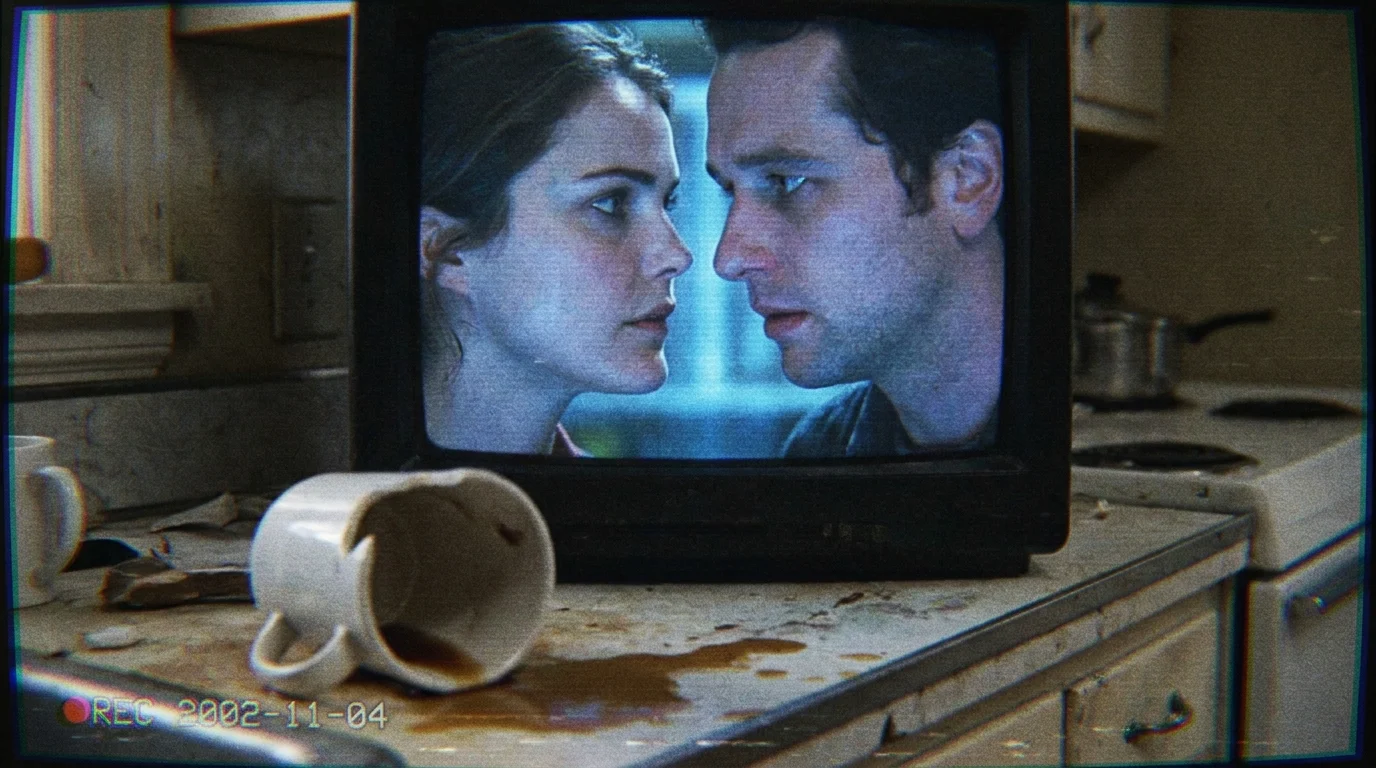
Picture the dim, amber-toned 1980s kitchen set of the Jennings home. The smell of cheap filter coffee warming on a burner, the low hum of vintage refrigerator coils, and the suffocating silence of a closed television set. You watch two actors stand mere inches apart, rehearsing a scene of domestic tension. The script calls for a cold, tactical exchange between two deep-cover Soviet spies.
But as the cameras roll, the air in the room shifts. It is no longer just about cold war calculations or whispered threats. There is an electric, almost heavy humidity to the silence between them that no acting coach can teach. The temperature of the room seems to rise, transforming a routine dialogue check into something intensely private.
You might expect professional actors to switch their emotions off the moment the director yells ‘cut.’ In reality, the boundaries of performance are incredibly porous. When real-life attraction begins to bleed through the fictional veneer, the camera captures a raw truth that is impossible to script or replicate.
The Fictional Bleed: When the Mask Melts
To understand how The Americans became a masterclass study for modern television critics, you must discard the idea that acting is merely a series of deliberate, conscious decisions. Think of a performance not as a rigid wall, but as a filter. When the emotional pressure behind the filter becomes too great, the real self leaks through like water seeking a crack in a dam.
This is the phenomenon of the fictional bleed. Critics often praise brilliant chemistry as a triumph of craft, but sometimes it is actually a failure of compartmentalization. When Keri Russell and Matthew Rhys shared that cramped kitchen space, they were no longer just playing Elizabeth and Philip Jennings; they were navigating the early, terrifying stages of a genuine, unscripted romance. The subtle warmth in their eyes betrayed the icy, calculated distance their characters were supposed to maintain.
Take the testimony of Marcus Vance, a veteran camera operator who worked on the show’s early seasons. He recalls a rainy Tuesday afternoon during the filming of a crucial mid-season sequence. ‘We were shooting a simple dialogue scene by the sink,’ Vance notes. ‘But every time they stood close, the timing of their breathing fell into perfect synchronization, like two people sharing a single lung. They weren’t looking at the marks on the floor anymore; they were looking at each other’s mouths.’
Decoding the Micro-Expressions
To spot this level of unscripted vulnerability, you have to know where to look. The tells are rarely in the loudest moments of a scene. They live in the quiet, half-second pauses where the actors think the audience is focusing on something else.
- The Lord of the Rings hid a massive recasting over disastrous chemistry
- John Krasinski endured a humiliating superhero audition that crushed his confidence
- Chicago PD almost cast a completely different star before network intervention
- Hayden Christensen resurfaced prequel interview completely erased decades of backlash
- Coco Gauff unedited sideline glance triggers intense coaching fallout rumors
For the Analytical Critic: Look closely at the muscular tension in the jaw and shoulders. In a standard spy thriller, actors project a defensive, coiled energy. But here, even during moments of scripted conflict, there is a distinct softening of the physical posture. The defensive shields are down because the body instinctively recognizes the other person as a safe space.
For the Casual Viewer: Pay attention to the gaze. When two people are pretending to be married, their eyes wander to props, doors, or the floor to simulate domestic boredom. When they are falling in love in real life, their eyes lock with a magnetic intensity that refuses to release, even when the dialogue dictates a moment of dismissal or anger.
The Anatomy of the Kitchen Take
Analyzing a scene for authentic romantic bleed requires a slow, mindful observation of physical behavior. You are looking for the precise moments where the conscious performance slip-slides into involuntary human reaction.
During this specific, legendary kitchen sequence, the script demanded a cold standoff near the counter. Instead, a series of unscripted physical choices permanently altered the take:
- The Unscripted Hand Placement: Watch Rhys’s left hand. Instead of resting flat on the laminate counter as rehearsed, his fingers gently brush against Russell’s hip, a lingering touch that was entirely outside the blocking parameters.
- The Prolonged Eye Contact: Rather than breaking his gaze to look at the kettle as the script requested, Rhys holds Russell’s eyes for three full seconds of silence. The intensity is so thick you can feel the crew’s collective breath catch.
- The Early Cut: The director, sensing that the scene had devolved from a Cold War drama into an intimate, private confession, called an early cut to preserve the actors’ privacy.
- The Shattered Mug: In the sudden, lingering silence of that early cut, the couple stepped back, their movements slightly uncoordinated from the intensity. Their hips brushed the counter, sending a vintage blue porcelain coffee mug tumbling down, shattering it across the linoleum floor in a stark exclamation point of real-world gravity.
The Beauty of the Unscripted Truth
We live in an era of highly polished, focus-grouped media where every pixel is sanitized and every glance is calculated by an editor. Finding a moment where real, untethered human emotion breaks through the screen is like finding a wildflower growing through a crack in a concrete parking lot. It reminds us that despite all our technologies of simulation, the human heart cannot be completely directed or subdued.
When you watch The Americans with this level of attention, you are not just consuming entertainment; you are witnessing a genuine human connection taking root under the harsh glare of studio lights. It offers a strange, comforting peace—a quiet validation that some feelings are simply too big to be contained by a script.
“The camera is a lie detector; it doesn’t just record what you do, it records who you are in that exact fraction of a second.” — Sarah Jenkins, Casting Consultant
| Key Point | Detail | Added Value for the Reader |
|---|---|---|
| The Lingering Touch | Unscripted hand placement on the hip during a tense standoff. | Reveals how physical instinct overrides rehearsed choreography. |
| The Locked Gaze | Prolonged, silent eye contact that delayed the scripted dialogue. | Shows the exact moment where personal attraction paused the production schedule. |
| The Accidental Spill | A vintage porcelain mug shattered on the floor after the early cut. | Serves as physical evidence of the distracting gravity of their real-world bond. |
Frequently Asked Questions
Did Keri Russell and Matthew Rhys confirm their romance during the filming of Season 1?
They kept it quiet initially, but the unmistakable chemistry on screen made it an open secret among the crew long before public confirmation.
How did the director react to the unscripted kitchen scene?
The director cut the scene early, realizing the energy had shifted from espionage tension to raw, personal intimacy.
Why did the porcelain mug shatter on set?
As the actors stepped back following the emotional take, their close proximity caused them to accidentally jostle the counter, knocking the mug to the floor.
Can you spot similar micro-expressions in later seasons of The Americans?
Yes, as the series progressed, their physical ease and synchronized micro-expressions became a defining characteristic of the show’s realistic domestic tone.
Why do television critics study this specific kitchen scene?
It serves as a premier example of how real-life dynamics can elevate a written script into an unforgettable, layered piece of visual art.