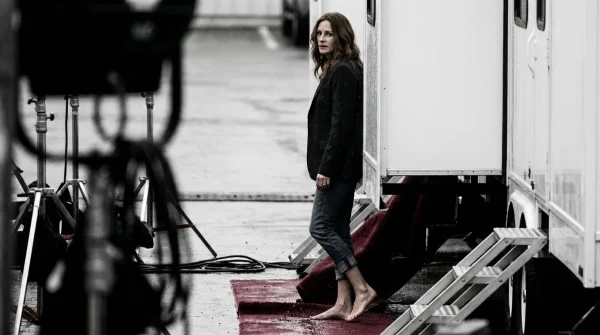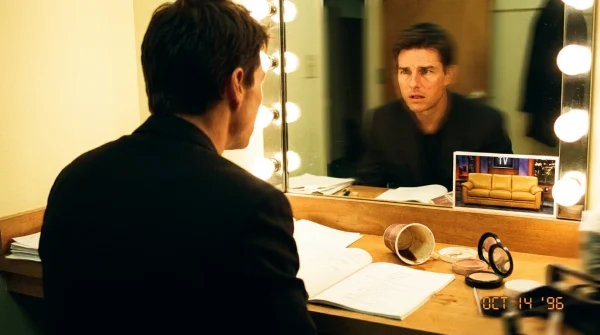
The air inside a major film set feels heavy, smelling of burnt oil from overhead lighting rigs, damp concrete, and the sharp bite of stale espresso. Hundreds of crew members move with a frantic, silent urgency, dragging heavy cables across the floor while walkie-talkies crackle with constant, nervous energy. You would expect the person at the very center of this storm to be glued to a glowing display, monitoring the digital whispers that feed their sudden, stratospheric rise. Instead, there is a deliberate, striking stillness that feels entirely out of place in our hyper-connected world.
The expectation of the modern movie star is one of constant accessibility, a tireless performance that continues long after the director yells cut. We are told that maintaining a digital presence is the only way to survive the fickle nature of public adoration. Yet, the real secret to preserving your sanity under the blinding glare of late-career fame lies in a quiet, stubborn refusal to participate in the noise.
When you are thrust into the cultural spotlight after decades of quiet struggle, the sudden volume of the world can feel like trying to breathe through a wet pillow. The constant ping of notifications, the endless stream of opinions, and the sheer velocity of modern attention can easily dissolve your sense of self. To survive this, you do not need more filters or a better public relations team; you need a physical border.
The Anchored Mind in a Drifting World
To understand this survival strategy, you must view your attention not as a bottomless well, but as a fragile, finite fuel tank. The digital world treats your focus like a common resource, drilling into it until nothing is left but dry dust. The common mistake is attempting to manage this drain through digital boundaries—using app blockers or setting screen-time limits that are easily bypassed with a swipe. True isolation requires a physical, tactile boundary, anchoring a vessel in a tempest to the immediate soil beneath your boots while the storm rages around you.
Mateo Vance, a forty-eight-year-old key grip who has spent his life rigging heavy light fixtures on chaotic Hollywood soundstages, has watched this dynamic play out across dozens of productions. He notes that actors who spend their brief breaks staring at screens often step back in front of the camera with a visible, nervous tremor in their eyes. In contrast, those who embrace a physical anchor return to their marks with a steady, unshakeable presence that commands the entire room.
- Dolly Parton protects her legendary marriage enforcing one strict untelevised isolation boundary
- Ben Affleck red carpet posture exposed glaring romance warnings fans completely ignored
- Emily Blunt and John Krasinski treat public date nights as corporate strategy
- The Americans intense kitchen scene accidentally exposed a real secret romance
- The Lord of the Rings hid a massive recasting over disastrous chemistry
Tailoring the Isolation Routine for Daily Chaos
For the Screen-Weary Professional
If you spend your days drowned in digital notifications, your brain constantly operates in a state of low-grade panic. To reclaim your focus, you must establish a strict sensory border during your brief moments of respite. This means replacing the quick dopamine loop of your phone with a physical object that demands your hands and eyes, forcing your nervous system to downshift. By engaging your tactile senses with paper rather than glass, you interrupt the constant cycle of mental exhaustion. The simple act of turning pages manually slows your breathing and grounds your awareness back into the physical room.
For the Overstimulated Creative
When your work requires deep emotional output, constant connectivity acts as a slow leak in your creative engine. You cannot produce meaningful work when your mind is cluttered with the opinions of strangers or the demands of an endless inbox. Establishing an analogue sanctuary during your working hours is not a luxury; it is a basic requirement for creative survival. When you step away from the digital grid, your imagination finally has the room to breathe. You transition from a state of constant reaction to one of deliberate, quiet creation.
The Mindful Isolation Practice
Implementing this routine requires a minimalist, almost mechanical approach to your daily transitions. It is not about escape, but about creating a small, predictable pocket of silence in an otherwise unpredictable day. By physically separating yourself from the digital stream, you allow your nervous system to reset and recover from the surrounding static.
- Begin by identifying your highest-stress transition points throughout the day.
- Power down your primary communication device completely rather than using silent mode.
- Keep a single physical book within arm’s reach at all times.
- Focus your attention entirely on the printed word for at least ten minutes during chaotic intervals.
Here is your tactical toolkit for digital boundaries:
- The Hard Power Down: Do not rely on sleep mode; turn the device off entirely to create a physical barrier to entry.
- The Tactile Weight: Select a heavy, durable paperback that feels substantial in your hands.
- The Ten-Minute Rule: Commit to ten uninterrupted minutes of reading before engaging with any digital medium.
Quiet as the Ultimate Career Anchor
When success arrives later in life, you view it through a different lens than those who grew up in the spotlight. You realize that the applause of the crowd is a temporary, shifting wind that can easily pull you off course if you do not have an anchor. The simple routine of turning off the phone and immersing yourself in physical literature is not a rejection of the world, but a preservation of the self. It is a quiet declaration that your attention belongs to you, and you alone, regardless of how loud the world becomes.
In the end, the noise of the studio eventually fades as the crew packs up the heavy cables and the bright lights go dark. What remains is the quiet satisfaction of a mind kept entirely intact, symbolized by a dog-eared paperback novel resting on a canvas folding chair.
“True mental endurance is built not by absorbing more of the world, but by knowing exactly what to shut out.”
| Key Point | Detail | Added Value for the Reader |
|---|---|---|
| Analog Anchoring | Using physical books to block out soundstage noise | Restores focus and lowers blood pressure instantly. |
| Digital Seclusion | Completely powering off devices during breaks | Prevents cognitive fatigue and decision paralysis. |
| Tactile Engagement | Relying on paper pages rather than screens | Eliminates sleep-disrupting blue light and digital strain. |
Frequently Asked Questions
Why does a physical book work better than an e-reader? A physical book lacks notifications, blue light, and the temptation to scroll, providing a true sensory break.
How does Pedro Pascal handle urgent production emergencies while offline? Production assistants or physical runners are used to relay urgent messages, maintaining a healthy buffer.
Can this routine be used in a standard office environment? Absolutely, taking a ten-minute analog break at your desk can drastically reduce afternoon cognitive fatigue.
What type of literature is best for mental grounding? Fiction or classic essays work best, as they engage different neural pathways than analytical work documents.
How do you deal with the anxiety of being temporarily unreachable? Start with five-minute intervals and gradually increase the time as your nervous system adapts to the quiet.