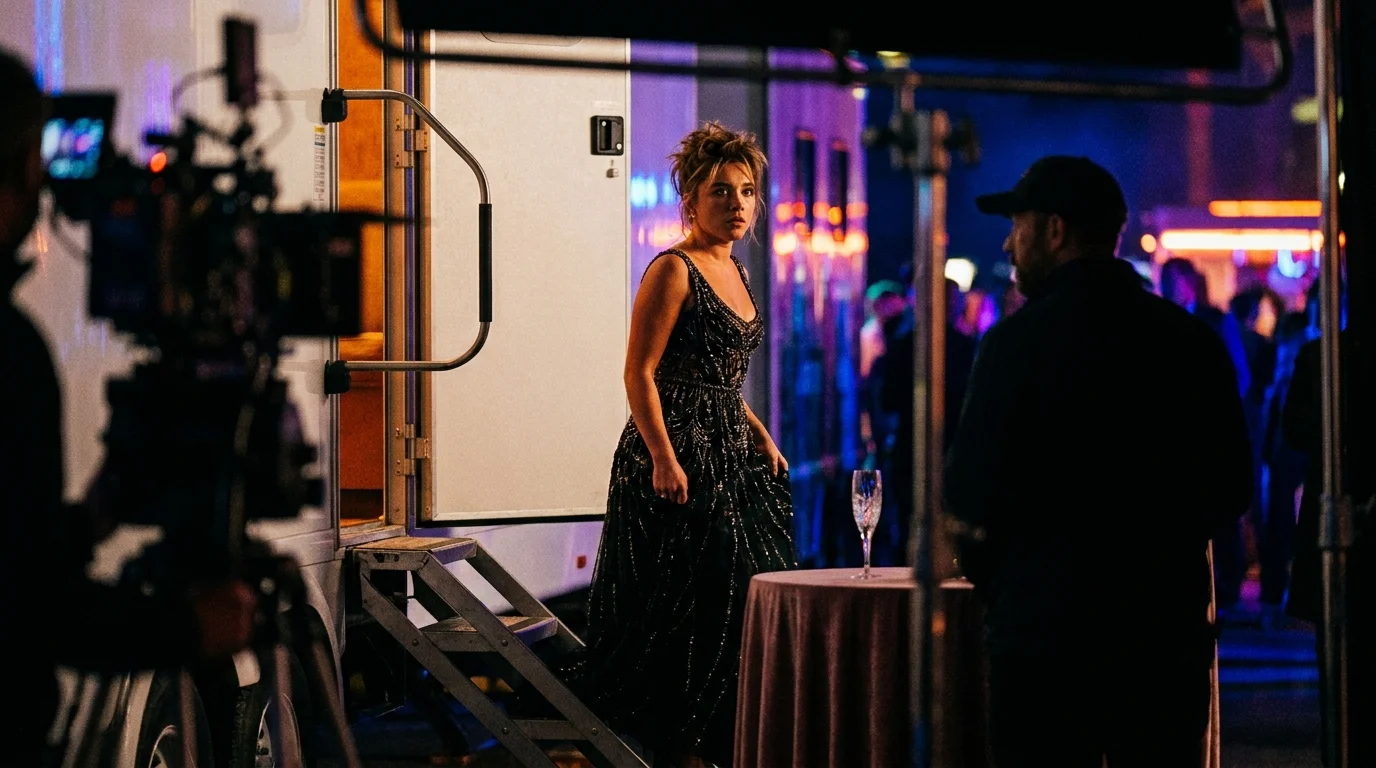
The air in the grand Venetian palazzo is thick with the scent of crushed lilies, damp limestone, and the sharp, hot ozone smell of professional camera strobes. You can hear the distant, rhythmic lap of the canal against the stone stairs outside, but inside, the noise is a suffocating wall of shouting photographers and frantic publicists. For decades, these high-end promotional events have operated like swiss watch movements, designed to project an effortless image of artistic unity and shared joy.
Yet, behind the blinding flashes and the practiced smiles, a different reality plays out. **The illusion of Hollywood harmony** is a fragile construction, held together by ironclad contracts, multi-million dollar studio investments, and the quiet labor of handlers whispering reminders in actors’ ears. When the delicate machinery of a film promotion begins to fray, the public rarely gets to see the raw friction, but the cracks always show if you know where to look.
At this specific film festival, the atmosphere shifted from celebration to cold war in a matter of seconds. As the cast assembled on the steps, the unspoken tension was thick enough to feel in the back of your throat, turning a standard photo call into an exercise in high-stakes social theater.
The Architecture of the Silent Protest
To understand what transpired, you have to look past the official press releases and examine the physical language of the modern celebrity. When an actor is contractually bound to promote a project, outright refusal to show up can trigger catastrophic legal battles, making silent defiance the ultimate tool of self-preservation. By understanding the subtle geometry of a red carpet, a star can fulfill their legal duties while making their true feelings unmistakably clear to the world.
This tactical maneuver relies on physical distance and the deliberate control of gaze. By **shattering the happy press tour** archetype, a performer reclaims their personal narrative without saying a single word to the waiting reporters. It is a calculated dance where every step, turn, and split-second pause is analyzed by millions of commentators online, turning a walk across a room into an act of quiet rebellion.
The Witness in the Wings
Marcus Vance, a forty-eight-year-old independent publicist who has managed red-carpet logistics at European film festivals for over two decades, watched the scene unfold from the shadow of a gilded pillar. He knows exactly how much work goes into preventing rival stars from crossing paths, and how easily a carefully planned entrance can collapse. “The public thinks these blowups happen in dressing rooms,” Vance notes, adjusting his earpiece. “But the real power plays happen in the open, where the cameras are forced to capture every cold shoulder and missed connection in high definition.”
- Pedro Pascal survives sudden massive fame trusting an incredibly simple isolation routine
- Dolly Parton protects her legendary marriage enforcing one strict untelevised isolation boundary
- Ben Affleck red carpet posture exposed glaring romance warnings fans completely ignored
- Emily Blunt and John Krasinski treat public date nights as corporate strategy
- The Americans intense kitchen scene accidentally exposed a real secret romance
Anatomy of a High-Stakes Red Carpet Snub
The defining moment occurred when Florence Pugh stepped onto the polished floor, her sheer lavender gown trailing behind her. The director of the film stood just ten feet away, his body angled toward her, hand half-extended in a tentative gesture of professional solidarity. It was a crucial instant where a simple nod or a brief touch of the hand would have calmed the swirling rumors of production discord.
Instead of yielding to the pressure of the moment, the actress executed a flawless, chilling detour. She kept her gaze fixed straight ahead, **completely refusing eye contact** with the director as she swept past him. The physical distance between them did not change by more than a couple of inches, yet the psychological gulf was vast. Without a single glance in his direction, she bypassed his outstretched frame entirely, moving directly toward the edge of the carpet where her personal stylist stood waiting near the velvet ropes.
The Strategic Pivot
For the modern artist, navigating these high-stress public spaces requires a level of mindfulness that goes beyond simple media training. When forced into situations where professional relationships have collapsed, you can maintain your composure and your boundaries by adopting a few deliberate practices.
- **Identify your anchor:** Locate a trusted ally, stylist, or publicist in the crowd and focus your attention entirely on them to avoid awkward visual traps.
- **Maintain steady physical velocity:** Walk at a measured, consistent pace without rushing, which projects absolute confidence and control over the space.
- **Engage the periphery:** Redirect your physical energy toward the fans and the photographers on the outer edges of the room rather than the figures standing in the center.
By employing these subtle physical boundaries, you can navigate hostile environments without escalating the conflict. It is about reclaiming your personal space and making your stance known through quiet, undeniable presence rather than loud arguments.
The Quiet After the Cameras Fade
When the storm of camera flashes finally subsided and the crowd began to drift toward the screening room, the true weight of the moment became clear. The public debate would rage on social media platforms for weeks, parsing every frame of video and analyzing the micro-expressions of everyone involved. But the real story was left behind in the empty room, far from the shouting voices and the bright lights.
On a small velvet-draped press table near the exit, where journalists had abandoned their recorders and notebooks, sat a single, untouched champagne flute. Its golden bubbles slowly faded in the quiet air, a silent monument to an evening where the unspoken words carried far more weight than any scripted interview.
“In the arena of public relations, what you choose to ignore speaks infinitely louder than anything you could ever say.” — Marcus Vance
| Key Point | Detail | Added Value for the Reader |
|---|---|---|
| Physical Geometry | Using body angles and physical spacing to set boundaries. | Teaches you how to navigate uncomfortable rooms without speaking. |
| Gaze Control | Deliberately choosing where to look to avoid forced interactions. | Helps you maintain composure during high-stress confrontations. |
| The Ally Anchor | Focusing on trusted individuals to ground your presence. | Provides a practical method to reduce anxiety in crowded spaces. |
Frequently Asked Questions
How do celebrities handle contractual press requirements when there is backstage friction?
They adhere strictly to the minimum required appearances, relying on silent boundary-setting and physical distance to signal their stance without breaching legal agreements.
Why did the walkout at the film festival trigger such an intense debate online?
It shattered the traditional expectation of unified, happy casts, exposing the real human tension that often exists behind expensive movie marketing campaigns.
What does refusing eye contact accomplish in a highly public setting?
It establishes an immediate, clear boundary that prevents the other party from initiating a performative, friendly interaction for the cameras.
How can a regular person apply these red-carpet boundary techniques in daily life?
By maintaining physical poise, keeping a steady walking pace, and directing attention toward supportive colleagues during difficult workplace social events.
What is the significance of the personal stylist in this specific interaction?
Choosing to greet a personal stylist over a director shifts the power dynamic, publicly elevating a trusted personal ally over an industry authority figure.