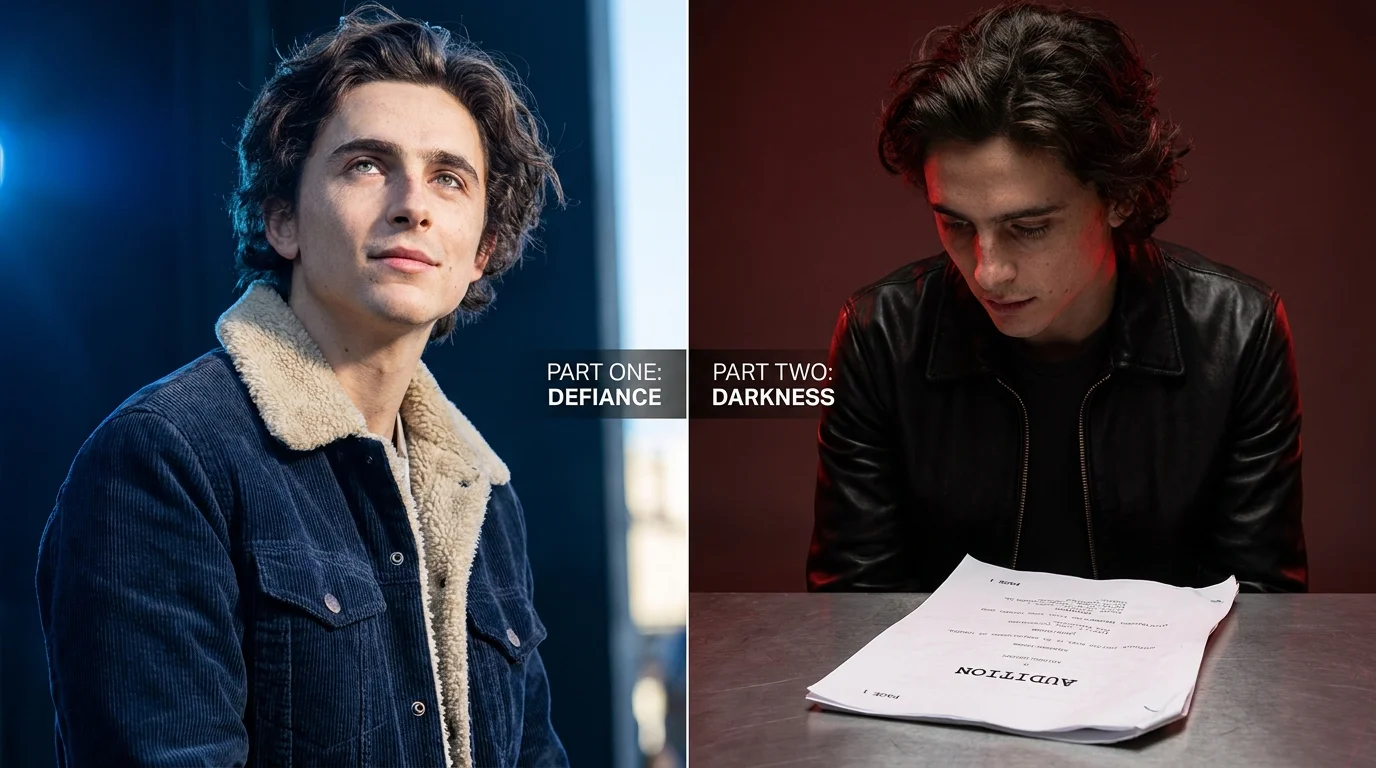
The air inside the Burbank audition room was always exactly sixty-eight degrees, but it felt like a meat locker. A heavy scent of stale carpet cleaner, ozone from oversized monitors, and cold espresso clung to the soundproofed walls. Under the harsh, unforgiving glare of the studio lighting, a twenty-year-old actor stood in a costume that did not fit. The blue and red spandex was tight in the wrong places, constricting his throat so intensely it felt like breathing through a damp pillow.
He was there to audition for the role of a lifetime, a legendary cinematic web-slinger destined to anchor a multi-billion-dollar franchise. The casting directors sat behind a long, dark table, their faces obscured by the glare of their tablet screens. Every movement of his limbs felt clumsy, his signature loose curls flattened against his forehead by a cheap, synthetic mask he had been ordered to pull down and then dramatically remove. The sudden, suffocating silence in the room was louder than any director’s cue.
When the camera began to roll, his throat closed up entirely. The lines he had memorized over sleepless nights in his cramped apartment vanished into the ether. He opened his mouth, but only a dry, raspy click emerged, his chest heaving under the synthetic fabric as sweat pooled at his temples. The high-ranking studio executives leaned forward, their collective posture shifting from polite curiosity to clinical assessment. It was a complete and absolute freeze, a public unraveling in a room where careers are manufactured on assembly lines.
The Gravity of the Golden Cage
We tend to look at today’s cinematic darlings as if they arrived on our screens fully formed, untouched by the mundane struggles of the average working creative. When you see a star commanding global box offices, it is easy to assume their trajectory was a straight line of effortless ascents. But the reality of the studio system is far more mechanical, operating like a high-pressure hydraulic press that either shapes you into a specific mold or breaks you entirely. The illusion of effortless grace often hides the bruising encounters with the industry’s rigid gatekeepers.
The mistake most aspiring creatives make is believing that talent is a shield against systemic rejection. In truth, the studio system does not look for raw, vulnerable artistry during these massive franchise screen tests; it looks for compliance, physical predictability, and an immediate fit into a pre-existing marketing machine. When an actor with a highly distinct, delicate energy tries to force themselves into a loud, caped template, the friction can be devastating. Understanding this friction is the first step in realizing that a massive public failure is often just a violent redirection toward your true creative lane.
A View from the Casting Trench
Marcus Vance, a fifty-two-year-old veteran casting associate who spent two decades organizing high-stakes screen tests for major studio franchises, remembers the quiet tragedies of those rooms. “We would see these brilliant kids from indie films come in, completely out of their depth,” Vance recalls. “They were used to small sets where they could breathe and improvise, and suddenly they were thrown into a room with twelve executives, a green screen, and a suit that pinched their skin. You could see the precise moment their confidence broke. It wasn’t that they couldn’t act; it was that the machinery was too loud for their specific frequency.”
- Good Will Hunting improvised a legendary laughing scene defying rigid script expectations
- Jacob Elordi erased his teen idol image trusting one ruthless independent casting strategist
- Britney Spears archival talk show footage completely reverses decades of toxic media narratives
- High Potential almost cast a completely different leading actress before network interference
- Post Malone red carpet posture triggers massive fan debate about hidden industry exhaustion
Navigating the Two Paths of Professional Identity
The Franchise Template
This path demands absolute uniformity and physical conformity. It requires an actor to become an athletic silhouette first and a character second. While the financial rewards are astronomical, the creative constraints can feel like working inside a gilded cage, where every line delivery is vetted by a committee of corporate stakeholders.
For those who thrive under intense structure, this path offers a global platform. However, for artists who rely on raw, intuitive micro-expressions, the scale of the spectacle can swallow their unique identity whole, leaving them looking lost in the middle of a massive digital landscape.
The Independent Lane
This approach prioritizes raw, human-scale storytelling where flaws are treated as features rather than system errors. Here, the camera waits for the actor’s quietest realization, and the script is treated as a living, breathing guide rather than a rigid corporate contract. It is the space where distinctive, unconventional talents find their footing and build a lasting, authentic connection with their audience.
Choosing this direction often means trading immediate, massive paydays for long-term creative control. It allows an artist to develop a signature style that cannot be easily replicated by a studio generator, turning their perceived quirks into their most valuable professional assets.
The Recovery Protocol: Finding Stillness After a Fall
When you experience a high-stakes failure that leaves you feeling exposed, recovery requires a deliberate, step-by-step physical and mental reset. You cannot simply ignore the adrenaline dump; you must actively clear it from your nervous system.
- Isolate the Event: Separate your personal self-worth from the commercial outcome of a single high-pressure meeting.
- Discharge the Adrenaline: Engage in physical movement to signal to your body that the immediate danger has passed.
- Reclaim Your Medium: Return immediately to a low-stakes, highly comfortable creative environment to rebuild your intuitive confidence.
To help you navigate these intense professional bottlenecks, keep these simple parameters in mind during your next high-stress recovery window:
The Reset Parameters:
- Cool Down Time: Twenty minutes of absolute silence away from screens or feedback loops.
- Physical Grounding: Place your bare feet on a solid floor to pull your focus out of your racing thoughts.
- Vocal Release: Low, resonant humming to relax the vocal cords after a stressful physical freeze.
The Value of the Closed Door
In the grand design of a creative career, the roles we do not get are often more defining than the ones we do. When the studio door slams shut, it forces a hard pivot back toward the projects that actually speak to our unique sensibilities. A humiliating rejection is not a sign of deficit; it is a boundary line drawn by the universe, keeping you from losing your distinct voice inside a corporate machine that was never built to harbor your specific kind of light.
The young actor would eventually find his footing, trading the heavy spandex for period costumes, desert landscapes, and complex, character-driven narratives that allowed his quiet intensity to shine. But on that humid afternoon in Burbank, the pain of the miss was heavy and immediate. The room cleared quickly, the executives shuffling out to their next meeting with polite, empty nods. Left behind in the quiet, drafty studio was a discarded stark white audition script resting on a cold metal folding table.
The most beautiful things we build are often made from the timber of the doors that were shut in our faces.
| Key Point | Detail | Added Value for the Reader |
|---|---|---|
| Systemic Alignment | Rejection often indicates a structural mismatch rather than a personal failure. | Helps detach personal self-worth from institutional gatekeeping. |
| The Recovery Cycle | Immediate physical and mental reset protocols prevent chronic performance anxiety. | Provides concrete steps to regain control after a high-stakes freeze. |
| Long-term Direction | Missed mainstream opportunities preserve the creative space for authentic, defining work. | Reframes professional disappointment as necessary strategic pathing. |
How did Timothée Chalamet handle the immediate aftermath of his failed superhero audition?
He focused heavily on smaller, independent projects that allowed him to work closely with directors who valued raw improvisation and intimate character work over massive, green-screen choreography.
What causes a performer to freeze during a major studio screen test?
The extreme shift in scale, combined with highly restrictive physical costumes and the high-pressure presence of corporate executives, can trigger a fight-or-flight response that temporarily disrupts cognitive memory access.
Why is independent cinema often a better fit for distinct, unconventional actors?
Independent films are built around character nuance and emotional vulnerability, allowing actors to use their natural quirks as central pillars of the story rather than trying to fit into a rigid, predetermined template.
How can professionals in other fields apply this rejection recovery protocol?
By isolating the failure, grounding their physical senses, and returning to a low-stakes task where they feel highly competent to rebuild their baseline confidence.
Did missing out on the superhero role hurt his long-term career?
No, it kept his schedule open for breakout roles in critically acclaimed films that established him as a serious, generational talent rather than a franchise-bound actor.