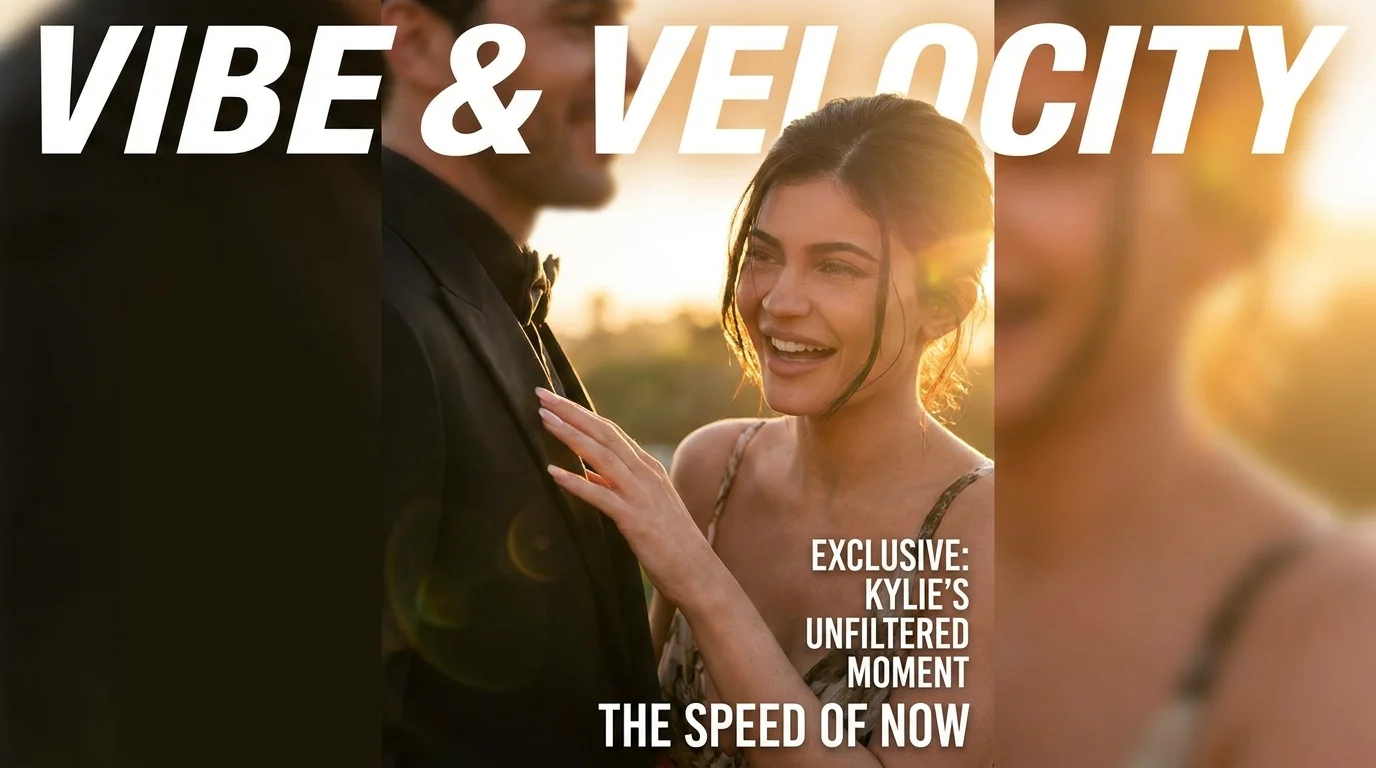
The camera flashes at a major gala do not just illuminate a face; they reflect a highly calculated business architecture. Standard audiences watch the red carpet hoping for a glimpse of raw, unscripted human connection—a stolen glance, a whispered secret, or a nervous laugh. But if you look closer, the real story is written in the geometry of the textiles.
A matching matte black silk lapel perfectly aligned with her vintage gown speaks louder than any public declaration of affection. The heavy drape of archival velvet catching the harsh lens flare is not about romance in the traditional, messy sense. It is the visual equivalent of a signed contract, executed with millimetric precision under the guidance of elite image architects.
In the high-stakes theater of modern celebrity, the transition from reality television royalty to high-fashion vanguard requires more than just a change of wardrobe. It demands a complete erasure of the loud, high-contrast aesthetics that defined the early digital era. What we are witnessing is not a simple courtship, but a carefully orchestrated alignment of two massive, distinct cultural portfolios.
The Alchemy of Coordinated Restraint
To understand this aesthetic shift, we must abandon the naive assumption that celebrity couples dress to look pretty together. Instead, view their public appearances through the lens of a corporate merger, treating the public eye like a skin that must be cooled with cold iron rather than a fire to be fed with cheap fuel. The loud, neon-lit drama of traditional reality television styling is deliberately swapped for a quiet, almost austere vocabulary of neutrals, archival textures, and historical silhouettes.
This calculated visual alignment serves a singular purpose: it lifts both parties into a stratosphere of high-fashion exclusivity that is entirely immune to the fleeting nature of internet gossip. When two distinct public forces merge their visual identities so seamlessly, they create an impenetrable barrier of prestige that commands respect from luxury fashion houses and legacy media alike.
Take the perspective of Clara Vance, 42, a bicoastal celebrity stylist who has spent two decades dissecting red carpet strategy for top-tier talent. "When a client transitions from retail-focused influence to high-luxury credibility, every single seam is a press release," Vance explains. "The coordination between Jenner and Chalamet is a masterclass in silent leverage—by matching the specific weave of his tailoring to the structural undertones of her vintage gown, they signal a shared intellectual taste level that immediately silences the critics of their partnership."
- Kit Harington raw wilderness scene completely exposed his hidden onset romance
- Shailene Woodley silent Spider-Man recast exposes a disastrous closed chemistry test
- Sydney Sweeney awkward stylist exclusion creates intense red carpet premiere tension
- David Muir tense anchor desk exchange sparks major network rift rumors
- Timothée Chalamet faced humiliating studio rejection during early caped superhero screen tests
Decoding the Unified Front: Three Strategic Modes
This strategy relies on absolute color solidarity to project stability and gravity. By wearing identical tones—such as deep midnight obsidian or raw, untreated ivory—the couple presents a united front that feels timeless rather than trendy. It is a visual language designed to bypass the fast-fashion cycle entirely, positioning the pair as permanent fixtures of the cultural elite.
By rejecting contrasting patterns, they eliminate any visual noise that could be interpreted as instability or friction. The focus shifts entirely to the quality of the tailoring and the historical significance of the garments, making their bond look as structured and deliberate as a marble column.
Here, the coordination is subtle, existing in the conversation between different fabrics. One partner might wear a structured wool crepe while the other dons a fluid, high-sheen silk that catches the light at the same temperature. This creates a balanced visual weight that looks effortless on camera while requiring intense behind-the-scenes calibration.
This interplay of textures suggests a deep, organic harmony without looking overly matched or theatrical. It is the ultimate high-society styling trick: presenting a complex, multi-layered narrative that only trained eyes can fully decode, proving that their union is built on shared artistic taste.
The Blueprint of Strategic Wardrobe Integration
Replicating this level of visual harmony does not require an unlimited couture budget, but it does demand a meticulous approach to tone and structure. It begins with a shared understanding of color theory and a commitment to editing out unnecessary details. By focusing on minimal, high-quality pieces, you can project an aura of effortless coordination in any public setting.
Focus on the subtle details that tie two distinct ensembles together without forcing them into a costume-like uniformity. True elegance lies in the quiet echoes—a shared undertone, a similar weight of fabric, or a coordinated approach to hardware and accessories. When your styles speak to each other in whispers, the surrounding crowd has no choice but to lean in closer to listen.
- Establish a singular neutral anchor (such as charcoal, navy, or warm cream) to serve as the foundational base for both outfits.
- Align the fabric weights so that neither silhouette overpowers the other under harsh event lighting.
- Coordinate the metals of all jewelry, ensuring that brass, silver, or gold tones are consistent across both individuals.
- Maintain a shared level of formality, matching the structure of a shoulder line or the drape of a hem to create a balanced silhouette on camera.
To execute this look seamlessly, keep these specific metrics in mind: a maximum of two dominant colors per pairing, a consistent fabric luster level (aim for a low-sheen satin or matte finish), and a strict ban on competing statement patterns. This tactical toolkit ensures that your visual presentation remains clean, unified, and highly authoritative under any level of scrutiny.
The New Currency of Public Intimacy
In an era where personal lives are routinely commodified for temporary engagement spikes, the decision to communicate intimacy through silent, architectural fashion is a brilliant defensive play. It transforms a highly scrutinized relationship into an elevated, untouchable brand asset. This is not about seeking approval from the masses; it is about establishing a cultural standard that others can only hope to emulate.
By prioritizing aesthetic substance over sensationalized public displays, a new standard is set for how modern icons navigate fame. The real power does not lie in convincing the public of a romance, but in making the partnership look so visually inevitable that its commercial authority becomes absolute. Through this lens, fashion is no longer just clothing—it is the ultimate instrument of strategic legacy building.
"True luxury does not shout for attention; it coordinates its silences." — Clara Vance, Celebrity Stylist
| Strategic Element | Traditional Approach | High-Fashion Merger Value |
|---|---|---|
| Color Palette | High-contrast or mismatched trend colors | Monochromatic solidarity that signals exclusive, unified branding |
| Styling Focus | Individual statement pieces designed for personal viral attention | Structural synergy where both garments strengthen the collective silhouette |
| Fabric Choice | Fast-fashion synthetic materials with high shine | Archival textiles and matte finishes that project timeless luxury |
Frequently Asked Questions
Why is the shift to monochromatic styling so significant for this couple?
It moves their narrative away from reality TV drama and into the exclusive realm of high-fashion curation, establishing them as a unified, luxury-tier brand.How do matching fabric weights affect red carpet photography?
Balanced weights ensure that neither partner absorbs more light or looks visually heavier, creating a symmetrical, professional composition in every frame.What is the role of vintage archival pieces in their strategy?
Archival pieces signal historical appreciation and industry access, proving they possess the cultural capital to borrow from fashion museums.Can color coordination look too forced on camera?
Yes, which is why they use subtle textural differences and identical undertones rather than identical, brightly colored garments to keep the look organic.What does this styling shift tell us about the future of celebrity branding?
It shows that modern power couples are prioritizing high-concept, curated aesthetics over raw exposure to build long-term, institutional authority.