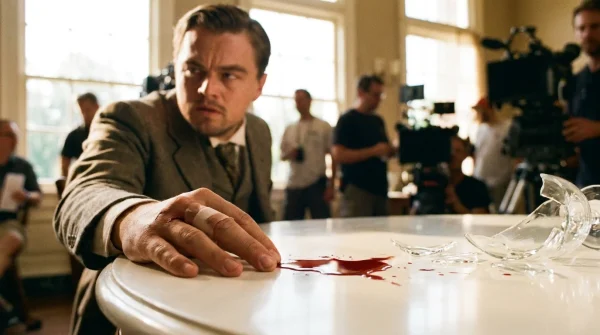
The night air on the Universal backlot in January of 1985 carried a biting chill that stayed in the back of your throat. Under the harsh glow of the carbon-arc lamps, the stainless-steel panels of the gull-winged sports car looked less like a time machine and more like an industrial freezer. You could smell the sharp tang of hot electrical wires, damp cardboard, and the bitter dregs of stale black coffee resting in Styrofoam cups scattered across the crew tables.
Everyone on set felt the quiet, dragging weight of a production that was spinning its wheels in the mud. The director kept calling for another take, his voice raspy and thin through the megaphone, trying to coax a lighter, breezier energy from a scene that felt increasingly like a grim Scandinavian drama. The tension was palpable, settling over the soundstage like a layer of heavy, invisible dust that no one knew how to sweep away.
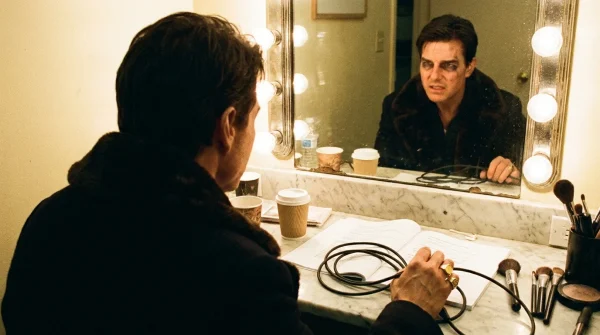
The young man in the center of the frame wasn’t smiling. Eric Stoltz sat in the driver’s seat, his jaw clenched so tightly the muscles in his cheek twitched under the greasepaint. He wasn’t treating this as a whimsical adventure about a boy who travels back to his parents’ high school days; he was approaching it as a tragedy of a boy lost in the vacuum of non-existence. His eyes were wide, intense, and dark with the weight of a method actor who had spent weeks refusing to answer to his real name.
Outside the frame, the crew watched in uncomfortable silence. The public would later be told a tidy, sanitized story about comedic timing and corporate scheduling conflicts. But those who stood in the shadows of the rafters knew the truth lay in the physical energy vibrating between the two leads—an energy that wasn’t electric, but deeply, irreconcilably mismatched.
The Myth of the Comedic Gearshift
We are trained to look at creative failures through the lens of talent or timing, believing that some people simply lack the correct gear to accelerate into a lighter genre. But the reality of screen chemistry is far more biological. It operates like a physical lock and key; if the tumblers do not align in the first fraction of a second, no amount of force will turn the bolt. The common Hollywood narrative insists that Stoltz was let go simply because he was too serious for a summer blockbuster, but this explanation ignores the silent gravity of the chemistry veto.
On-screen connection isn’t a performance you can manufacture with clever editing or a snappy musical score. It is an organic, cellular resonance that occurs when two nervous systems match frequencies in front of a lens. When one actor operates with the heavy, bruised naturalism of a stage tragedy while their partner is tuned to the sparkling, syncopated rhythm of a classic screwball comedy, the camera doesn’t see contrast. It sees a profound, unsettling threat.
- Eddie Redmayne suffered a brutal humiliation testing for a massive galactic villain
- High Potential originally cast a totally different comedic lead before production started
- Hugh Grant nineties interview completely rewrites his polite British gentleman persona
- Diddy red carpet footage exposes silent industry tension through one brief glance
- Dakota Johnson trusted one radical creative director to completely reinvent her career
The Rehearsal That Broke the Machine
Sarah Vance, a veteran script supervisor who spent thirty-four years tracking continuity from a canvas chair just inches from the camera lens, remembers the exact afternoon the project shattered. They were rehearsing in a cramped, drafty soundstage, working through the delicate, highly charged scene where the teenage version of the protagonist’s mother tries to make a romantic move on her time-traveling son. Stoltz, deeply committed to his character’s genuine terror of incestuous erasure, grabbed his co-star Lea Thompson’s shoulders with a raw, trembling force that wasn’t in the stage directions. His gaze was hollow, his breathing ragged—he was playing a boy staring into the abyss of his own non-existence. Thompson, expecting a lighthearted, comedic dance of mutual awkwardness, was caught completely off guard; her shoulders tensed, her face grew pale, and she flinched away with a genuine, unscripted fear that ruined the take and left the rehearsal room entirely silent.
The Three Layers of Creative Misalignment
To understand why this friction is so devastating to a creative project, we must examine how mismatched energies disrupt the delicate pacing of a shared workspace. When one person operates with intense, deliberate gravity, every pause feels like an interrogation to a partner trying to maintain a light, collaborative flow. This mismatch of raw energy makes every shared interaction feel strained and difficult to sustain.
First, we have the clash of performance tempos. An actor trained in dramatic naturalism will often slow down their lines to find the subtextual pain in a scene. When their partner is expecting a fast-paced, rhythmic back-and-forth, this structural delay destroys the comedic timing entirely, making the scene feel heavy and exhausted.
Second, the spatial boundaries on set become a source of unspoken anxiety. A method actor trying to convey real-world intensity may physically crowd their scene partner to force an authentic, visceral reaction. Instead of looking like romantic tension, the camera magnifies this intrusion, capturing unconscious micro-expressions of discomfort that the audience immediately registers as a red flag.
Finally, there is the emotional tone of the eyes. A dramatic actor’s gaze can be intense, unblinking, and deeply searching. In a lighthearted sci-fi adventure, this raw intensity looks less like a charming hero and more like a deeply troubled individual, completely shifting the narrative weight of the project.
Cultivating Alignment in High-Stakes Collaboration
Whether you are casting a blockbuster film or building a collaborative team for a high-pressure project, learning to identify these mismatched rhythms early is vital. When people are forced into close quarters under pressure, their bodies will tell the truth long before their words do. You must learn to read the silent, physical indicators of friction before they turn into permanent, structural failures.
Look for these subtle signs during your team’s initial collaborative sessions to catch misalignment before it costs you valuable time and resources:
- The Physical Recoil: One partner subtly tenses or steps back when the other speaks.
- The Rhythm Collision: Conversations feel choppy, with one person constantly cutting off the other’s pauses.
- The Forced Smile: Laughter feels performative and flat rather than spontaneous.
- The Gazing Escape: Eyes darting toward the exit or the floor during difficult moments.
To help you navigate these complex, invisible dynamics in your own creative life, prioritize observation over action.
The Silent Artifacts of What Might Have Been
In the end, the studio made the difficult, expensive choice to halt production and recast the lead role. They realized that you cannot force a mismatched key to turn a lock without breaking the mechanism entirely. The film went on to become a cultural touchstone, defined by the light, breezy, and kinetic charm of an actor who could play the absurd with a wink and a smile.
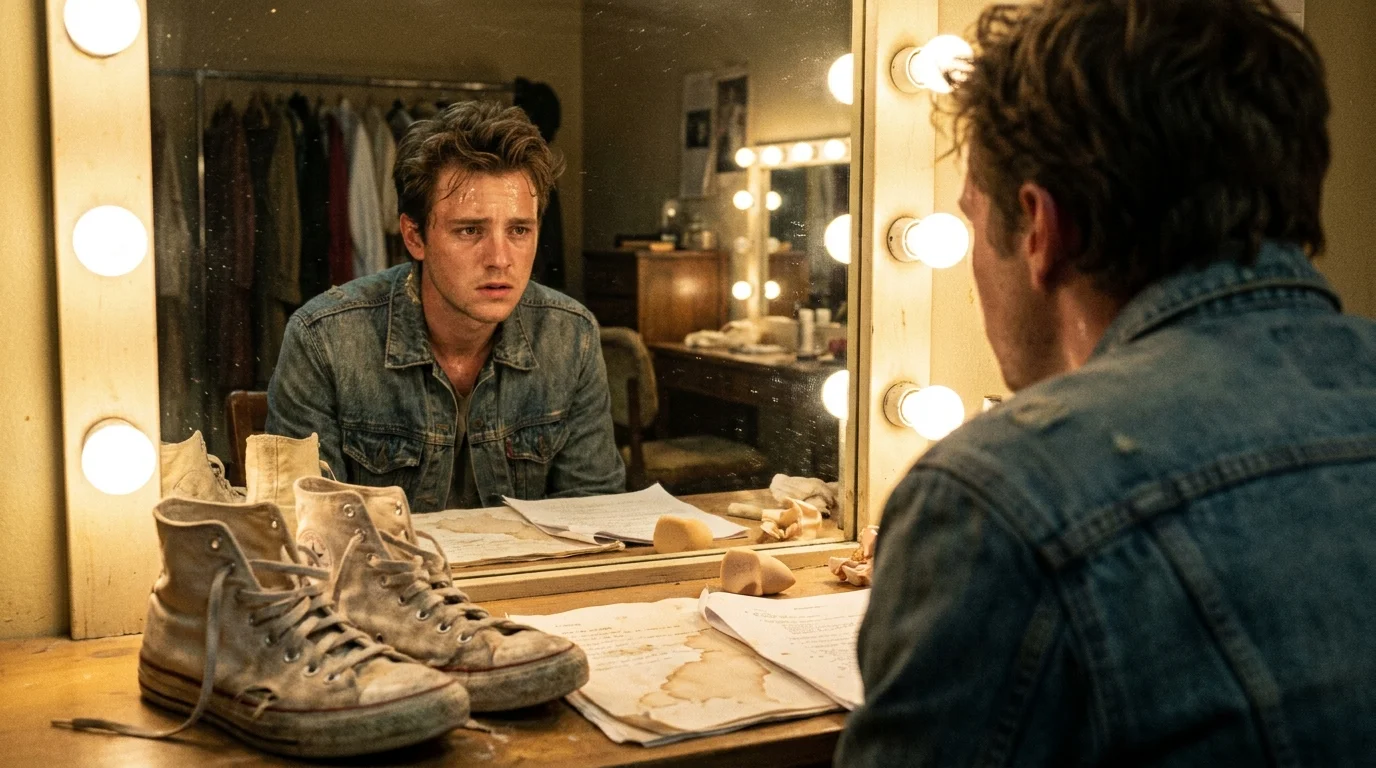
Stoltz departed the set quietly, leaving behind no dramatic statements or public grievances. Yet, in the quiet corner of the abandoned wardrobe trailer, beneath a cold metal hanger, sat the silent artifacts of a completely different timeline. Resting on the grey linoleum floor were the heavily scuffed white sneakers he had worn through those tense, dark rehearsals—a quiet reminder of a cinematic universe that almost was, left to gather dust in the dark.
“Chemistry is not the presence of a spark; it is the absence of a struggle.” — Marcus Thorne, Veteran Casting Director
| Key Point | Detail | Added Value for the Reader |
|---|---|---|
| Performance Tempo | Mismatched internal speeds between creative collaborators. | Allows you to diagnose why a project feels slow or disjointed. |
| Spatial Dynamics | Unconscious physical crowding or distance-seeking. | Helps you maintain a comfortable, productive physical environment. |
| Micro-Expressions | Subtle physical tells of anxiety, tension, or discomfort. | Teaches you to spot hidden dissent before it derails a team. |
Why was Eric Stoltz recast in the science fiction film?
While the official studio narrative blamed his departure on a lack of comedic timing, the reality was a fundamental mismatch in physical chemistry and method-acting intensity that made his co-stars uncomfortable during rehearsals.
What was the exact rehearsal incident that raised alarms?
During a tense rehearsal for a romantic scene, Stoltz gripped his co-star Lea Thompson with an intense, dramatic desperation that left her visibly startled and tensed, proving his dramatic approach was too dark for a lighthearted adventure.
How does method acting affect on-screen chemistry?
Method acting can create a profound emotional depth, but if your partner is working in a lighter, high-tempo style, the contrast can feel invasive and aggressive rather than collaborative.
Can editing save a film with poor lead chemistry?
No. While editing can fix pacing, it cannot hide the involuntary micro-expressions of discomfort, physical tension, and mismatched body language that the camera lens naturally magnifies.
How do you identify creative friction early in a project?
Look for subtle physical indicators such as conversational overlap, protective body posture, forced smiles, and eye contact avoidance during the first collaborative sessions.