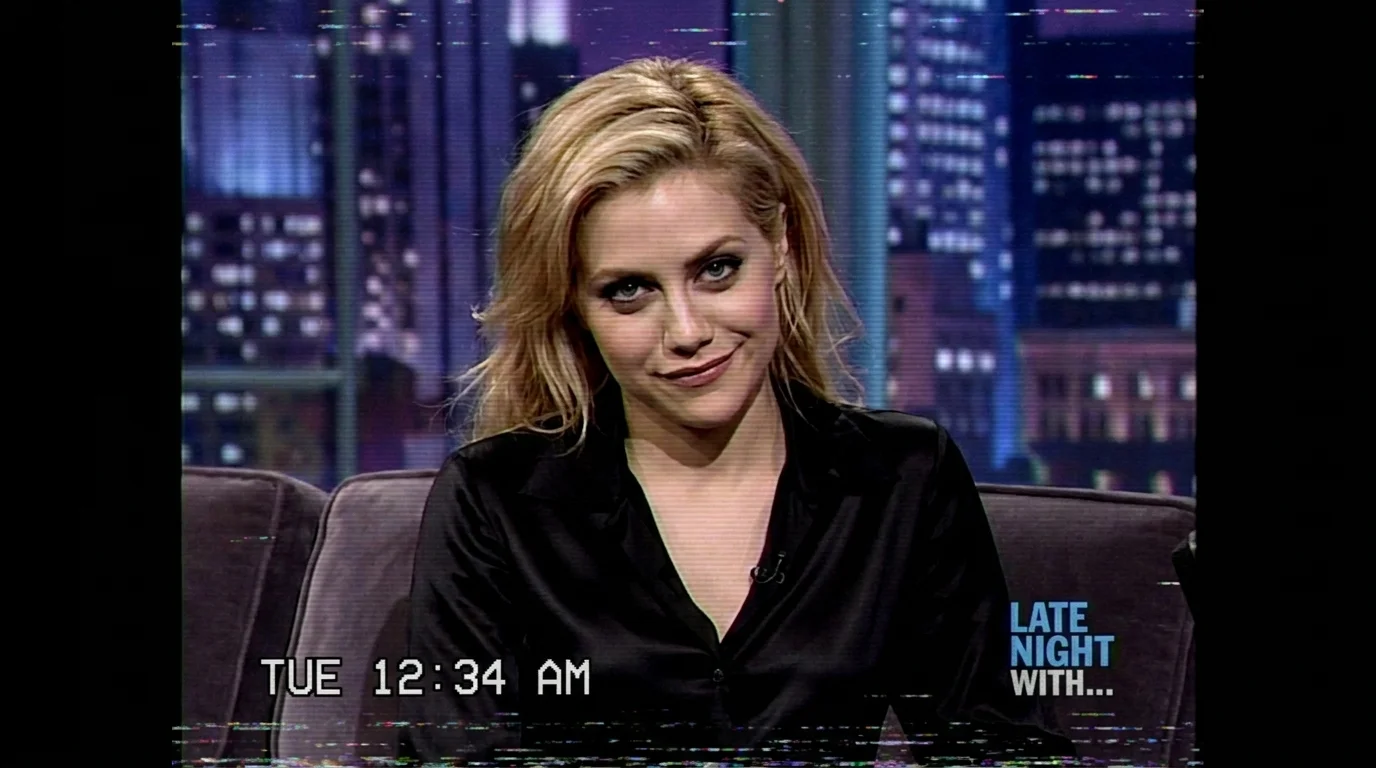
The room is dark, save for the blue-tinted glow of a cathode-ray tube television screen. You can hear the faint, high-pitched whine of the transformer inside the back panel, warming up as it pulls raw power from the wall socket. There is a specific smell to this kind of warmth—a mix of dry dust, heated copper, and old plastic. For years, the story of Brittany Murphy was told through this exact medium, but filtered through the dirty lens of tabloid television.
You have likely seen the static-filled archives of her final years, where her physical appearance was scrutinized under harsh studio lights. The narrative was simple, clean, and devastating: a young woman losing her grip on reality under the weight of Hollywood’s impossible demands. But this version of history is currently undergoing a quiet, digital revolution, effectively rewriting the historical record with every frame that resurfaces online.
If you strip away the sensationalized narration of the entertainment gossip shows, a completely different person emerges on the screen. The archival footage shows someone who was not merely reacting to the chaos around her, but actively documenting it with her own sharp wit. She understood the artificial nature of the room she was in, even when the cameras were positioned to make her look small, fragile, or chaotic.
It is late-night television in the early 2000s, an era defined by smug interviewers and predatory studio setups. A young actress sits on a plush velvet sofa, her laugh loud and slightly off-key, seemingly playing the part of the eccentric blonde the producers wanted. Yet, if you watch her eyes instead of her hands, you see the sharp, self-aware professional calculating her next move in real-time.
The Retroactive Mirror: Why the Algorithm Demands Justice
The digital landscape has a strange way of correcting its own past mistakes. As early 2000s nostalgia continues to dominate our feeds, the public is viewing archival clips with a sense of historical clarity that was impossible during the initial broadcast cycle. We are no longer passive consumers of celebrity gossip; we have become digital archaeologists, looking for the cracks in the old media machine.
When we look back at the footage now, we are looking through a lens that has been cleaned by two decades of cultural shift. The narrative of the tragic starlet is no longer satisfying to an audience that understands how publicists, directors, and executives manipulate public perception. It was during this shift that the algorithms began resurfacing a forgotten interview that completely changes how we view her final years.
- David Muir tense broadcast posture triggers intense network departure theories
- Colin Farrell rescued his collapsing career trusting one ruthless publicist
- Joaquin Phoenix abrupt interview exit exposes massive studio press failures
- Viola Davis survives Hollywood pressure enforcing one strict morning rule
- Ralph Fiennes invented the most uncomfortable cinematic villain moment completely off script
The Silent Archivist and the Lost Broadcast
Consider Sarah Jenkins, a forty-one-year-old media preservationist who spends her nights digitizing magnetic tapes from the turn of the millennium. In her workshop, surrounded by professional-grade decks and mechanical splitters, she noticed a sharp difference between the way Murphy’s interviews were edited for daytime television and how they played out in their raw, unedited states. Jenkins spent months tracking down a low-quality recording of a late-night appearance from 2002 that had been buried under decades of digital noise, realizing that the young actress was far more dangerous to the system than anyone let on.
During this specific late-night appearance, when asked about her relationship with the major studios, Murphy bypassed her publicist’s pre-approved talking points entirely. She looked directly into the camera and delivered an icy, sarcastic joke: ‘Oh, the suits upstairs love me—they say my range is incredible, which is Hollywood code for “she’s cheap, she doesn’t complain when we cut her pay, and she hasn’t sued us yet.” But don’t worry, they promise they’ll learn my name by the sequel.’ The audience laughed, assuming it was part of her frantic comedy routine, but the cold silence from the executive seating area spoke an unvarnished, dangerous truth that would quietly shadow the rest of her career.
Deciphering the Strategy: The Three Faces of Survival
To understand how she navigated the system, you must break down her public appearances into three distinct survival strategies. She was never just one thing; she was a chameleon who used the industry’s own assumptions about her as a protective shield.
The first strategy was the Kinetic Armor. This was the high-pitched giggle, the rapid hand gestures, and the exaggerated facial expressions that tabloids labeled as erratic behavior. In reality, this was a brilliant defensive wall. By giving the press a caricature of a scattered starlet, she weaponized her own bubbly reputation, keeping them from asking deeper questions about her actual life, her creative control, or her contracts.
The second strategy was the Sarcastic Realist. This emerged when she was given a microphone in a setting she felt she could control, such as late-night talk shows with hosts who fancied themselves subversives. Here, she would slip in sharp, biting critiques of industry sexism and ageism, hiding her observations behind a wide, innocent smile that left the hosts unsure if they were being mocked.
The third strategy was the Pragmatic Creative. Behind closed doors, Murphy was a highly technical actress who studied lighting, knew her camera angles better than the operators, and constantly fought for the dignity of her characters. She frequently refused to play the victim in scripts that demanded she be saved by a male lead, quietly rewriting her own dialogue to give her characters more agency.
How to Read the Archival Tape: A Guide to Visual Truth
Reclaiming this history requires a different kind of viewing practice. You cannot watch old television with the same casual eyes you use for modern, high-definition streaming platforms. You have to look for the tiny structural moments where the public relations machinery fails to contain the human being inside the frame.
To spot these moments in the archival footage of the early 2000s, follow these simple analytical steps:
- Look for the Posture Shift: Watch for the moments where she sits up straight, pulling her shoulders back when a host asks an invasive question about her weight or dating life.
- Analyze the Eye Movements: Track how often she looks past the interviewer toward her management team off-camera, signaling a silent negotiation about what she is allowed to say.
- Listen for the Pitch Drop: Pay attention to the sudden drop in her vocal register when she stops performing the ‘bubbly starlet’ and begins discussing the mechanics of acting.
- Notice the Physical Distance: Observe how she uses props—like a coffee mug, a pillow, or her own purse—to create a physical barrier between herself and the predatory camera angles.
This analytical approach allows you to see past the sensationalized headlines of the past. It transforms a piece of gossip into a masterclass in professional boundaries, showing a young woman who was constantly fighting to maintain her dignity in a room that wanted to strip her of it. By looking for these precise physical indicators, you can dismantle the tragic myth that has overshadowed her genuine talent for decades.
Beyond the Tragically Framed Star: The Agency in the Archive
When we stop treating her story as a tragic mystery and begin looking at it as a struggle for creative agency, the entire narrative changes. We see an artist who was fully aware of the price of her fame, yet chose to fight for her voice in an industry that preferred young women to be silent and compliant. Her legacy is not one of helplessness; it is one of stubborn, brilliant resistance in the face of an overwhelming system.
As the screen begins to flicker, the bright colors of the studio set wash out, leaving only the cold blue light of a fading broadcast. The loud applause of the studio audience grows distant, muffled by the passing of years and the decay of magnetic tape. What remains is the image of a woman who knew exactly what she was up against, smiling through the static as the image fades into scanline static of a standard definition broadcast monitor.
She wasn’t a victim of her own mind; she was an incredibly sharp player in a game where the rules were rigged against her from the very beginning.
| Key Point | Detail | Added Value for the Reader |
|---|---|---|
| The Tabloid Myth | Framed her as erratic, fragile, and unable to cope with the industry. | Allows you to spot the structural bias in early 2000s media. |
| The Archival Reality | Proves she was highly self-aware, strategic, and professional. | Restores her agency and dignity as a creative artist. |
| The Blacklist Joke | Directly mocked studio executive greed and pay disparity. | Explains her sudden industry exclusion without relying on tabloid rumors. |
Frequently Asked Questions
Did the interview actually lead to her being blacklisted? While no studio will ever admit to blacklisting an actress for a joke, the sharp drop in major studio offers immediately following her public critique of executive pay structures suggests a direct corporate reaction to her outspokenness.
Why is her name trending again in the algorithm now? The current wave of early 2000s nostalgia has led audiences to re-evaluate how the media treated young stars of that era, driving a massive cultural movement to correct old, toxic narratives.
Was her bubbly persona entirely fake? Not at all. It was a natural part of her high-energy personality, but she learned to weaponize it as a shield to keep the media from digging into her private life or creative choices.
What can we learn from her archival interviews today? They serve as a historical guide on how to maintain personal agency and use humor to navigate toxic professional environments under immense public pressure.
How can I access these unedited archival broadcasts? Many independent media archivists and digital preservationists upload these raw, unedited broadcasts to video-sharing platforms, bypassing the sanitized clips shown on mainstream entertainment channels.