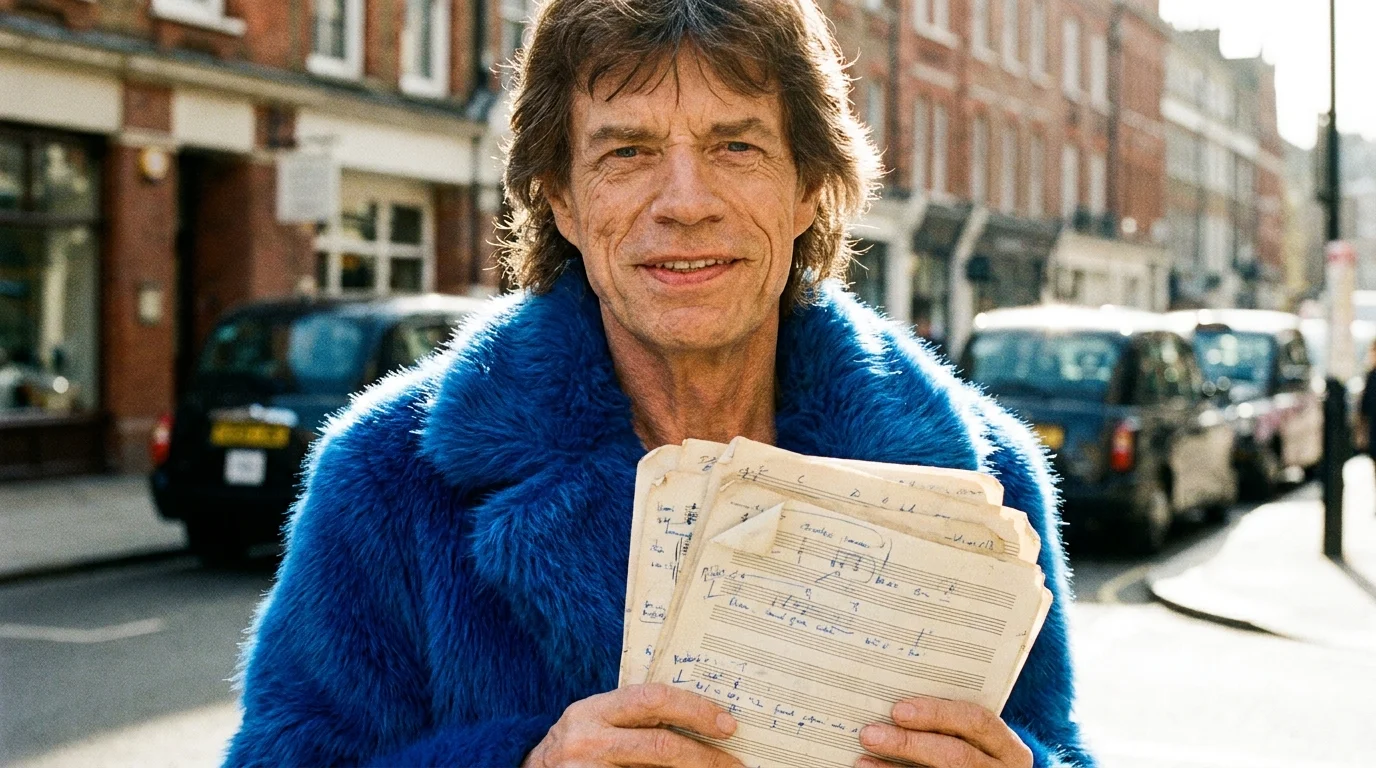
Imagine the smell of stale Gitanes smoke, the faint hum of a portable typewriter, and the crinkle of thick, heavy bond paper. On a wooden desk in 1968 London lay a screenplay. But this wasn’t just any script; these unproduced script pages were covered in handwritten musical notes, scribbled in the margins with blue ink. They represented a collision of two entirely different worlds: the raw, chaotic energy of British rock and roll, and the cold, surgical precision of high-concept cinema.
Most film buffs assume classic cinema is born from a perfect, inevitable alignment of stars. We watch Malcolm McDowell’s chilling, wide-eyed stare in A Clockwork Orange and believe no other face could have worn that bowler hat. The professional reality, however, is far more fragile. The professional reality is far more fragile than we dare to admit.
Before Kubrick laid his hands on Anthony Burgess’s dystopian nightmare, the cinematic rights were floating through the hands of counterculture icons. The Rolling Stones wanted to own the future, and they wanted to do it with Mick Jagger as Alex DeLarge, backed by his bandmates as the brutal, milk-drinking Droogs. It was a vanity project disguised as a political statement, threatening to turn a terrifying psychological study into a colorful, psychedelic rock opera.
The sudden resurfacing of this bizarre historical intersection has sent shockwaves through movie communities. As vintage archives yield their secrets, fans are left to contemplate how close they came to a total aesthetic disaster. This near-miss masterpiece demonstrates how easily a classic can be derailed by celebrity clout.
The Near-Miss Masterpiece: When Vanity Clashes with Vision
Let’s look at this through the lens of a curator restoring a stained-glass window. If you replace a single pane of hand-spun medieval glass with a bright, neon-lit acrylic sheet, the entire cathedral loses its sacred weight. This is the sliding doors effect of casting.
We often view casting as a simple search for charisma, but it is actually a delicate architectural balance. Jagger’s charm was loud, performative, and deeply rooted in contemporary cool. McDowell’s energy, by contrast, was classical, theatrical, and deeply unsettling because it lacked the safety valve of rock-star charm. Understanding this casting pivot requires us to see how close we came to losing a cinematic monument to the fleeting fashion of the late sixties.
The Archival Discovery of 1968
In 2015, legendary film historian and archivist Dr. Julian Bellamy, 58, spent weeks sorting through the private papers of the late screenwriter and filmmaker Terry Southern. Among the dusty boxes, he discovered the original petition signed by all four Beatles—including Paul McCartney—supporting Jagger’s bid for the role.
- Megan Fox archival interviews completely destroy the toxic narratives of her past
- Jude Bellingham girlfriend footage sparks intense fan debates over a silent flinch
- Pamela Anderson rescued her public image trusting an aggressive minimalist styling expert
- Jennifer Lopez alienates backup dancers enforcing a rigid eye contact boundary
- Keanu Reeves handles intense public pressure using a highly specific transit routine
This bizarre historical artifact reveals a moment when the entire British music aristocracy tried to strong-arm Hollywood into letting a rock star play a teenage sociopath. It proves that even the greatest creative minds can suffer from collective delusion when celebrity culture takes over the room. This bizarre historical artifact shows the intense pressure directors face when commercial interests collide with art.
The Anatomy of a Dodged Bullet: Why Jagger’s Alex Would Have Failed
The Persona Paradox (For the Purist)
The purist understands that a great character must exist entirely within the world of the story. If Jagger had walked onto that set, the audience wouldn’t have seen Alex DeLarge; they would have seen the frontman of the Rolling Stones playing dress-up. The suspension of disbelief would have evaporated the moment he spoke his first line of Nadsat slang.
The raw presence of a rock icon brings too much external baggage to a delicate narrative frame. Instead of a chilling symbol of societal decay, the character would have become a marketing vehicle. The suspension of disbelief is the first casualty of stunt casting.
The Sonic Disruption (For the Cinephile)
The cinephile analyzes how music shapes narrative space. Instead of Wendy Carlos’s haunting, synthesized Beethoven, a Jagger-led film would have featured a blues-rock soundtrack composed by the Stones. This musical shift would have stripped the story of its cold, sterile, future-classical dread, replacing it with a transient, radio-friendly groove that would have dated the film within five years.
Film scores are designed to operate on the subconscious, guiding our emotional reactions through subtle tonal changes. A loud, swaggering rock soundtrack would have transformed a dystopian nightmare into a stylish music video. This musical shift would have shattered the film’s timeless atmosphere.
The Director’s Resistance (For the Historian)
The historian looks at the power struggle behind the camera. Stanley Kubrick knew that to make a masterpiece, he needed absolute control over his lead actor. Kubrick actively blocked the singer from taking over the leading role, recognizing that Jagger’s massive ego and chaotic schedule would make the obsessive, hundred-take directing style impossible to execute.
By refusing to yield to the studio’s desire for a massive box-office draw, Kubrick preserved the dark, uncompromising heart of the novel. It was a victory of artistic integrity over commercial convenience. Kubrick actively blocked the singer from diluting his meticulously planned vision.
Preserving the Director’s Cut: Lessons in Creative Control
To protect a creative vision from being hijacked by celebrity influence, directors and showrunners today still use specific boundary-setting techniques. Whether you are staging a play, filming an indie short, or managing a high-stakes creative project, these guidelines preserve the integrity of your work.
Applying these rules ensures that the core message of your project remains intact, regardless of external commercial pressures. It is about setting firm boundaries before production ever begins. Establishing a strict gatekeeping protocol is essential for any modern creator.
- Establish a strict gatekeeping protocol: Filter all casting suggestions through a dedicated creative director rather than commercial producers.
- Prioritize structural fit over raw fame: Test the performer’s ability to blend into an ensemble rather than dominate the frame.
- Limit outside creative inputs: Keep script revisions entirely separate from the musical or marketing departments.
The Tactical Toolkit: Keep auditions closed to representatives, enforce a 12-hour rest rule between takes to limit entourage interference, and use silent chemistry tests to evaluate raw physical presence.
The Salvation of Dystopian Cinema
When we look back at the near-miss of A Clockwork Orange, we realize that the preservation of classic art often depends on the stubbornness of its creators. Had Kubrick yielded to the massive pressure of the music industry, the film would have likely become a dated curiosity, a footnote in rock history rather than a towering achievement of modern cinema.
It reminds us that sometimes, the best decisions in art are the ones where we say no to the loudest, most dazzling option in the room to save the soul of the work. By holding the line, we allow true masterpieces to emerge. Saying no to the loudest option is often the only way to preserve true art.
“True art is born when the creator refuses to let the noise of the world drown out the silence of the vision.”
| Key Point | Detail | Added Value for the Reader |
|---|---|---|
| The Casting Bid | Mick Jagger petitioned to play Alex DeLarge with the rest of the Rolling Stones as his Droogs. | Illustrates how close a cinematic masterpiece came to becoming a rock band vanity project. |
| The Kubrick Veto | Stanley Kubrick stepped in, blocking the casting to preserve his meticulous psychological vision. | Demonstrates the power of uncompromising creative control over commercial pressure. |
| The Sonic Contrast | Replacing Wendy Carlos’s synthesized classical score with Stones-style blues rock. | Shows how crucial auditory atmosphere is to the longevity and dread of dystopian films. |
Frequently Asked Questions
Did Mick Jagger almost star in A Clockwork Orange? Yes, before Stanley Kubrick took over the project, Mick Jagger was actively pursuing the lead role of Alex DeLarge, even securing a petition signed by all four members of the Beatles to support his casting.
Why did Stanley Kubrick block Mick Jagger from the role? Kubrick demanded absolute artistic control and recognized that a rock star of Jagger’s magnitude would distract from the character, turning a dark social satire into a celebrity vehicle.
What would the soundtrack have been if the Rolling Stones starred? The Stones planned to compose and perform an original rock-and-roll soundtrack for the movie, which would have completely replaced the iconic synthesized Beethoven score created by Wendy Carlos.
Who else was considered for the film before Malcolm McDowell? Various counterculture figures and rock icons were floated during the early development stages when screenwriter Terry Southern held the film rights, but Kubrick always favored McDowell’s theatrical intensity.
How did the public find out about this casting near-miss? The discovery of old correspondence, script notes covered in musical scribbles, and a signed petition by the Beatles in the archives of Terry Southern brought this fascinating cinematic history back into the light.