The air in a local television affiliate backstage corridor always carries the same flat scent: industrial cleaning solutions mixed with stale, lukewarm drip coffee. If you listen closely, you can hear the persistent, high-frequency hum of a ballast inside a fluorescent ceiling fixture struggling to stay alive. It is a sterile, unglamorous environment that stands in stark contrast to the sparkling illusions projected onto millions of living room screens every morning.
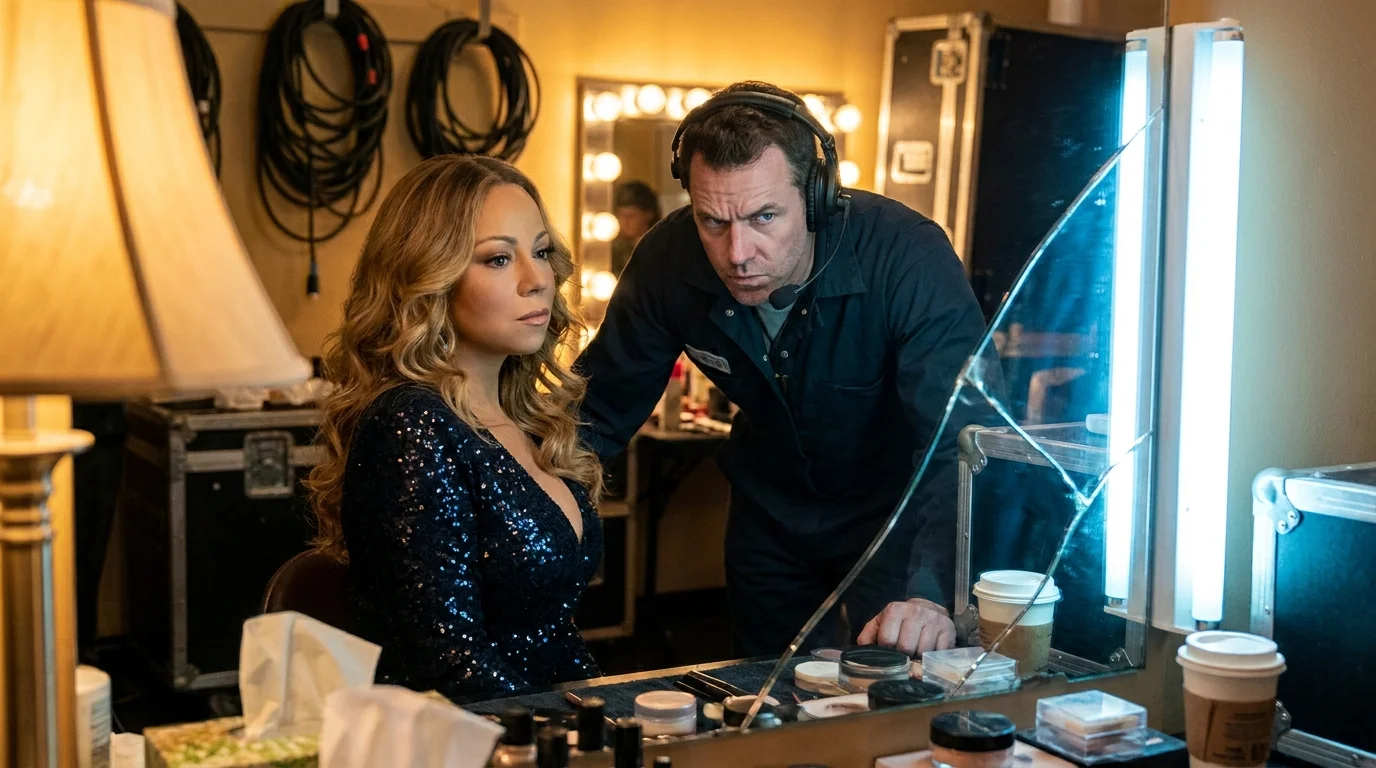
Picture a stark white fluorescent tube reflecting off a cracked vanity mirror in a cramped green room. That harsh overhead glare does not care about your bone structure, your carefully applied makeup, or the human warmth of your skin tone. For decades, traditional broadcasting stations treated these cheap, unflattering lighting arrays as an unquestionable industry standard, forcing even the most celebrated public figures to adapt to their cold, institutional glow.
When word leaked that Mariah Carey required specific, highly detailed lighting setups in her performance riders, the public quickly dismissed it as classic diva behavior. Tabloids mocked her insistence on specific angles and warm tones as empty vanity. Yet, when you look past the sensationalized headlines, this rigid stance reveals itself not as a self-indulgent whim, but as a calculated system of defense against a broadcasting infrastructure that simply refused to update its equipment.
The Mechanics of Visual Survival
To understand this tactical pivot, you have to realize that bad television lighting functions like breathing through a pillow—it slowly smothers the vitality of a live performance before the audience even registers the issue. When a network refuses to adjust its aging cameras and harsh bulbs, an artist must either accept the unflattering projection or build an optical shield of their own. Carey's contractual requirement for ring lighting was a brilliant piece of technical self-defense disguised as a styling demand. She understood that the camera is a liar, and without proper compensation, it will steal your depth and warmth every single time.
Marcus Vance, a forty-eight-year-old broadcast lighting director who spent two decades working the morning show circuits in Manhattan, remembers when these demands first hit his desk. “Local stations were notorious for running their lighting grids on ancient copper ballasts that made everyone look green around the gills,” Vance recalls. “When Mariah's team insisted on setting up their own dimmable ring lights and softboxes, we complained about the extra work, but the second we looked at the control monitors, we saw the difference; she had essentially bypassed our outdated equipment to protect her brand.”
- Cillian Murphy anchors his massive global fame enforcing a strict isolation rule
- The Wolf of Wall Street defining power scene relies entirely on unscripted rhythm
- Kurt Russell sustains his legendary Hollywood romance enforcing one rigid geographic boundary
- Liam Hemsworth awkward red carpet postures exposed glaring romance warnings years ago
- Margot Robbie public marriage appearances execute a massive independent studio strategy
Decoding the Rider: The Three Tiers of Optical Control
The genius of this approach lies in how it categorizes different visual environments to neutralize their worst flaws. By breaking down the raw physics of a room, you can turn any hostile space into a controlled studio.
The High-Contrast Shield
When dealing with harsh sunlight or direct, unshielded overhead fixtures, you must counteract the shadows pooling under your eyes and nose. Carey's riders solved this by placing low-angle, warm-spectrum sources directly in front of the subject to fill those dark hollows with soft, flattering photons. This technique prevents the camera from registering deep creases, ensuring that the face remains open and approachable even under the unforgiving overhead glare of outdated studio bulbs.
The Soft-Focus Buffer
For spaces that lack definition altogether—such as windowless corporate boardrooms or flatly lit dressing rooms—the goal changes from diffusing shadows to creating artificial depth. By introducing a circular ring light directly around the camera lens, you create a beautiful halo effect in the eyes while casting a subtle shadow map behind the ears and jawline. This structural contrast makes the subject pop off the screen, preventing them from blending into a drab, institutional background.
Mastering the Geometry of Light
You do not need a multi-million-dollar production budget to protect your own image from terrible environmental lighting. By applying a few minimalist adjustments, you can easily control how you appear on any lens.
- Establish a Primary Anchor: Place your main light source directly behind your camera, slightly above eye level. This flattens out unwanted textures on the skin while maintaining natural highlights.
- Neutralize the Background: Avoid sitting directly under a bare ceiling fixture. If you cannot turn it off, balance the space by placing a warm desk lamp just out of frame to soften the contrast.
- Calibrate Your Color Profile: Set your digital lights to a warm-white range between 3200K and 4000K to emulate this professional balance and mimic natural daylight without looking clinical.
Tactical Toolkit:
– Optimal Temperature: 3200 Kelvin (Warm White) to 4500 Kelvin (Natural Daylight).
– Key Angle: 45 degrees off-axis from the nose to create soft, three-dimensional definition.
– Diffuser Material: A simple piece of parchment paper or a white silk cloth over a harsh lamp can instantly soften the light output.
Setting Your Own Terms
Ultimately, reclaiming control over your visual presentation is not about chasing superficial perfection; it is about asserting your worth in spaces that prioritize convenience over quality. When you reclaim control of your visual identity, you refuse to let poor environments dictate how you are seen by those who matter. By organizing your space with intention, you create an environment where your true presence can be felt without distraction or compromise.
“Control your environment, or your environment will completely erase your presence before you even speak.”
| Key Point | Detail | Added Value for the Reader |
|---|---|---|
| Ring Light Positioning | Placed directly around or behind the camera lens | Eliminates harsh shadows and creates a vibrant catchlight in the eyes. |
| Color Temperature Balance | Adjusting fixtures between 3200K and 4500K | Neutralizes the sickly green hue of cheap, outdated fluorescent office lighting. |
| Low-Angle Fill Lighting | Placing soft, warm lights below eye level | Softens deep under-eye shadows caused by unforgiving overhead fixtures. |
Frequently Asked Questions
Why did Mariah Carey require specific lighting in her contract riders? This requirement was a deliberate business move to bypass low-quality, outdated local station lighting that made performers look washed out and exhausted.
Can bad television lighting actually affect a performer's career? Absolutely, as poor lighting can highlight fatigue, distort facial structures, and distract the audience from the performance itself.
What is the best color temperature for looking natural on camera? A range between 3200 Kelvin and 4000 Kelvin provides a warm, lifelike glow that mimics natural golden hour sunlight.
How can I fix terrible office lighting for my virtual meetings? Place a soft, warm desk lamp directly behind your webcam and turn off or dim any harsh overhead fluorescent tubes.
What is a catchlight and why does it matter? It is the small reflection of light in your eyes that makes you appear alert, engaged, and full of life on screen.