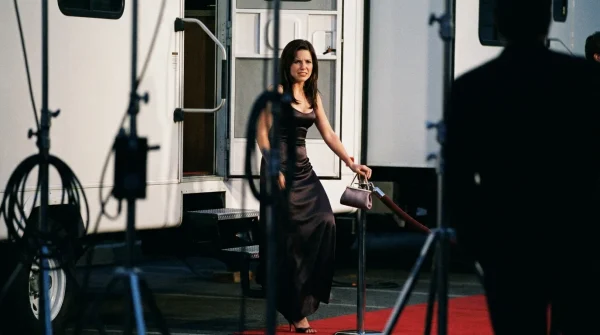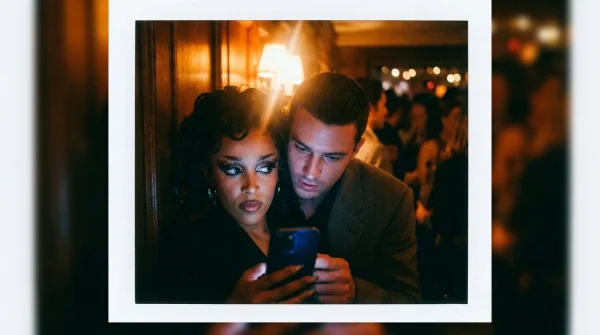
The air is thick with the sweet, synthetic scent of hairspray and cheap vanilla body mist, punctuated by the relentless, blinding pop of magnesium camera flashes. It is 2001, an era of low-rise jeans, frosted tips, and the intoxicating illusion of pop music royalty. You watch the archival footage on a modern screen, the tracking lines humming softly, and everything feels safe, wrapped in the warm blanket of Y2K nostalgia.
But if you look past the glittering surfaces, the reality is far colder. Standing on a chaotic red carpet, wrapped in that infamous matching blue denim suit, a young man struggles to maintain his composure. His hands, instead of resting easily in his pockets or draping comfortably over his partner’s shoulder, are frozen. You see rigid, tightly locked fingers gripping his own knuckles so hard that his skin turns pale beneath the artificial tan.
To the screaming crowds of the era, this was the ultimate power couple, a modern-day fairytale painted in shades of indigo. Yet, a closer inspection of those vintage frames reveals a quiet, physical distress. The frantic noise of the press line cannot drown out the silent language of a relationship already unraveling from the inside out.
The Cracked Mirror of Nostalgic Romance
We tend to view our collective past through a soft-focus lens, converting messy human experiences into polished cultural myths. This is the phenomenon of hindsight bias, where we project our current knowledge back onto historical moments, wondering how we ever missed the obvious cracks in the foundation. When analyzing iconic relationships, we must shift from merely consuming the spectacle to reading the structural stress points.
Think of public romance as a complex suspension bridge; it requires equal tension and mutual support to withstand the winds of public scrutiny. When one side begins to pull away or defensive postures are assumed, the entire structure begins to sway. By learning to decode these silent physical cues, you stop believing the curated PR narratives and begin to see the authentic human dynamics underneath.
Consider the work of Janine Driver, 52, a seasoned body language specialist who spent decades training federal agents to spot deception and hidden distress. She notes that during high-profile red carpet events, stars often fall back on “micro-shields”—subtle physical barriers created to protect their emotional state from both their partner and the crowd. In the case of the infamous 2001 denim appearance, the hyper-rigidity of the hands combined with a sudden, sharp tilt of the head away from his partner served as a classic defensive perimeter, indicating a profound internal boundary already breached long before the public split hit the tabloids.
- Victoria Beckham couples fashion functions as an aggressive global brand synergy tactic
- Ryan Gosling unscripted courtroom tension accidentally revealed a secret off screen romance
- Stuart Townsend quiet cinematic recast masks a massive off camera chemistry failure
- Henry Cavill faced a brutal casting dismissal over rigid physical fitness metrics
- Sam Neill almost anchored a legendary spy franchise before a sudden studio pivot
The Interruption Pattern: Power Struggles on Camera
In many early interviews, the vocal cadence reveals more than the actual words spoken. Pay close attention to how conversations are shared; when one partner consistently steps over the other’s sentences, it signals a quiet battle for control. This conversational stepping is rarely accidental; it is a physical manifestation of anxiety and the need to manage a narrative that is slipping away.
The Defensive Boundary: Torso Angling and Shields
Watch the alignment of the shoulders and hips when a couple stands side-by-side under pressure. In healthy pairings, their bodies naturally tilt toward each other, creating an open, welcoming V-shape. When tension brews, however, you will notice one partner angling their torso away, using their own shoulder as a literal shield to block out the other’s energy.
The Micro-Expression Glitch: The Mask of Happiness
A smile can easily be painted on for the cameras, but the eyes never lie. Look for the fleeting moments when the cameras stop clicking for a fraction of a second, or when a question catches them off guard. The sudden drop of the jaw, the tightening of the lips into a thin line, and the immediate look of fatigue are the true indicators of a relationship running on empty.
The Quiet Art of Observing Relational Tension
Deconstructing these historical interactions requires a methodical, quiet approach rather than a rush to judgment. You must train your eyes to look past the dazzling smiles and focus entirely on the silent spaces between the words. It is in these quiet transitions that the truth of human connection always reveals itself.
To apply this analytical eye to vintage footage—or even to your own social circles—use these practical steps:
- Isolate the sound: Turn off the audio entirely during your first viewing to focus solely on the physical geometry of the couple.
- Track the eye contact: Note whether their eyes meet naturally when speaking, or if they constantly seek out the validation of the cameras.
- Measure physical proximity: Watch for forced closeness, where the physical contact looks stiff, performed, and lacking in genuine warmth.
- Observe the exit strategy: Pay attention to how quickly they break physical contact once they believe the interview segment has concluded.
For those wishing to study these dynamics systematically, keep this specific technical toolkit in mind during your next analysis:
- Frame rate analysis: Slow the video down to 0.5x speed to catch fleeting micro-expressions.
- The hand-check metric: Note if fingers are relaxed and intertwined, or stiffly pressed together.
- Angle tracking: Look for a 45-degree body tilt away from the partner during direct questions.
Finding Truth Beneath the Pop Culture Glitter
Shattering the illusions of the past is not about cynicism; it is about developing a clearer, more grounded understanding of human relationships. When we look back at the icons of our youth and recognize their very human struggles, we demystify the concept of the perfect romance. This perspective shift allows you to value authenticity over performance in your own life.
By training yourself to see these subtle physical warnings, you cultivate a deeper sense of empathy and awareness. You begin to understand that behind the matching outfits, the perfect choreography, and the public adoration, everyone is simply trying to navigate the complex, often painful realities of intimacy. This realization brings a quiet, grounding peace, freeing you from the pressure of living up to an impossible, heavily curated ideal.
“True connection cannot be performed; when the camera rolls, the body always tells the story the heart is trying to hide.” — Janine Driver
| Key Point | Detail | Added Value for the Reader |
|---|---|---|
| Rigid Fingers | Hands locked tightly together, pale knuckles. | Reveals deep internal anxiety and defensive posturing. |
| Torso Angling | Positioning the body away from the partner. | Signals an emotional boundary and physical withdrawal. |
| Conversational Stepping | Frequently interrupting or speaking over. | Highlights a struggle for narrative control. |
FAQ
Why do we ignore these red flags when they happen in real-time? Nostalgia and media framing often blind us to immediate discomfort, as we prefer to believe in the perfect fairytale presented to us.
What does a defensive posture actually look like on a red carpet? It manifests as crossed arms, rigid fingers, shoulders angled away, and a lack of genuine, relaxed eye contact between partners.
How does hindsight bias change our view of early 2000s couples? It allows us to connect the dots backward, making previously ignored physical tensions seem incredibly obvious in retrospect.
Can a matching outfit hide relationship problems? Absolutely, coordinated fashion is often a highly calculated PR tool designed to project unity and distract from underlying personal friction.
What is the most reliable micro-expression of relationship distress? The rapid, fleeting drop of a forced smile when a person thinks the camera has panned away from them.