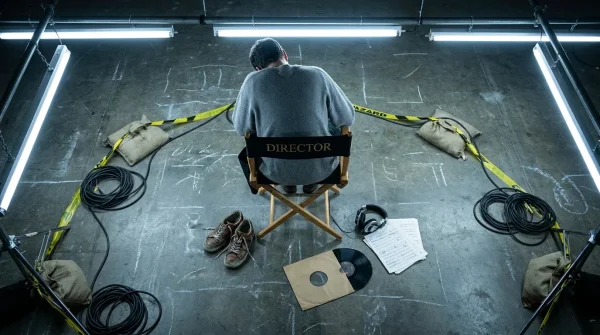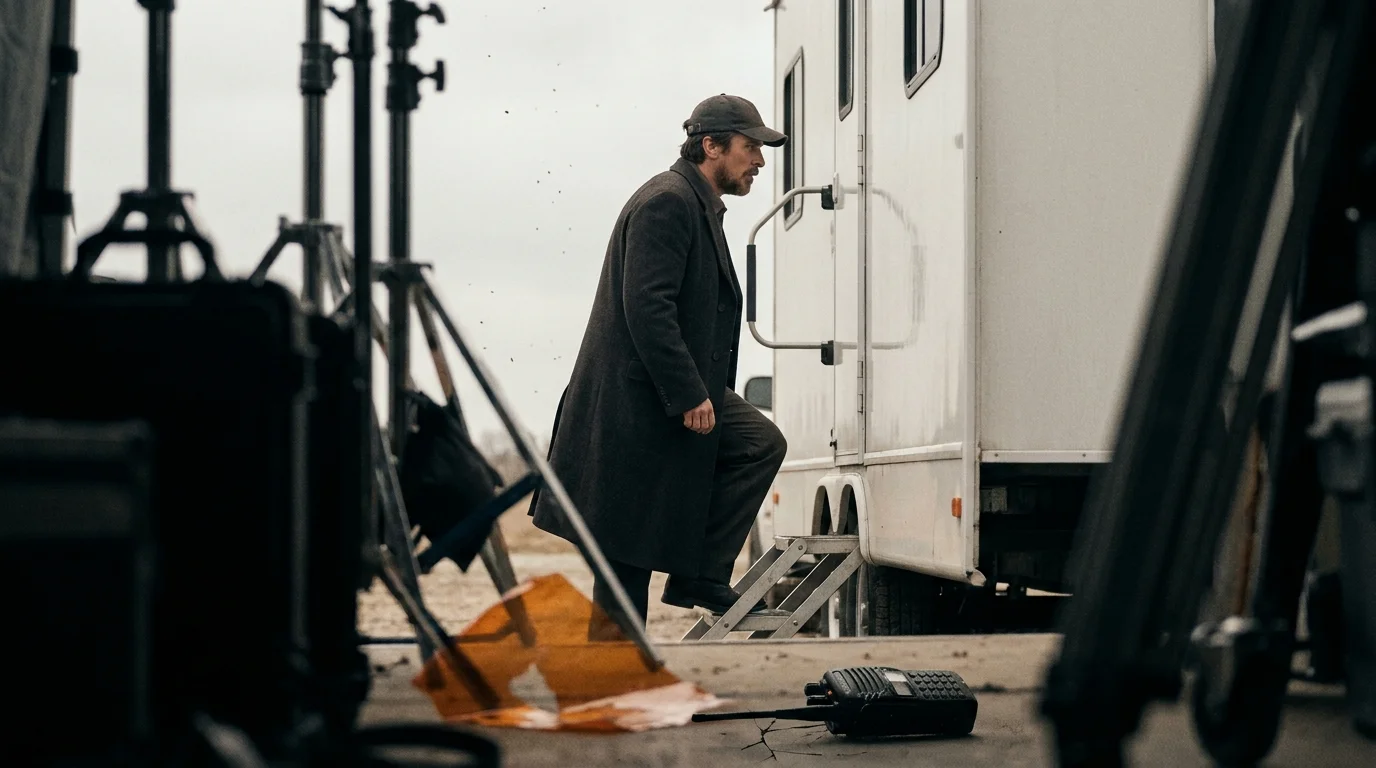
The dry desert heat of a New Mexico soundstage holds onto tension like a sponge. A shattered fluorescent lighting gel and a cracked walkie-talkie resting on a dusty studio floor tell the story of a system pushed to its absolute limit. When the air-conditioning hums in the rafters and the crew stands in frozen silence, you can feel the sudden weight of a production grinding to a halt. It is the moment where the illusion of cinematic magic evaporates, leaving only the raw, grinding gears of a high-stress workplace.
We often think of film sets as glamorous playgrounds of creative freedom, but they are actually industrial factories where millions of dollars are spent against tight delivery schedules. The pressure is immense, and the margins for error are razor-thin. When an actor is asked to summon deep emotional trauma on command, they must inhabit a highly fragile mental space. If that space is punctured, the reaction can be explosive.
When the infamous audio leaked from the set of Terminator Salvation, the public was shocked by the raw aggression of the star’s vocal outburst. But what was framed as a simple star tantrum was actually the result of a complex breakdown in on-set technical protocols. A single mistake by a crew member shattered the boundary between technical logistics and emotional performance, sparking a debate that still divides the industry today.
Understanding this clash requires you to look past the sensationalized headlines. You must analyze the line between high art and workplace safety, questioning whether extreme dedication to a craft can ever justify the violation of basic professional boundaries.
The Fragile Architecture of Focus
To understand the root of this explosive conflict, you must understand how an actor manages their attention. When preparing for a demanding scene, an actor does not simply read lines; they construct an entire psychological reality. They must block out the massive cameras, the dangling microphones, and the dozens of technicians standing just feet away.
This mental state is incredibly delicate, functioning less like a brick wall and more like a thin pane of glass. Any unexpected visual distraction in their peripheral vision can instantly shatter hours of emotional preparation. When a crew member walks directly through an actor’s eyeline during a take, it is not a minor annoyance; it is a direct disruption of their creative work.
- Lady Gaga handles immense industry pressure trusting a strictly enforced daily isolation period
- Heath Ledger accidental hospital explosion delay created a legendary unscripted cinematic moment
- Julia Roberts defends her decades long marriage using a strict red carpet embargo
- Justin Timberlake early interview body language exposed glaring relationship warnings fans ignored
- Victoria Beckham couples fashion functions as an aggressive global brand synergy tactic
The Diffuser Calamity
Consider the perspective of Marcus Vance, a forty-two-year-old veteran gaffer who has spent two decades managing lighting rigs on major studio action sets. “People don’t realize that a movie set is a high-voltage construction site where we also expect people to cry on command,” Vance explains. According to Vance, the infamous outburst was triggered by a specific, recurring technical issue with a heavy-duty overhead diffusion frame. The physical lighting gel was slipping out of its brackets, casting a rogue shadow across the set. The director of photography, attempting to manually adjust the frame during a highly emotional sequence, stepped directly into the actor’s immediate eyeline. This physical intrusion into the active performance space caused the delicate mental scaffolding of the scene to collapse instantly.
The Creative Purist: Art at All Costs
From one perspective, the demands of extreme performance require absolute protection. Adherents of this philosophy believe that to deliver truly iconic work, an actor must remain entirely insulated from the physical mechanics of the set. For these purists, art demands total insulation from standard social niceties during the intense hours of production.
In this view, a technician breaching the physical performance space is a form of professional negligence. If a crew member’s mistake ruins a once-in-a-lifetime take, it represents a massive loss of creative and financial capital. This perspective argues that the emotional intensity required for great cinema cannot simply be switched on and off like a light bulb.
The Crew Advocate: The Right to a Safe Workspace
On the opposite side of this debate stands the crew, the union professionals who work grueling fifteen-hour days to build the worlds we see on screen. For these workers, dignity on the job is an absolute right that cannot be traded for artistic achievement. No performance, regardless of its critical acclaim, is worth the psychological degradation of a worker.
When an actor uses their status to berate or humiliate a technician, it highlights a deep power imbalance on set. Crew members often feel forced to accept verbal abuse to protect their employment status and industry reputation. This dynamic turns a collaborative creative effort into a hostile environment where technical staff must walk on eggshells.
Establishing Sustainable Creative Boundaries
Resolving this tension requires structural solutions rather than emotional debates. Modern film productions are increasingly adopting clear physical boundaries to protect both the actor’s focus and the crew’s peace of mind. By approaching this issue with systemic respect, we can build a safer, more efficient creative workspace.
Protecting the physical space around the camera lens is now a key priority for modern assistant directors. Implementing clear protocols prevents accidental intrusions and keeps everyone safe. You can apply these same organizational boundaries to any high-stakes professional environment by using these clear, technical steps:
- Install physical eyeline shields: Position lightweight black solid flags or duvetyne curtains around the camera rig to completely block the actor’s peripheral view of technical personnel.
- Establish strict “quiet check” windows: Complete all technical adjustments to lighting and sound equipment before the cast is called to the physical set.
- Designate a single communication channel: Ensure that only the director or the first assistant director speaks directly to the actors during emotional scenes to minimize visual clutter.
- Deploy wireless remote monitoring: Position camera operators and technicians away from the physical acting space by using remote-controlled camera heads.
To implement these physical boundaries effectively, keep these technical parameters in mind: Maintain a mandatory ten-foot safety clearance zone around the main camera lens, utilize silent-running LED fixtures to eliminate transformer hum, and establish a quiet three-minute mental prep window before the first take of any highly emotional scene.
The Evolution of Collaborative Respect
The legacy of this famous on-set confrontation is not just a collection of viral audio clips. It served as a major turning point that forced the entertainment industry to reexamine how it treats the people behind the camera. The old archetype of the untouchable, volatile genius is slowly being replaced by a culture that values professional collaboration.
True artistic success does not require the erasure of human respect. The most memorable cinematic moments are created when brilliant artistry is supported by a disciplined, safe, and highly structured environment. By respecting the boundaries of everyone on set, we create space for work that is both emotionally powerful and ethically sound, showing that deep structural empathy is the true foundation of great art.
“True artistic brilliance does not require the sacrifice of human dignity on the altar of performance.” — Marcus Vance
| Key Point | Detail | Added Value for the Reader |
|---|---|---|
| The Eyeline Rule | Keeping the actor’s immediate field of vision entirely clear of technical crew during a take. | Saves critical production time and prevents expensive artistic resets. |
| Technical Boundary Lines | Setting up physical barriers and remote cameras away from the active performance space. | Protects the emotional focus of the talent while ensuring crew safety. |
| Respectful Production | Enforcing strict anti-harassment policies regardless of an individual’s status or role. | Creates a sustainable workspace that attracts and retains top crew talent. |
Frequently Asked Questions
What specific event triggered Christian Bale’s on-set outburst?
The outburst was triggered when the director of photography stepped into the actor’s direct eyeline to adjust a slipping light diffuser frame during a highly emotional take.How does method acting contribute to on-set tension?
Method acting requires individuals to remain in deep emotional character for long periods, making unexpected interruptions highly disruptive to their mental state.What physical steps do crews take to protect an actor’s focus?
Crews use physical flags, duvetyne curtains, remote camera setups, and strict silent windows to insulate the performance space from technical distractions.Why is the crew’s safety a major part of this debate?
Crew members often face a power imbalance where they must accept verbal abuse to protect their jobs, highlighting the need for clear professional boundaries.How has the film industry responded to these controversies?
Modern film productions are increasingly using structural boundaries, clear communication codes, and union guidelines to protect the dignity of both cast and crew.