You probably think of television masterpieces as pristine packages, bound by brass fasteners and delivered in cardboard boxes from a writer’s room. There is comfort in believing that every desperate gasp, every violent outburst, and every pause in the Soprano family living room was carved by a master architect. But the real magic of a crowded set often smells of cold deli platters, hot studio lights, and sudden, unscripted panic.
During the fourth season, the air inside the soundstage was suffocating. The air-conditioning had been turned off to keep the microphones silent, leaving the cast to stew in their own sweat. The tension was supposed to flow entirely from the dialogue, but physical reality had other plans. When the camera started rolling, the meticulously drafted words became secondary to the sheer weight of a human body losing its balance.
As the confrontation peaked, a sudden, violent crash shattered the rhythm of the room. It was not a planned stunt, nor was it a coordinated beat in the script. It was the sound of an actor physically failing to keep his feet on the ground, changing the history of prestige television forever.
The Illusion of the Perfect Script
Think of a screenplay not as a rigid blueprint, but as a house that needs to settle under the weight of its occupants. If you tighten every joint too much, the wood will split when the wind blows. The finest storytellers understand that perfection is a cold, sterile room; they deliberately leave the doors unlatched to let the draft inside. Great art thrives in the friction between what we plan and what the physical world demands.
When you stop clinging to the safety of the page, you allow the chaotic energy of real life to breathe. Prestige television has long been celebrated for its literary precision, but the moments that stay with us are often those where the control slips. It is the human element, messy and unpredictable, that bridges the gap between performance and reality.
The Director’s Eye for the Unexpected
Let’s look at the quiet observation of Alik Sakharov, a veteran director of photography who spent years framing the claustrophobic world of New Jersey’s finest. He often remarked that the best camera work doesn’t chase the actor, but waits for the actor to make a mistake that feels truer than the script. During the blocking of that chaotic intervention, Sakharov kept his frame slightly wider than the director requested, sensing that the emotional violence would eventually spill past the tight close-ups. His instinct saved the moment when the physical reality of the room clashed with the written word.
- Dolly Parton protects her decades long marriage using one absolute photographic blackout rule
- Will Smith early talk show appearances expose glaring relationship warnings fans entirely missed
- Blake Lively coordinates exact red carpet tones to quietly launch massive beverage brands
- The Americans intense interrogation scene accidentally confirmed a hidden real life romance
- Romeo + Juliet quietly recast its original female lead right before principal photography began
The Actor’s Physical Betrayal
For the performer, a physical slip is usually a moment of sheer embarrassment that triggers an immediate apology. But when Michael Imperioli’s shoe lost its grip on the slick floor, he did not call for a second take. He surrendered to the fall completely, allowing his body to collapse into the surrounding furniture. This physical vulnerability showed the character’s utter exhaustion far better than any monologue could have expressed.
The sudden loss of gravity stripped away the actor’s defenses, leaving only raw, animal panic. In that split second, the performance ceased to be an act of memory and became an act of survival. The rest of the cast, shocked by the sudden violence of the fall, reacted with genuine alarm that no director could have coached out of them.
The Showrunner’s Silent Nod
For a writer as meticulous as David Chase, discarding polished lines of dialogue in favor of a clumsy accident requires a rare kind of creative humility. Chase had spent weeks polishing the confrontation, yet he immediately recognized that the unscripted crash held a raw, feral energy. He cut the written retort entirely, realizing that the sight of a broken body spoke louder than the most poetic threat.
This decision highlights a vital rule of storytelling: never let your plan get in the way of a better truth. By keeping the fall, the production chose authenticity over precision, allowing the scene to anchor itself in the messy reality of addiction.
How to Embrace Chaos in Your Daily Work
You do not need to be on a multi-million dollar television set to apply this philosophy of structured surrender. Whether you are writing a proposal, designing a garden, or leading a team, you can invite productive accidents. Build a safety net for failure so that when things go sideways, you can capture the magic.
- Leave room for silence: Never pack your schedule so tight that a single pause feels like a mistake instead of a breath.
- Watch for the physical lean: Notice where people naturally stumble or hesitate; those are the areas where your project is trying to tell you something true.
- Keep the tape rolling: Always observe the transitions right before and after your planned execution, as that is where the real life hides.
By shifting your focus from rigid control to active observation, you can transform unexpected obstacles into your greatest advantages. The next time a project takes a sudden, unplanned turn, do not rush to correct it. Stop, watch, and see if the mistake is offering you a better path forward.
The Splintered Rattan and the Weight of Truth
Ultimately, we return to this scene because it feels like watching a real family self-destruct in real time. The moment Christopher crashes backward, the illusion of television dissolves into something far more visceral. It is the physical cost of his character’s decline made visible in a single, desperate second.
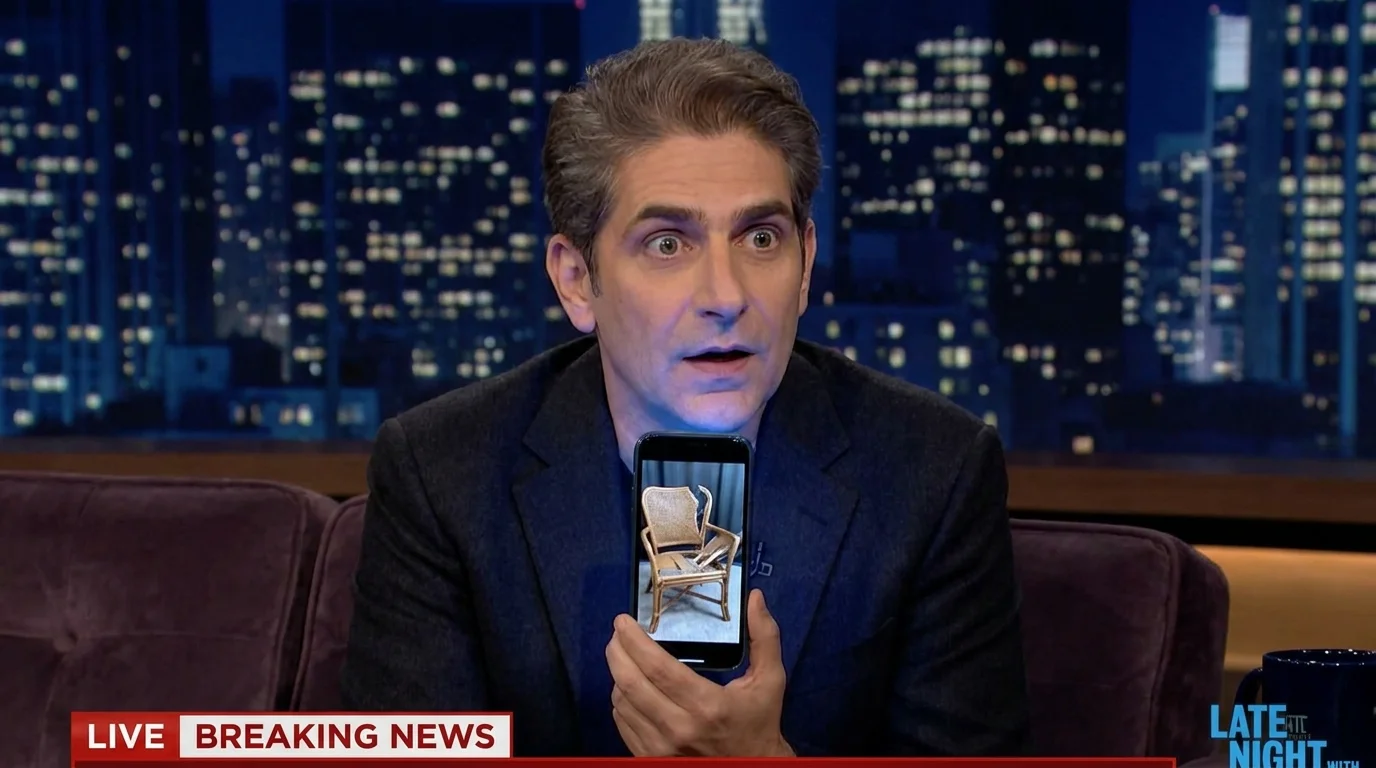
As the frame holds, you do not see a polished actor executing a stunt. You see a man falling through the fragile safety net of his own life, ending with the sight of a crushed rattan chair splintering under sudden weight.
“The best moments are always the ones you didn’t plan, because they are the only ones that cannot be faked.”
| Key Point | Detail | Added Value for the Reader |
|---|---|---|
| The Unscripted Fall | Michael Imperioli lost his footing and crashed during the intervention scene. | Shows how physical vulnerability can communicate deeper truth than scripted dialogue. |
| Creative Humility | David Chase kept the mistake and deleted his own written lines. | Highlights the importance of prioritizing raw authenticity over rigid plans. |
| The Rattan Symbol | The literal collapse of the furniture mirrors Christopher’s life. | Demonstrates how environmental accidents can create perfect visual metaphors. |
Why did they keep the fall in the final cut?
The director and showrunner realized that the physical collapse conveyed Christopher’s exhaustion and vulnerability far better than the written script could have achieved.
Was Michael Imperioli injured during the filming of this scene?
No, the actor was uninjured, though the sudden crash startled the rest of the cast and created an organic, unscripted tension in the room.
How much of the intervention scene was actually improvised?
While the dialogue was heavily scripted, the physical layout of the struggle and the final collapse were completely unplanned products of the moment.
Did David Chase often keep mistakes in The Sopranos?
While Chase was famously precise, he would occasionally keep physical anomalies or vocal cracks if they added a layer of undeniable realism.
How does this change the way we view screenwriting?
It proves that great writing is not about absolute control, but about creating a framework sturdy enough to let reality take over when needed.