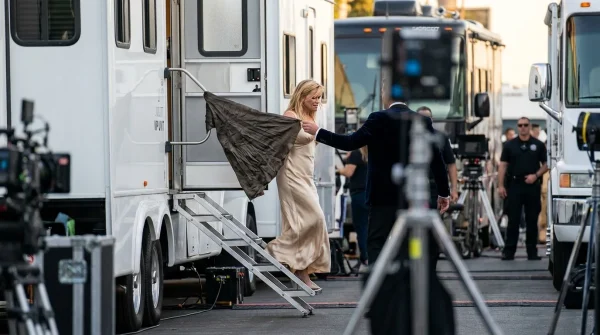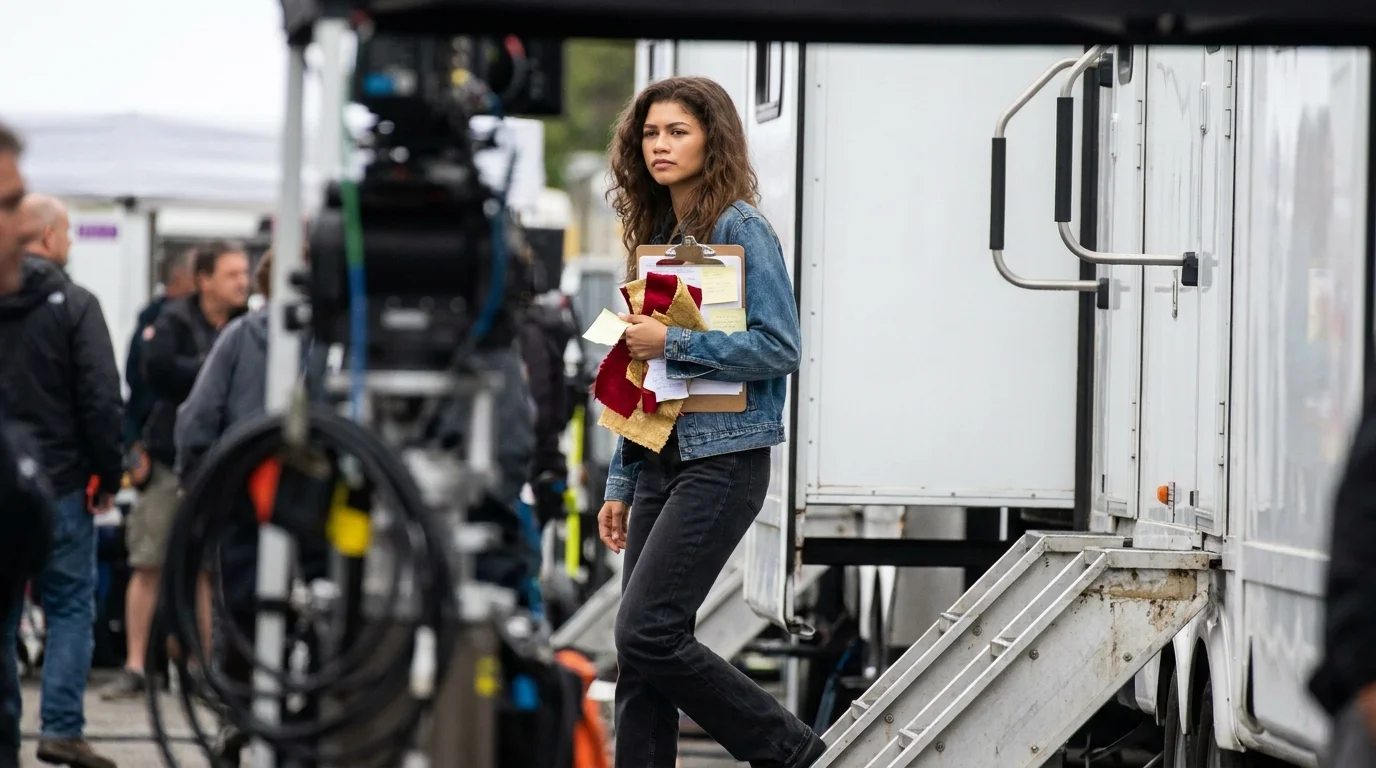
Inside a quiet, white-walled showroom in West Hollywood, the air smells of freshly steamed wool, lavender water, and the metallic tang of heavy-duty zippers. A tailor pulls a thread taut, her fingers moving with the quiet urgency of a surgeon. On a heavy oak table nearby, two distinct mood boards sit side-by-side, pinned with swatches of heavy silk crepe and Italian worsted wool.
To the millions of fans scrolling through social media, the resulting red carpet moments feel like pure, unscripted magic. You see a young couple laughing under the flashbulbs, their coordinated style choices appearing as nothing more than a sweet, spontaneous nod to their real-life partnership. It feels real, intimate, and entirely unbothered by the heavy machinery of Hollywood.
But look closer at the spacing of their public appearances and the precise synchronization of their silhouettes. The curve of her structural collar mirrors the exact lapel width of his double-breasted suit. This is not a happy coincidence born of a shared closet; it is a highly calibrated branding strategy designed months in advance to protect and grow a collective empire.
By analyzing this romance through a corporate lens, we begin to see how public intimacy is built. It is a masterclass in visual asset management, where every public step is treated with the same precision as a corporate merger.
The Architecture of the Accidental Aesthetic
The prevailing myth of celebrity styling is that stars simply pick clothes they like from a rack of designer options. We love to believe that their personal style is an authentic window into their souls, especially when they are in love. In reality, the modern red carpet is a high-yield financial arena where every square inch of fabric is negotiated, signed off on by legal departments, and aligned with studio marketing cycles.
Think of their public wardrobe not as fashion, but as a highly sophisticated visual language. When two massive stars coordinate their appearances, they are not just showing up for a film premiere; they are presenting a unified front that reassures investors, secures brand partnerships, and drives billions of social media impressions without spending a single dollar on traditional advertising.
The Shadow Timeline: Six Months to Premiere
Behind this seamless visual harmony is a rigid, multi-phase production schedule managed by a dedicated team of shared stylists and brand coordinators.
Consider the story of Clara Sterling, a 39-year-old wardrobe coordinator who has spent over a decade aligning talent for major studio press runs. “You do not just call in dresses two weeks before a premiere,” she explains. “For a global tour, the coordination begins half a year in advance, with joint fittings scheduled across three different time zones to ensure the couple never clashes in front of a camera.”
- Keri Russell accidentally broadcast her real romance during a highly tense screen moment
- Eric Stoltz losing Back to the Future exposed a brutal hidden chemistry test
- Andrew Garfield losing Prince Caspian over his appearance sparked a massive career shift
- Sam Neill almost secured a defining blockbuster spy role before studio intervention
- Megan Fox forgotten talk show interview instantly shatters years of harsh criticism
The timeline operates with military precision, breaking down into four distinct phases:
- Month 6: The Narrative Alignment. Stylists from both camps meet to establish the visual thesis of the tour, ensuring the outfits reflect the tone of the movie while maintaining the couple’s personal branding.
- Month 4: Fabric Sourcing and Dye Matching. Fabric swatches are sent to specialized dye houses in Italy and France to ensure that under harsh step-and-repeat lighting, his suit does not absorb light in a way that dampens the color of her gown.
- Month 2: The Parallel Fitting. Joint fitting sessions are held in private hotel suites, where the couple stands side-by-side on specialized pedestals to test how their silhouettes interact when walking, turning, and whispering to one another.
- Week 1: The Final Swatch Board Review. The styling teams lay out the final wardrobe lineup against a digital mock-up of the premiere’s step-and-repeat backdrop to guarantee maximum contrast and visibility.
This meticulous planning ensures that every photo taken by a frantic paparazzi photographer looks like a perfectly composed editorial spread. It turns a chaotic public street into a controlled, high-value branding canvas.
Tailoring the Strategy: The Three Visual Playbooks
To understand how this strategy functions across different events, we must break down the three distinct visual playbooks used to project power, intimacy, and accessibility.
The first playbook is The High-Contrast Power Match, designed for major global premieres. Here, one partner wears an avant-garde, structurally dominant piece while the other adopts a classic, understated frame. This deliberate contrast ensures they do not compete for visual real estate; instead, his minimalist tailoring acts as a literal frame that draws the eye directly to her high-fashion silhouette.
The second approach is The Casual Off-Duty Sync, used for paparazzi walks and casual outings. This is perhaps the most heavily coordinated of all, relying on matching undertones, complementary leather washes, and similar shoe profiles to signal a deeply connected, relaxed lifestyle that feels entirely organic to the untrained eye.
The final playbook is The Nostalgic Callback, where the wardrobe team integrates subtle design nods to iconic Hollywood couples of the past. By mirroring the structural lines of old-school pairings, they quietly insert themselves into the lineage of timeless cultural icons, lifting their modern partnership into something legendary.
Mindful Application: How to Sync Your Public Image
While you might not have a team of French couturiers on speed dial, you can apply the core principles of this visual alignment to your own professional or personal public appearances.
True visual coordination is never about wearing matching clothes or identical colors. It is about balancing weight, texture, and structural lines so that you and your partner or business associate look like a unified team rather than two individuals who happened to walk into the same room.
Use these practical guidelines to refine your shared aesthetic:
- Establish a shared color temperature (either all cool undertones or all warm undertones) to keep your joint photos looking clean and intentional.
- Balance the visual weight of your garments; if one person is wearing a heavy wool blazer, the other should avoid ultra-light, gossamer fabrics that create a jarring textural disconnect.
- Keep your accessories in the same metal family, ensuring that brass, silver, or gold details harmonize across both outfits.
- Test your outfits under natural and artificial light before leaving the house to identify any secret color shifts that might ruin your shared palette.
Below is the precise wardrobe toolkit used to create the iconic, synchronized look of Hollywood’s most powerful young couple during their latest international press run:
- Primary Palette: Pantone 19-4008 TCX (Obsidian Black) paired with Pantone 11-0601 TCX (Bright Alabaster).
- Accent Fabric: 100% silk satin in a custom-dyed Sage Green, used for her gown’s lining and his silk pocket square.
- Structural Material: Super 150s Italian worsted wool for his tailoring, offering a matte finish that absorbs camera flash and keeps him grounded beside her reflective silk.
- Proportion Rule: A strict 3:1 ratio of structural volume to minimalist tailoring, ensuring one silhouette remains the clear visual anchor.
Beyond the Red Carpet Illusion
Understanding the corporate precision behind these romantic red carpet moments does not diminish their beauty. If anything, it highlights the incredible artistry and work ethic required to maintain a public image in the modern digital landscape.
By viewing these appearances as a form of high-level performance, we can appreciate the immense talent of the designers, stylists, and publicists who work behind the scenes. It teaches us that true impact is never accidental; it is designed, polished, and presented with absolute intent.
“True elegance is not about standing out individually, but about creating a shared visual space where both partners can shine without competing.” — Clara Sterling, Wardrobe Coordinator
| Key Point | Detail | Added Value for the Reader |
|---|---|---|
| The Shadow Timeline | 6-month prep cycle for red carpet coordination | Understand the immense logistics behind “effortless” style. |
| Tonal Harmony | Matching color undertones rather than exact shades | Learn how to coordinate with others without looking dated. |
| Proportional Balance | One partner structural, one minimalist | Discover how to frame your partner or business associate visually. |
Frequently Asked Questions
Do they really coordinate their street style too?
Yes, paparazzi walks are heavily curated to maintain a cohesive brand image outside of official industry events.
How do their stylists work together?
They share private digital mood boards and physical swatch books months before any public appearance is scheduled.
Why don’t they just wear matching colors?
Exact matching looks like a costume; coordinating complementary tones looks expensive, modern, and sophisticated.
What role do fashion houses play in this?
Brands pay millions to dress them as a package deal, maximizing their global marketing reach during film releases.
Can I use these tips for business presentations?
Absolutely, matching the visual weight of your business partner’s attire projects unity and shared authority to clients.