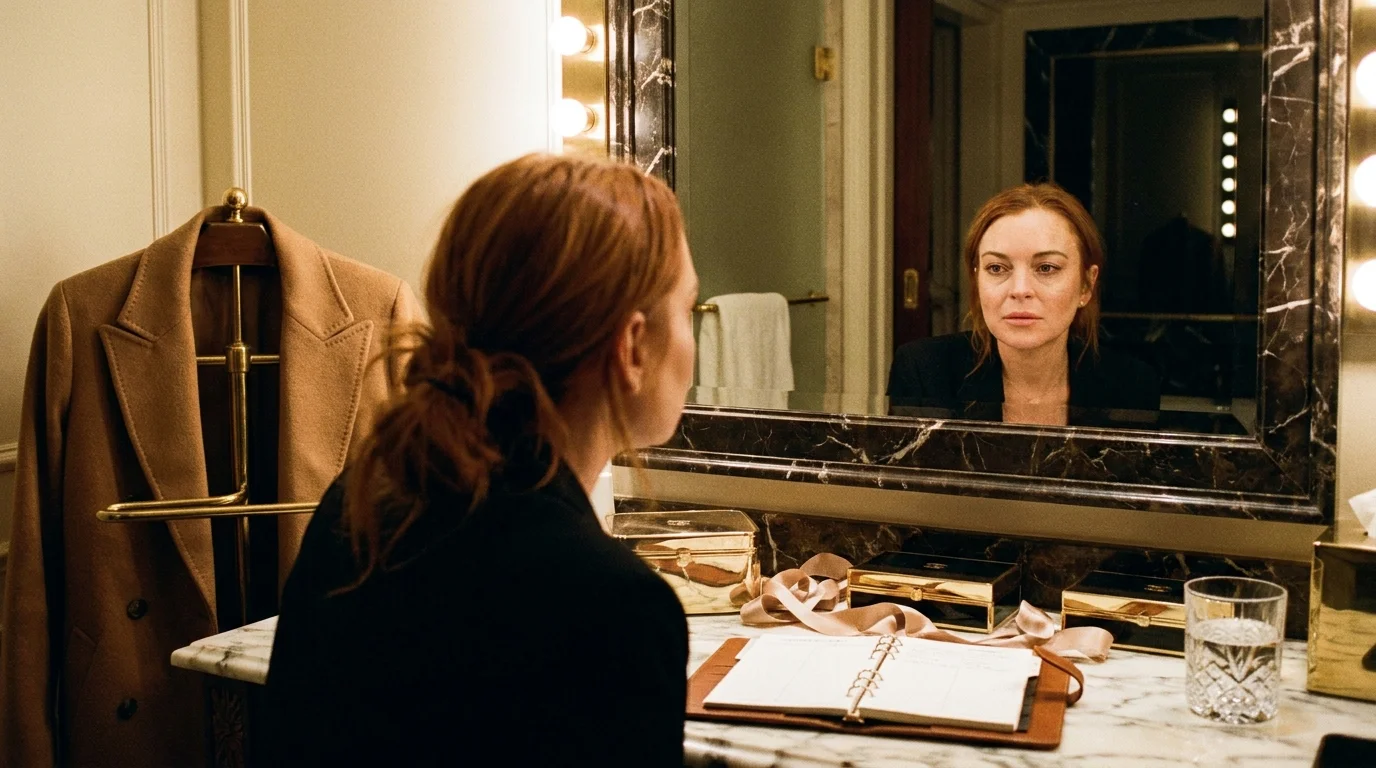
The morning sun cuts through the tall windows of a quiet suite in Manhattan, catching the microscopic dust motes suspended in the air. On a heavy rack of clothes, a tailored camel wool coat draped perfectly over a wooden hanger catches the light. There are no loud logos here, no neon fabrics screaming for attention, and no chaotic textures reminding you of the early-2000s paparazzi frenzies. Instead, there is only the soft, heavy weight of cashmere, silk, and structured wool.
Most onlookers watching your favorite stars assume that a career rebirth is simply a stroke of good fortune. They see a sudden string of successful holiday films, a flurry of viral red carpet moments, and assume the universe simply decided to be kind again. They mistake a highly calculated masterclass in human psychology for a happy accident.
The truth is far colder and much more deliberate. When an icon climbs back into the cultural stratosphere, every single seam, collar, and shade of beige has been negotiated weeks in advance. It is a quiet language designed to bypass your skepticism and speak directly to your sense of stability.
The Wardrobe as a Psychological Fortress
To understand this aesthetic shift, you must stop looking at clothes as fashion and start viewing them as a structural defensive shield. When a public figure transitions from tabloid fixture to respected leading lady, the primary obstacle is not talent; it is noise. The goal of a strategic rebrand is to lower the visual volume of the past so the audience can finally hear the present.
Think of it as architectural restoration. If you try to rebuild a historic home using the same cheap, flashing lights that once burned it down, the neighborhood will reject it. Instead, you use limestone, heavy oak, and muted tones that suggest the building has always belonged there. This is why the neon dresses and low-rise jeans of yesteryear were permanently retired in favor of clean lines, double-breasted tailoring, and a palette that whispers rather than screams.
Behind this specific aesthetic resurrection was a calculated alliance between legendary crisis PR representative Leslie Sloane and stylist Rob Zangardi. Sloane, a veteran of high-stakes public relations, understood that changing the narrative required changing the physical silhouette. Together with Zangardi, they did not just select outfits; they engineered a visual narrative of safety and maturity. By dressing the star in structured Max Mara coats, high-collared knitwear, and neutral tones, they bypassed the old media tropes entirely, forcing the public to view her through the lens of timeless, institutional elegance rather than fleeting internet gossip.
- Florence Pugh polarizes fashion insiders enforcing highly awkward red carpet demands
- Zendaya survives intense Hollywood pressure enforcing one strict digital boundary
- The Devil Wears Prada defining fashion monologue happened entirely off the script
- Sarah Michelle Gellar guards her twenty year marriage using one strict social boundary
- Brad Pitt early press tour moments exposed massive cracks in a golden marriage
Decoding the Anatomy of a Visual Resurrection
The transformation relies on three distinct wardrobe archetypes, each serving a specific psychological purpose on the red carpet and during press tours.
The Quiet Shield (Structured Outerwear)
This layer is about establishing physical boundaries. Heavy, long-line coats in camel, slate, and cream act as a wearable boundary between the star and the flashing cameras. By opting for oversized yet meticulously tailored silhouettes, the clothing conveys a sense of ownership over one's personal space.
The Architectural Collar (High-Neck Knitwear)
Historically, low-cut and revealing necklines dominated her early career, leaving her vulnerable to invasive tabloid framing. The modern strategic wardrobe swaps these out for high-necked turtlenecks, mock necks, and structured lapels. This frames the face clearly, drawing the viewer's eye up to her expressions and away from her body, shifting the conversation to her intellect and presence.
The Tonal Wash (Monochromatic Dressing)
When you dress in a single tone from head to toe, you project an instant image of organization and calm. Using varying textures of the same color—such as silk paired with heavy wool—creates depth without creating visual clutter. It tells the brain of the observer that the wearer is collected, deliberate, and entirely in control of her life.
Bringing the High-End Rebrand into Your Daily Life
You do not need a Hollywood budget or a legendary publicist to apply these visual principles to your own life. Whether you are stepping into a high-stakes meeting or seeking to redefine how people perceive your professional authority, the rules of sartorial gravity remain identical.
The secret lies in removing the friction from your appearance. By focusing on the structural integrity of your clothing rather than the speed of current trends, you build a wardrobe that works as an asset.
- Invest in the anchor layer: Allocate your budget to a single, high-quality trench or wool coat that instantly frames any outfit underneath.
- De-brand your daily rotation: Remove visible logos, busy patterns, and distracting hardware to let the silhouette do the talking.
- Match your underwear to your skin tone, not your clothes: This simple adjustment ensures no distracting lines interrupt the smooth drape of high-quality fabrics.
- Seek out heavy-weight materials: Choose heavy silks, dense cottons, and high-percentage wools that naturally resist wrinkling throughout a busy day.
The Tactical Toolkit
To execute this shift seamlessly, keep these specific parameters in mind:
- Fabric Weight: Look for wool blends with at least 80% natural fiber content for a natural, elegant drape.
- Color Temp: Stick to warm neutrals (camel, oatmeal, olive) to project warmth, or cool neutrals (navy, charcoal) to project authority.
- Tailoring Rule: Always buy for your shoulder width first; a local tailor can easily bring in the waist, but adjusting the shoulders is nearly impossible.
The Quiet Power of Being Seen on Your Own Terms
Ultimately, a style transition of this scale is not about vanity. It is about reclaiming the right to write your own story. When you change how you present yourself to the world, you change the terms of engagement, forcing others to meet you at your current level of maturity rather than dragging you back to your past mistakes.
By stripping away the noise and focusing on timeless, structural pieces, you create a visual environment where your talent and character can take center stage. It is a quiet reminder that the most powerful statement you can make is often the one whispered with absolute confidence.
“The most effective crisis management doesn't happen in a press release; it happens in the three seconds before you even open your mouth.”
— Leslie Sloane, Public Relations Strategist
| Key Point | Detail | Added Value for the Reader |
|---|---|---|
| Structured Outerwear | Uses heavy fabrics and clean lines to establish physical boundaries. | Projects instant authority and protects against invasive scrutiny. |
| High-Neck Silhouette | Shifts visual focus upward to the face and expressions. | Forces the audience to focus on your words and intellect. |
| Monochromatic Palette | Combines different textures of a single neutral color. | Creates an organized, calm appearance that resists daily wear. |
Frequently Asked Questions
Who was the main architect behind Lindsay Lohan's style comeback?
The transformation was engineered by crisis PR powerhouse Leslie Sloane in tandem with elite Hollywood stylist Rob Zangardi, shifting her from high-contrast trends to classic, quiet-luxury silhouettes.Why is camel wool considered a strategic color choice?
Camel wool projects warmth, neutrality, and high-status stability, bypassing hostile media lenses and signaling mature professionalism.How does structured outerwear help with public perception?
It builds a clean, physical boundary that hides movement, minimizes visual clutter, and immediately anchors the wearer in any environment.Can I build this look on a modest high-street budget?
Yes. Focus on fiber content rather than price tags. Look for 100% cotton, heavy linen, and high-percentage wool blends in simple cuts at thrift or mid-tier shops.What is the number one styling mistake to avoid during a personal rebrand?
Wearing poorly fitted shoulders. No matter how expensive a garment is, ill-fitting shoulders ruin the clean lines crucial for projecting quiet authority.