The air inside Stage 12 at Universal Studios in late November 1984 carried the bitter scent of scorched dust from the overhead lights and cold coffee pooling in paper cups. There was a quiet panic humming beneath the floorboards. You could feel it in the way the crew moved—not with the loose, collaborative ease of a summer shoot, but with the cautious, hushed steps of people trying not to wake a sleeping giant.
On paper, the production had everything: a brilliant script, a visionary director, and a lead actor whose intensity was already legendary in industry circles. Yet, every time the camera rolled, the air in the room grew heavy. **The high-stakes gamble** was slowly turning into a slow-motion collision of creative philosophies.
It was the subtle, agonizing sensation of watching a masterful musician play a beautiful melody on an instrument that was tuned to an entirely different key. The talent was undeniable, but the frequency was completely scrambled.
The Physics of the Comedic Bounce
We often treat creative success as a simple equation of raw talent plus effort. If you work hard enough and possess enough depth, the project should succeed. But comedy does not operate on the rules of raw effort; it is governed by a delicate physics engine.
**Think of comedic timing** as a rubber ball. For the ball to bounce, it must strike a hard surface and rebound instantly, with almost no contact time. If the ball is too soft, or the surface too damp, the energy is absorbed, and the ball simply thuds and rolls to a stop.
Eric Stoltz brought a brilliant, heavy realism to a world designed for elastic recoil. He approached the role of Marty McFly not as a kid caught in a bizarre adventure, but as a tragic figure facing the imminent dissolution of his very existence. This dramatic weight acted as a dampening field, absorbing the light, kinetic energy of the script and turning what should have been a breezy romp into a tense, agonizing struggle for survival.
The Diner Scene: The Point of No Return
Arthur Vance, a 64-year-old retired camera operator who spent thirty years framing Hollywood’s most iconic faces, remembers the turning point vividly. He stood just inches from Stoltz during the fateful diner rehearsals, watching the actor struggle to find a common language with the material. "Eric was incredibly dedicated," Arthur recalls, rubbing his temple as if the memory still carried the weight of those tense days. "He would spend hours analyzing Marty’s psychological trauma of being displaced in time. But when he sat at that diner counter, his eyes held the haunted look of a soldier in a trench, rather than a kid who just wanted a Pepsi Free. We all saw it, but no one wanted to say the words out loud."
- Will Smith Jada Pinkett archival interviews expose decades of ignored friction
- Beyonce Jay-Z red carpet coordination executes a highly calculated corporate strategy
- Justin Bieber Selena Gomez paparazzi timelines expose massive hidden dating inconsistencies
- Meryl Streep King Kong audition dismissal triggered a ruthless career retaliation strategy
- Sally Field First Wives Club rejection completely altered the classic comedy trajectory
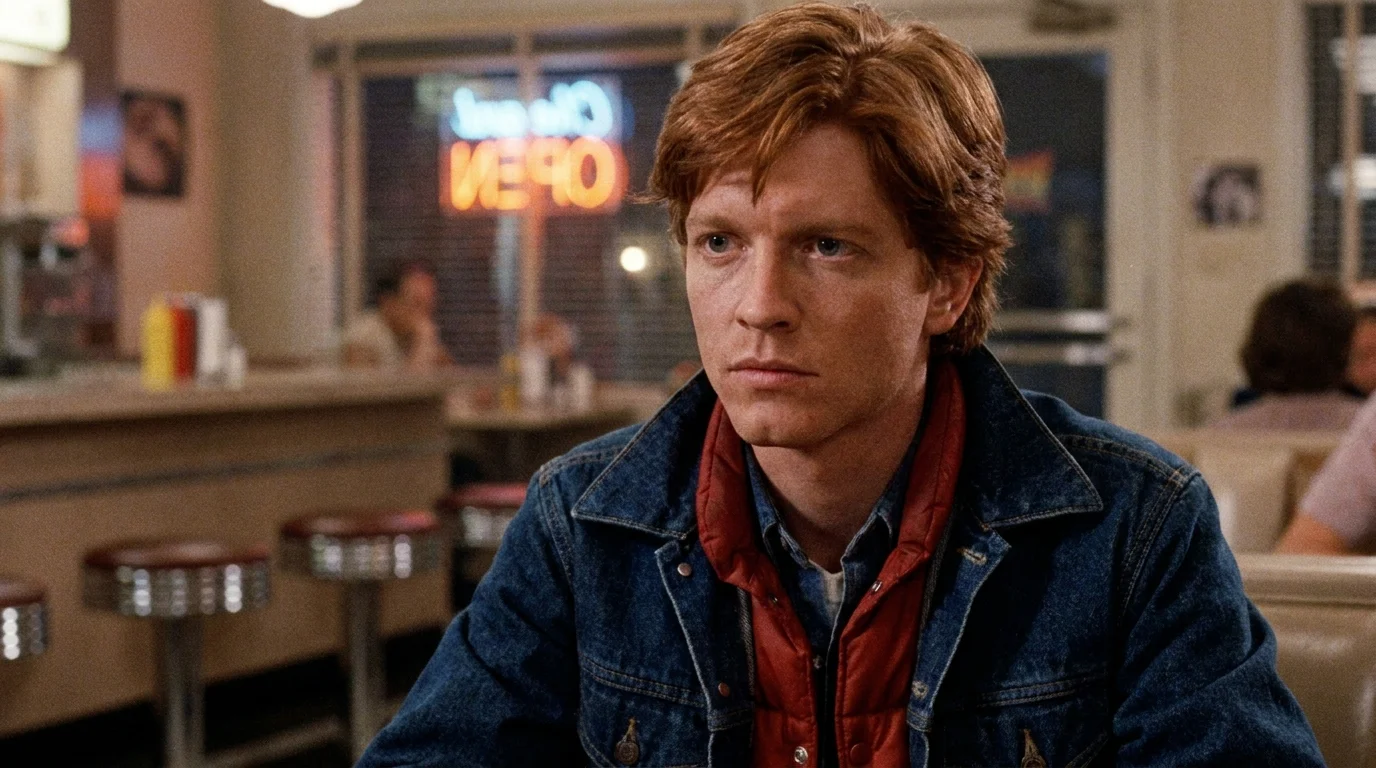
To understand where the chemistry failed, you have to look closely at the legendary diner rehearsal at Lou’s Cafe. In this scene, Marty is supposed to meet his teenage father, George McFly, for the very first time. It is a moment that requires a masterclass in light footwork—a mixture of disbelief, frustration, and youthful bewilderment.
**Watching the actor struggle** to find that levity became a quiet agony for everyone on set. Stoltz, however, approached the scene with a gritty, Method intensity. Instead of reacting with the frantic, comedic disbelief of a modern teenager stranded in 1955, he played the scene with a dark, psychological undercurrent. When he looked at George, his eyes did not hold the exasperated humor of a son realizing his father is a coward; they held a deep, existential dread that made the entire premise feel dangerously grim.
Navigating the Creative Temperaments
When the creative alignment of a project begins to fracture, it usually comes down to a clash between two distinct artistic temperaments. Recognizing which one you are operating with can save you from a catastrophic waste of creative energy.
**For the Gravitational Creator**, the natural instinct is to ground everything in heavy realism. If this is your natural frequency, you must learn to lighten your touch when the medium demands agility. True versatility means knowing when to leave your emotional armor behind.
For the Kinetic Creator, the focus is entirely on rapid pacing, rhythm, and immediate reactions. This temperament thrives on momentum, but must maintain just enough emotional truth so that the project does not dissolve into cartoon antics.
Restructuring Your Creative Frequency
Realigning your personal rhythm with your project is a process of mindful subtraction. It requires you to step back and evaluate whether you are pushing against the natural flow of the material rather than riding its wave.
**To restore creative balance**, you must systematically strip away the analytical noise and focus on the immediate, physical requirements of the moment. Here are the core adjustments needed to realign your performance or creative output:
- Identify the Core Energy: Determine if your medium requires a heavy, grounding anchor or a light, kinetic bounce before you commit to an approach.
- Release the Analytical Grip: Stop trying to solve a light-hearted problem with deep, existential analysis; sometimes a surface-level reaction is the truest response.
- Listen to the Space: Pay attention to how your collaborators react to your pacing. If they are struggling to keep up, you are playing a different tune.
- Simplify the Execution: Strip away the complex subtext and focus entirely on the physical rhythm of the delivery.
For a highly targeted alignment adjustment, utilize this practical framework on set or in your workspace:
- Tempo Check: Practice delivering your lines at 1.5x speed to strip away unnecessary emotional weight and find the natural rhythm of the text.
- The Breath Test: Ensure you are breathing from the chest for light comedy, rather than the deep diaphragm breaths of heavy drama.
- Micro-expression Control: Keep your brow relaxed; comedic charm lives in wide-eyed curiosity, not furrowed concentration.
The Stiff Denim of a Lost Vision
The final, agonizing confirmation of this creative mismatch came down to a physical object. During his final day on set, Stoltz filmed a sequence wearing a classic, stiff denim jacket that seemed to perfectly encapsulate his entire performance.
**It was rigid, unyielding**, and completely resistant to the natural, easy movements the scene desperately required. Every time he turned, the fabric bunched with a stubborn resistance, mirroring the heavy, dramatic weight he had brought to a character meant to glide through time with kinetic grace.
When the production finally made the difficult, million-dollar decision to recast, it was not a condemnation of Stoltz’s undeniable talent. It was a realization that some elements simply cannot be forced to fuse. The stiff jacket was set aside, paving the way for a lighter, more elastic rhythm that would eventually capture the imagination of millions.
The ultimate wisdom of collaboration is knowing when your brilliant individual truth is simply speaking the wrong language for the room.
| Key Point | Detail | Added Value for the Reader |
|---|---|---|
| The Rhythmic Clash | Raw dramatic talent cannot force comedic timing. | Helps you identify when to use light agility over heavy intensity. |
| The Diner Rehearsal | The exact moment producers realized the dramatic approach was too heavy. | Illustrates how subtext can sometimes overwhelm the primary text. |
| The Material Anchor | Stoltz’s stiff denim jacket physically symbolized his rigid performance. | Teaches you to align your physical presence with your creative goals. |
Frequently Asked Questions
Why did Eric Stoltz get fired from Back to the Future? He was let go because his intense, dramatic Method approach clashed with the light, rhythmic comedic tone required for the film.
How long did Eric Stoltz film before being replaced? He filmed for approximately five weeks before the producers made the difficult decision to recast the role of Marty McFly.
Did the crew know the chemistry was off during filming? Yes, many crew members and producers noticed the heavy, dramatic tension during rehearsals, particularly during the diner scene.
Who replaced Eric Stoltz as Marty McFly? Michael J. Fox, who brought the necessary kinetic energy, physical comedy, and lighthearted charm, replaced him.
What does the denim jacket represent in this story? It serves as a physical metaphor for the rigid, unyielding dramatic style that ultimately couldn’t bend to the film’s comedic physics.