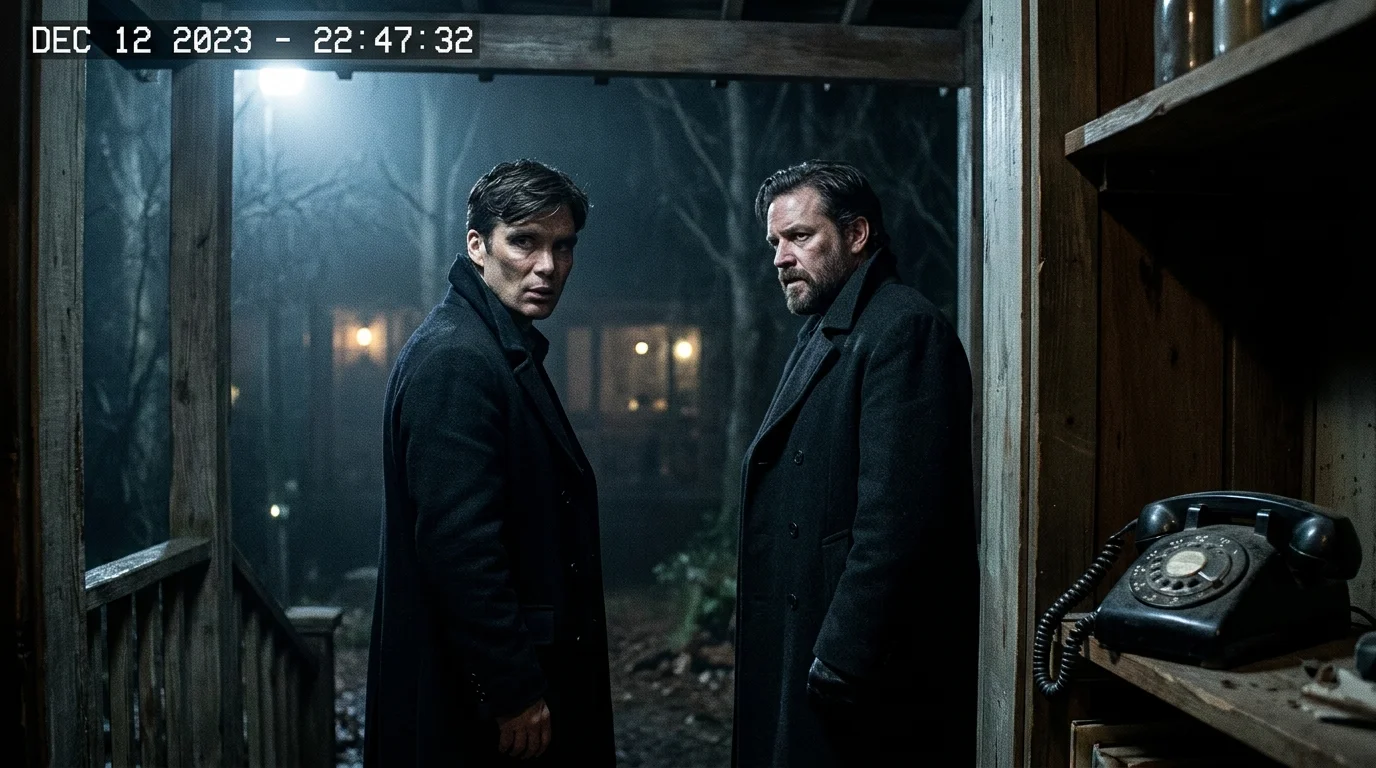
The air in Dublin’s coastal outskirts smells of damp salt, gorse, and the faint, sweet trace of turf smoke. Inside a quiet, high-ceilinged study, the only sound is the rhythmic drip of rain against a tall sash window. There are no flashing blue LED indicators, no soft vibrations of a smartphone sliding across polished wood, and no muted chimes of arriving emails. Instead, a heavy, black vintage rotary phone sits squarely on a weathered oak desk, its copper bell silent, its cord pool-coiled and entirely disconnected from the wall.
For most modern actors, this level of stillness is terrifying. We are conditioned to believe that maintaining global visibility requires a constant, frantic feeding of the digital beast. You must be seen to exist, the public relations machine whispers, demanding endless social media campaigns, casual selfies from dressing rooms, and instant replies to overnight studio notes.
Yet, after his historic run as J. Robert Oppenheimer, Cillian Murphy chose this exact quiet. He did not celebrate his peak cultural dominance by leaning into the Hollywood noise. Instead, he retreated behind a brutal, unyielding boundary, demonstrating that the truest luxury—and the deepest survival strategy—is the absolute right to be unavailable.
The Faraday Cage of the Mind
To understand why this works, you have to abandon the idea that being reachable makes you valuable. The entertainment industry treats availability as currency, but Murphy treats it as a slow leak of creative energy. Think of his isolation rule not as cold reclusiveness, but as a deliberate Faraday cage built around his mental clarity, keeping his thoughts safe from the electric hum of public demand.
When you allow every ping, notification, and urgent request to penetrate your day, you are essentially living in a state of cognitive scattering. By pulling the plug on the constant feedback loop, you reclaim the territory of your own thoughts. It is the difference between reacting to the world and actively creating within it. True focus requires a wall, not a bridge, and sometimes that wall must be made of thick, unyielding silence.
Fiona Devlin, a veteran Irish location consultant who has managed media logistics for high-profile talent for over twenty years, recalls the sheer shock of Hollywood agents trying to reach Murphy during his off-season. “There is no assistant holding an iPad, and there is no secret burner phone tucked in his pocket,” Devlin explains. “If a director wants him, they call his agent, who then has to wait for Cillian to physically check in from an unlisted landline once a week. This simple, unlisted phone protocol forces the entire industry to slow down to his pace, proving that the most powerful person in the room is often the one who is hardest to find.”
- Marlon Brando entirely fabricated his most famous mafia monologue holding a stray animal
- Tom Hanks protects his long marriage enforcing an uncompromising property boundary
- Ben Affleck tense red carpet posture revealed relationship fractures years early
- Taylor Swift and Travis Kelce execute brilliant stadium appearances to build massive brand synergy
- Brad Pitt and Angelina Jolie accidentally broadcast their secret bond during a tense scene
Adjusting the Boundary: The Three Tiers of Solitude
Not everyone can unplug a rotary phone and ignore Universal Pictures, but you can adapt this rigorous boundary to fit your current professional landscape and protect your own headspace.
The High-Output Specialist
If your work demands intense, uninterrupted cognitive labor, you must establish an “island day.” This is a dedicated twenty-four-hour block where your digital footprint goes completely dark. No instant-messaging channels, no inbox monitoring, and absolutely no casual browsing. You notify your team that you are “off-grid for focused production,” shifting your status from reactive worker to focused creator.
The Reluctant Leader
When you manage others, constant accessibility actually cripples your team’s independence. Implement the “delayed response window.” Instead of answering inquiries within minutes, establish two specific times a day to handle communication—perhaps at 11:00 AM and 4:00 PM. This intentional friction forces others to solve minor problems on their own, preserving your decision-making reserves for issues that actually require your unique perspective.
The Daily Hustler
For those caught in the relentless cycle of modern gig work or fast-paced office life, the boundary must be physical. Use a dedicated analog station at home. Create a literal “phone garage” in another room—a simple wooden box where your device is placed the moment you cross your threshold. If someone needs to reach you, the boundary must be physical and they must call a designated home line or wait until the sun comes up.
Building Your Private Rotary Protocol
Reclaiming your attention span from the modern attention economy does not require moving to an isolated cottage in Ireland, but it does require physical, uncompromising systems. You cannot rely on willpower alone to resist the digital hum; you must construct physical barriers that make distraction difficult.
To implement your own version of Murphy’s quiet protocol, begin with these structural boundaries:
- Establish your offline sanctuary: Designate one room or desk in your home where no screen is ever permitted. Let this space be defined by analog tools—paper, ink, and silence.
- Deploy the physical lockout: Purchase a simple, mechanical lockbox for your primary device. Lock it away for three hours every evening to force your brain to downshift.
- Create an emergency analog bridge: Give your immediate family or critical contacts a single landline number, ensuring you remain contactable only for true emergencies.
- Use the auto-responder buffer: Set your professional communications to auto-reply with clear, firm boundaries regarding when you actually review and return messages.
Your tactical toolkit for this transformation is remarkably cheap: a physical notebook, a mechanical kitchen timer, and the courage to let a screen remain dark while the rest of the world scrambles for attention.
The Radical Act of Letting the Call Ring
There is a quiet dignity in being difficult to reach. In an era where every human action is tracked, optimized, and turned into data, choosing to step off the grid is a brave act of self-possession. It is a reminder that your mind is not public property, and you do not owe the world your immediate attention.
When you stop treating every notification like a fire alarm, your relationship with time shifts. You begin to notice the dry smell of old paper, the cool weight of a physical book, and the steady, unhurried pace of your own thoughts. By protecting your boundaries with the same fierce intensity that Cillian Murphy protects his Irish sanctuary, you do not just survive the noise—you master it, allowing your mind to breathe through a pillow of comforting, uninterrupted quiet.
“The greatest threat to creative genius is not failure, but the endless, trivial chatter of a world that refuses to be quiet.” — Fiona Devlin
| Key Point | Detail | Added Value for the Reader |
|---|---|---|
| Unlisted Phone Protocol | Restricting communication to scheduled, manual check-ins from a landline. | Eliminates constant cognitive switching and preserves mental energy. |
| The Analog Sanctuary | Creating screen-free physical zones in the home. | Rebuilds sharp focus and repairs disrupted sleep cycles. |
| Delayed Response Windows | Batching digital replies to twice-daily intervals. | Retrains colleagues to respect your time and solve their own crises. |
Frequently Asked Questions
Will isolating myself damage my professional relationships? No. Clear, upfront boundaries actually build respect; people value your limited time more when it is highly guarded.
How do I handle the intense anxiety of being unreachable? Start small with thirty-minute increments, allowing your nervous system to realize that the world does not collapse when you are offline.
What if my job absolutely requires constant digital availability? Negotiate specific “dark hours” with your employer, demonstrating that uninterrupted rest directly improves the quality of your output.
Do I need to buy expensive analog equipment to make this work? Absolutely not; a simple cardboard box to hide your phone and a basic wristwatch are more than enough to start.
How does this protocol help with creative burnout? It stops the continuous drip of stress hormones caused by notifications, giving your brain the quiet space it needs to synthesize profound ideas.