The familiar, warm hiss of garlic hitting hot olive oil usually signals a moment of pure comfort. In the glowing warmth of a home kitchen studio, the rich aroma of browned butter and fresh rosemary should wrap around you like a heavy wool blanket. Instead, there is a coldness in recent uploads that has nothing to do with the winter air outside. You watch the steam rise from a heavy cast-iron skillet, but your eyes are drawn away from the food to the tense angle of a shoulder, the sharp tilt of a head, and a sudden, chilly silence that hangs in the air between cuts.
For years, daytime television gave us a highly polished version of domestic bliss. But in the raw, unedited landscape of recent independent social media uploads, the screen acts as a thin window into a much more complicated reality. The cracks in the facade show up not in the recipes, but in the tiny, split-second pauses where the home cook forgets the camera is running.
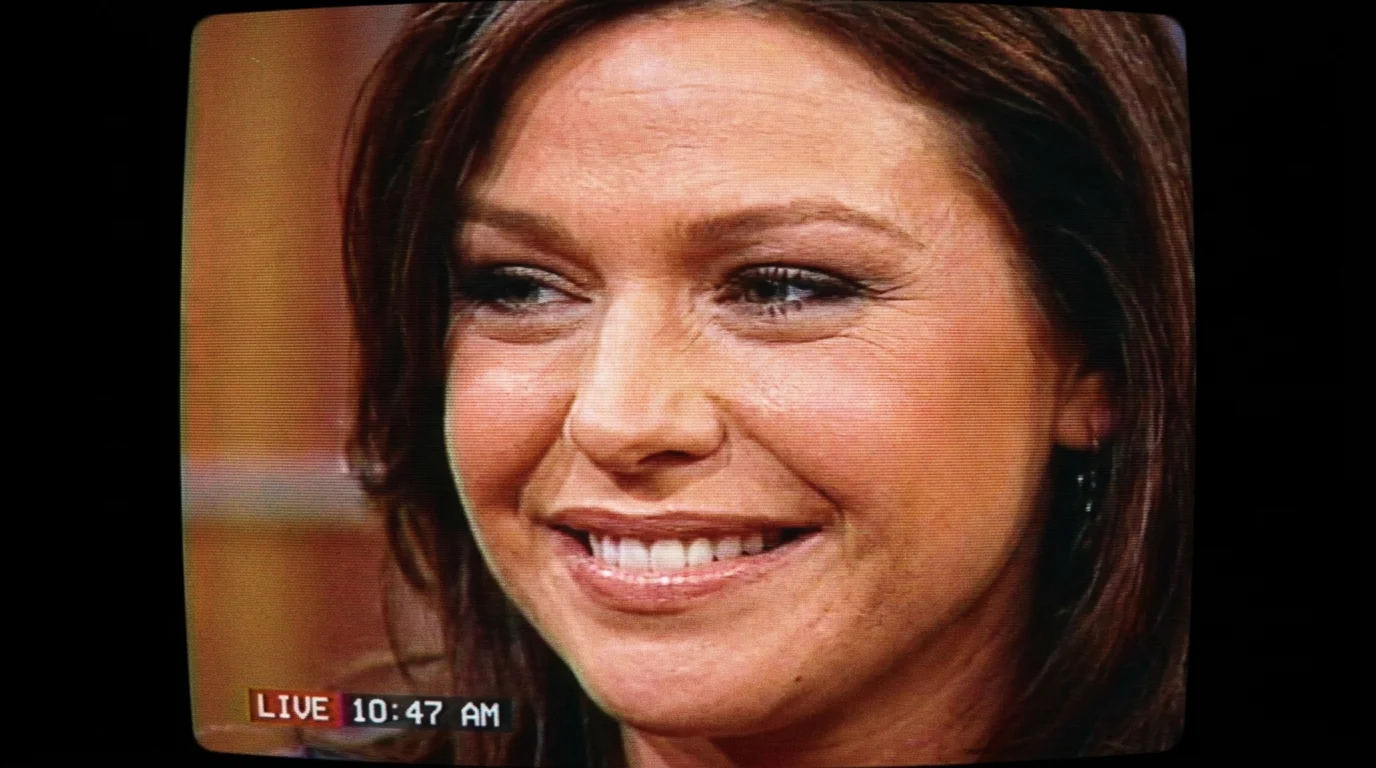
In the latest cooking video, during a demonstration of a rustic skillet meal, the atmosphere shifts instantly. As she reaches for a wooden spoon, her hand pauses mid-air. Her gaze flickers past the rim of the pan, directly to someone standing just behind the lens. It is a sharp, unmistakable glance—one that carries the weight of a quiet battle.
This isn’t the lighthearted banter we grew up with; it is the raw choreography of a workspace under pressure. The sudden, tight-lipped smile she forces as she snaps her attention back to the lens doesn’t project warmth; it feels like a defensive shield raised in the middle of a silent domestic war.
The Glass Kitchen: Decoding the Choreography
To understand what is happening behind the camera, you have to treat the modern video frame like a glass kitchen where every reflection reveals a hidden truth. When a cooking host moves from a multi-million-dollar studio to a self-produced home environment, they lose the buffer of a professional control room. Without a director to soften the transitions, the raw footage becomes an accidental mirror of real-time friction.
The central mistake we make is believing that a cooking show is about the food. It is actually about control. When a host is used to absolute authority, any small shift in production quality—a camera operator moving too slowly, a lighting cue missed, or an unscripted instruction murmured off-camera—feels like a direct challenge. Reading these unedited moments is like watching someone try to breathe through a cold oven; the physical strain of maintaining a happy exterior while managing internal chaos is impossible to hide entirely.
- Anne Hathaway completely reversed her massive career slump trusting a ruthless image consultant
- Tom Segura strict backstage podcast demands trigger an unexpected comedy industry clash
- Cillian Murphy handles intense global fame following an incredibly strict isolation rule
- Marlon Brando entirely fabricated his most famous mafia monologue holding a stray animal
- Tom Hanks protects his long marriage enforcing an uncompromising property boundary
Julianne Vance, 42, spent over twelve years as an associate producer for daytime culinary programming before stepping away to study non-verbal communication in digital media. She notes that the tension we see in these independent uploads is a classic symptom of production misalignment. “When a legendary host transitions to a smaller, agile crew, there is often a quiet clash of cultures,” Vance explains. “The host expects the seamless anticipation of a hundred-person studio, while the young camera crew is operating on a shoestring budget. At the 4-minute, 12-second mark of that chicken recipe, that sharp, three-second glare off-camera isn’t just impatience—it is a seasoned professional realizing her crew is not keeping pace with her rhythm, leaving her exposed in the final edit.”
The Anatomy of the Production Glare
Not all off-camera looks are created equal; each micro-expression tells a distinct story of set friction. By segmenting these physical tells, we can map out the exact nature of the silent dispute happening behind the kitchen counter. The tiny muscular shifts in the face tell us more about the backstage environment than any official public relations statement ever could.
The Glare of the Unrehearsed Second
This is the most common tell, occurring when the camera operator fails to anticipate a physical transition. When the host moves to grab a salt cellar or a hot pan, the camera should glide effortlessly to follow. A split-second delay forces the host to wait, holding a heavy plate or a hot handle while staring directly at the lens. In these moments, the eyes narrow, and the jaw tightens—a clear sign that the physical flow of the kitchen is being broken by an inexperienced hand.
The Silent Audio Stand-Off
Sometimes the battle is not visual, but acoustic. You can spot this when the host suddenly drops their voice to a whisper or abruptly stops speaking mid-sentence. The sharp head turn toward the left side of the frame usually indicates an off-camera noise—a dropped microphone, a whispered comment from an assistant, or the hum of an unshielded cable. This physical interruption breaks the culinary rhythm, forcing the host to manually rebuild their onscreen persona.
The Forced Smile Transition
The most telling sign of a deeper staff dispute is the rapid recovery. Watch for the instant she snaps her head back to the lens after a glare. The muscles around the mouth tighten into a thin, straight line, but the warmth never reaches her eyes. It is a mechanical transition designed to save the take, but it reveals a deep-seated frustration with the production team’s lack of polish.
How to Decode Hidden Set Tension
Watching a cooking upload with a critical eye allows you to look past the ingredients and analyze the human dynamics of the production. To spot these subtle battles yourself, you must pay attention to the space between frames and the tiny, unscripted pauses that occur during transitions.
First, turn down the audio. Removing the pleasant, conversational tone of the host allows you to focus purely on physical transitions and micro-expressions. Second, track the movement of the camera. A camera that jerks, reframes mid-cut, or fails to settle on the food quickly is a primary source of host frustration.
Analyze how the physical tools are handled. White knuckles on a knife handle or a slammed cutting board are clear signs of internal frustration. Observing the eye line during these heavy-duty prep sequences will quickly show whether the host is working in harmony with her crew or actively fighting their timing.
- Track the camera stability: Steady tripod or handheld wobble?
- Watch the focus transitions: Smooth rack focus or hunting for the subject?
- Monitor eye contact duration: Direct to camera, or drifting toward the floor manager?
- Evaluate spatula grip: Natural and loose, or rigid and defensive?
Beyond the Recipe: The Human Cost of Perfection
When we peel back the layers of these polished culinary uploads, we find a messy, human environment that is far more relatable than any pristine studio set. The subtle friction between a beloved host and her crew reminds us that creating comfort on screen requires an immense amount of unseen emotional labor.
Understanding these hidden battles changes the way we consume media. It teaches us to value the raw, imperfect reality of human work over the sterile, manufactured perfection we have been taught to expect. When the facade slips, we are not just seeing a momentary lapse in professionalism; we are seeing a passionate creator fighting to maintain her high standards in a changing digital landscape. In the end, the glare off-camera is not just a sign of trouble—it is proof that real work is happening, and real work is rarely quiet.
“True kitchen authority is not established through the recipe, but through how one commands the room when the cameras are supposed to be looking the other way.” – Julianne Vance
| Key Tell | Physical Sign | Production Meaning |
|---|---|---|
| The 4:12 Mark Glare | Abrupt eye-drift to the camera left with tightened jaw | Unrehearsed crew movement or lighting mistake mid-take |
| The White-Knuckle Grip | Rigid tension in fingers holding basic kitchen utensils | Internal irritation regarding set pacing and timing delays |
| The Dead-Eye Recovery | Mouth smiles quickly while the eyes remain entirely flat | A professional attempt to mask staff friction from the viewer |
What exactly happens at the 4:12 mark in the latest video?
At this specific moment, Rachael Ray looks sharply off-camera to her left with a tightened jaw, indicating an unscripted interruption or a mistake made by the camera crew that temporarily broke her focus.
Why are these micro-expressions more noticeable now?
Because the shift from large daytime studio productions to smaller, home-based independent crews removes the safety net of professional editors who would normally cut these moments out.
Are these subtle glares a sign of a real crew dispute?
While we cannot know the internal dynamics, professional body language analysis suggests a clear misalignment between the host’s high standards and the crew’s technical execution.
How can I spot set tension in other cooking shows?
Look for sudden audio cuts in the middle of sentences, defensive postures, and moments where the host has to wait awkwardly for the camera to catch up to their physical movements.
Does this tension affect the quality of her recipes?
Not at all. The recipes remain solid, but the tension highlights the immense emotional and professional effort required to produce casual-looking home cooking content.