Imagine the heavy, pressurized silence inside a blacked-out SUV. The air conditioning hums at a sterile sixty-eight degrees, smelling faintly of leather conditioner and expensive detailing spray. Outside, the city of Los Angeles passes by like a muted television screen, completely separated from your senses by three layers of reinforced glass. This is the standard operational bubble of the modern celebrity—a carefully curated isolation chamber designed to keep the world at a safe, predictable distance.
But then you hear it. A low, throaty rumble that vibrates right through your shoe soles before you even see the machine. It is the uneven idle of a vintage parallel-twin engine, sputtering slightly in the warm California heat. A rider sits at the light, legs straddling a black Norton Commando, wearing a faded leather jacket that has seen its share of asphalt. He does not have a security detail, a chase car, or a team of publicists managing his lane changes.
When the light turns green, he drops into gear and disappears into the traffic flow, entirely exposed to the exhaust fumes, the sudden lane changes of distracted drivers, and the gritty reality of the asphalt. This is not a stunt or a temporary photo opportunity. It is a deliberate, daily refusal of the golden cage that fame naturally builds around anyone who commands a billion-dollar box office record.
Choosing the raw friction of the street over the insulated safety of a private chauffeur is more than a transportation preference. It is a calculated act of self-preservation that resets your internal compass every time you turn the ignition key. By stripping away the layers of artificial insulation, you force your mind to stay anchored to the ground everyone else walks on.
The Friction Buffer and the Myth of Protection
We are conditioned to believe that success means removing all friction from our lives. We strive for seamless deliveries, private spaces, and automated interactions that shield us from the messy reality of the public square. Yet, this total elimination of daily friction is exactly what breeds a subtle, creeping alienation. When you no longer have to navigate the small inconveniences of life, you lose the vital capacity to relate to the people around you.
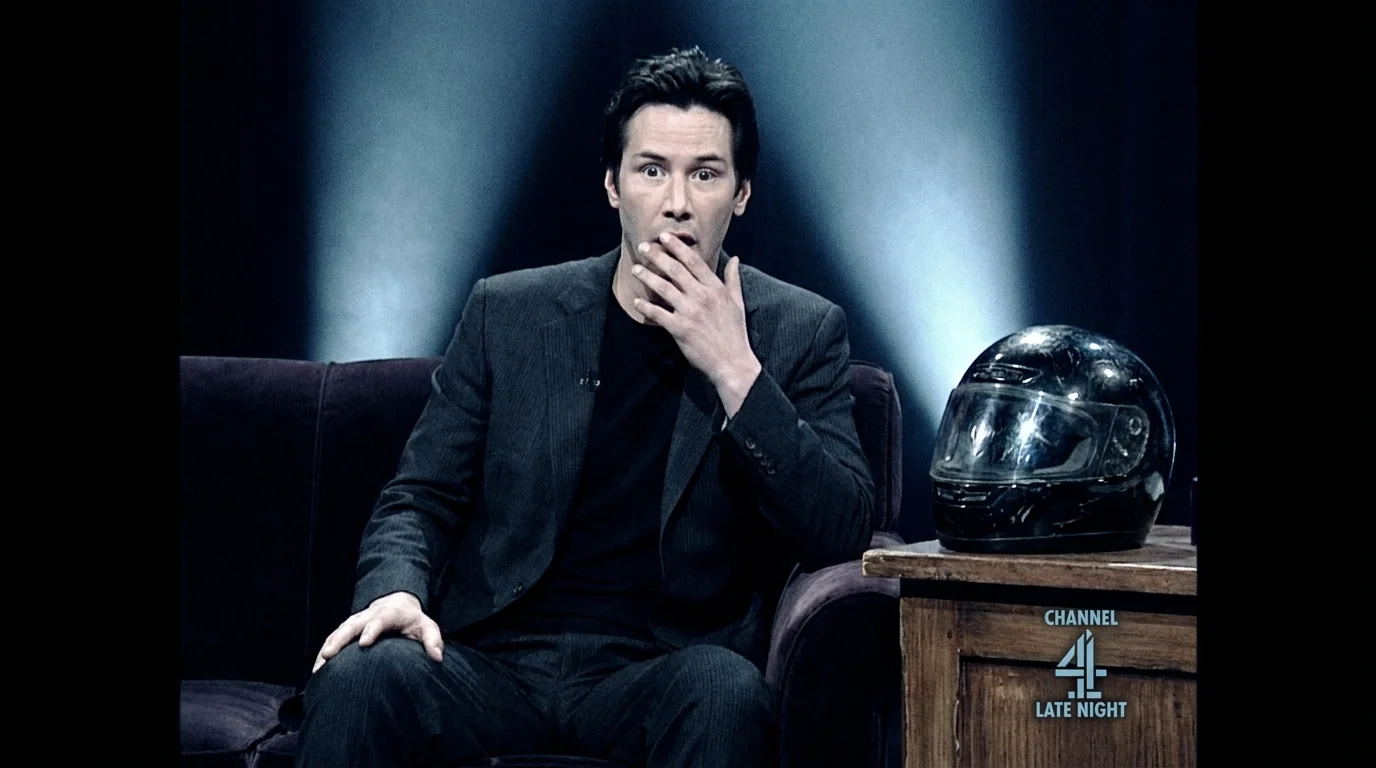
The Friction Buffer is the concept of intentionally inserting physical, uninsulated experiences into your daily routine to prevent your reality from warping. For Keanu Reeves, this translates into a strict logistical rule: never outsource your movement. By riding his own motorcycles through heavy traffic or sitting quietly on a crowded subway car, he deliberately subjects himself to the shared sensory experience of the average commuter. It is a functional shield against the distorting gravity of global adoration.
- The Dark Knight iconic jail scene relied completely on accidental physical pacing
- Kevin Bacon protects his decades long marriage enforcing a strict conversational boundary
- Justin Timberlake early red carpet interviews expose intensely awkward relationship warning signs
- Mr and Mrs Smith unscripted micro expressions broadcast an intensely guarded romance
- Lord of the Rings quietly recast a leading man over chemistry failures
Thomas Vance, a 42-year-old custom motorcycle fabricator based in Glendale, California, has spent two decades observing how machines alter human behavior. “The moment you put on a helmet, your relationship with the world changes,” Vance explains while wiping grease from a vintage carburetor. “You cannot look at a phone, you cannot hide behind a tinted window, and you are forced to pay absolute attention to the exact patch of asphalt beneath your tires. It is the ultimate equalizer because the road does not care who you are; it demands your full presence or it will punish you instantly.”
Adapting the Friction Buffer for Different Lifestyles
You do not need to ride a vintage motorcycle or navigate the New York subway system to practice this grounding philosophy. The core principle is about identifying where you have over-insulated your life and systematically restoring raw, human-scale interactions.
For the Desk-Bound Professional
Expose your senses to the changing elements during your daily transition periods. Instead of driving directly from an air-conditioned garage to an office parking structure, park several blocks away or choose a route that requires a ten-minute walk through the local weather.
For the Creative Thinker
Replace the curated digital feed with physical, unpredictable environments. Spend your planning sessions in chaotic public spaces—like busy coffee shops or public parks—without noise-canceling headphones, forcing your mind to process the actual soundtrack of human life.
Implementing Your Grounding Routine
Grounding yourself is not a passive state of mind; it is a series of small, deliberate physical choices you make throughout your week. To build your own friction buffer, you must consciously choose the less comfortable, more direct path of interaction.
Strip away the artificial barriers that keep you from experiencing your immediate environment. Start by auditing your daily movements and identifying where you can replace automated convenience with physical effort.
- Choose analog navigation: Turn off your GPS during routine weekend drives and rely on your internal sense of direction to navigate your local geography.
- Ditch the delivery apps: Walk to your local diner or grocery store to pick up your food, engaging in at least one brief, unscripted conversation with the staff.
- Commute without distraction: Leave your earbuds in your pocket during transit rides, allowing yourself to observe the faces, movements, and quiet struggles of the people sharing your space.
- Maintain your own gear: Clean, polish, or repair your own tools and transportation, whether it is a bicycle chain, a leather jacket, or a pair of boots.
Tactical Toolkit:
• Duration: 20 minutes of uninsulated outdoor exposure daily.
• Focus: Zero digital screen time during any form of transit.
• Gear: One durable, hand-maintained item that you use every single day.
The Real Luxury of Being Grounded
Ultimately, the desire to be shielded from the world is a trap that trades human connection for convenience. When you choose to step out of the climate-controlled bubble, you reclaim your right to participate in the shared human experience. It is not about pretending to be humble; it is about recognizing that your sanity depends on staying connected to the raw, unpolished edges of reality.
True peace of mind is found in the places where fame, status, and digital metrics lose their power to protect you. It is found on the open road, where the wind bites cold through a denim jacket and the smell of asphalt rain fills your lungs. You realize that you do not need a pristine, curated existence to feel complete.
The real luxury is being able to step off the machine, pull off your gloves, and walk into a place where nobody is looking at your resume. You sit down on a vinyl stool, order a cup of black coffee, and set your scuffed black motorcycle helmet right on the sticky counter of a crowded diner, completely at peace with the beautiful, messy world around you.
“The road has a way of stripping away your titles and leaving only your focus.” — Thomas Vance
| Key Point | Detail | Added Value for the Reader |
|---|---|---|
| Physical Exposure | Replacing private vehicles with open commutes. | Restores direct sensory contact with your daily environment. |
| Analog Focus | Turning off navigation tools and digital distractions. | Rebuilds spatial awareness and mental self-reliance. |
| Direct Commerce | Ordering and picking up items in person. | Keeps social skills sharp through everyday interactions. |
Frequently Asked Questions
Why does choosing physical commutes help with daily stress? It forces your brain to focus on immediate physical tasks, which naturally breaks the cycle of digital overthinking.
Can I practice this without buying a motorcycle? Absolutely. Walking, riding a bicycle, or using public transit provides the exact same sensory friction.
How does reducing convenience improve mental clarity? It stops you from living in an artificial feedback loop, keeping your expectations aligned with reality.
What is the best way to start building a friction buffer? Begin by leaving your phone behind during a simple fifteen-minute walk around your neighborhood.
Does this mean rejecting all modern technology? No, it means choosing when to use technology as a tool rather than letting it become your entire environment.