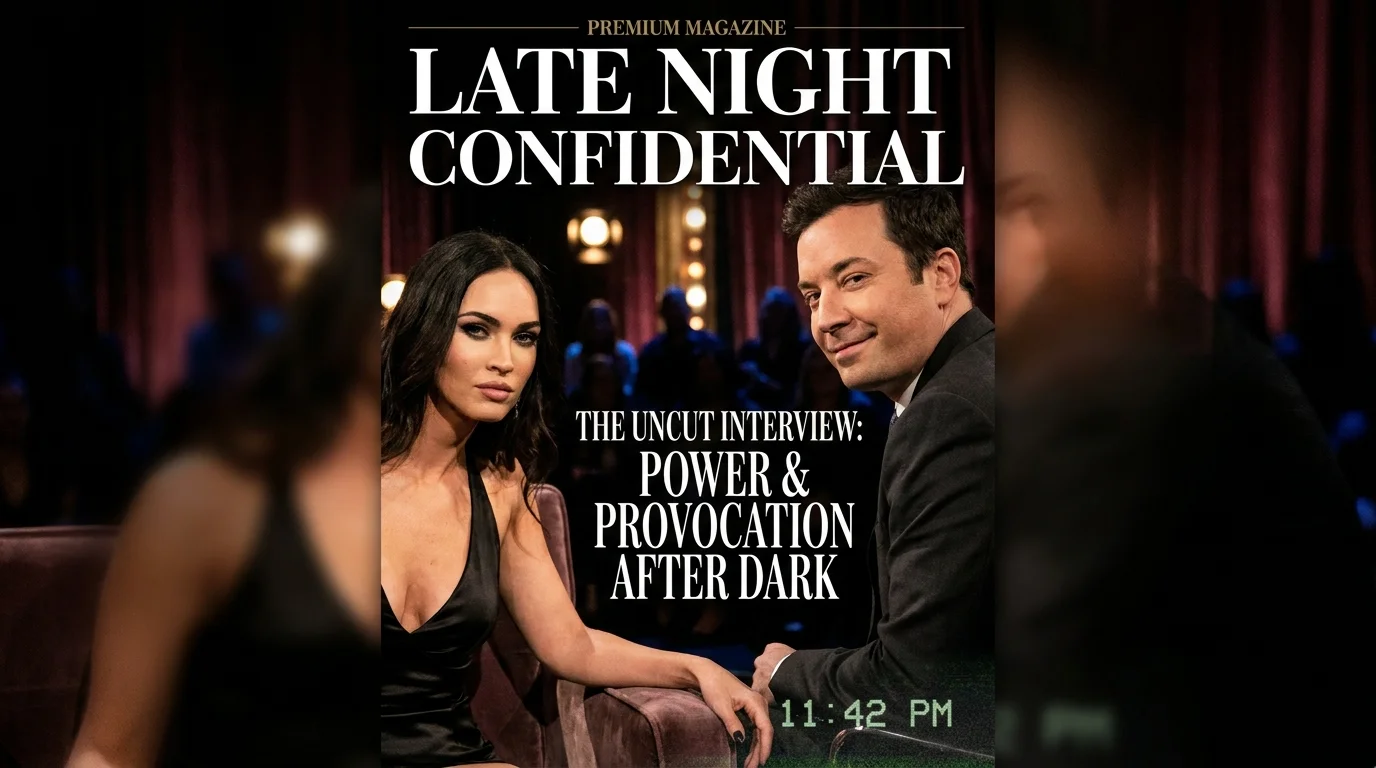
The glow of an old CRT screen hums quietly in the dark, throwing a pale blue light across the room. You expect the usual, comfortable rhythms of a late-night promotion—the practiced smile of a young starlet, the rehearsed anecdote about a filming mishap, and the soft, agreeable laughter of a studio audience. Instead, the footage offers something entirely different, almost chilling in its raw discomfort.
You watch a twenty-three-year-old actress sit rigid in a leather chair, her shoulders squared like a soldier expecting a blow. The host leans across his desk, his teeth gleaming under the aggressive studio lighting as he delivers a loaded question designed to humiliate. At the bottom of the screen, you see a grainy television timestamp flickering away as the tension builds.
It is during this segment that the host stands up to physically mock her, contorting his body and mimicking a brainless doll while the studio audience erupts in a unified wave of cruel laughter. She sits frozen, her smile desperately pinned to her face, a survival instinct captured in real-time. For decades, the media carried a story that she was difficult, ungrateful, and impossible to work with, yet this dusty tape tells a completely different story of the era.
As the video loops on modern social feeds, fueled by nostalgia algorithms that are suddenly obsessed with reassessing the early 2000s, the old narrative begins to crumble. The truth, long buried under sensationalized tabloid headlines and late-night punchlines, finally finds room to breathe. It is a moment of archival rebirth that vindicates a career spent in the crosshairs of a hostile industry.
The Hostile Ecosystem and the Mirage of the Difficult Star
For years, mainstream media used a very specific mechanism to handle young women who refused to play along with the industry’s unwritten rules. Think of it as a rigged carnival game where the targets are weighted to never fall, yet the player is blamed for every missed throw. When a starlet showed boundaries, she was instantly labeled as unprofessional or combative, a narrative designed to isolate her from future opportunities.
When you strip away the bright studio lights and the upbeat transition music, you see that the media environment did not want authentic talent; it wanted compliant caricatures. By viewing her through the lens of modern accountability, the old rumors dissolve into nothing more than collective public gaslighting.
- David Beckham tense public posture sparks sudden brand deal tension rumors
- Sandra Bullock survives intense fame trusting a strict isolation rule
- Anthony Hopkins entirely improvised his most terrifying horror movie scene
- Kevin Bacon sustains his massive marriage enforcing one rigid boundary
- Tom Cruise early couch interview broadcast glaring romantic warning signs
A Hidden Reality Captured in the Archives
Sarah Jenkins, a thirty-four-year-old digital archivist who specializes in preserving pre-streaming broadcast history, spent weeks tracking down the original, unedited master tape of this interview. “When you look at the raw broadcast feed without the commercial breaks, the hostility is undeniable,” Sarah says, pointing to the screen. “We were trained to look at her as the problem, but she was simply a young woman navigating a room full of powerful people who were actively waiting for her to stumble.”
How the Algorithm Decodes the Archive
The way we digest these resurfaced moments depends heavily on our own relationship with the past, splitting viewers into distinct camps of understanding. For the casual late-night viewer, these clips are a jarring wakeup call, exposing how much our collective standards of decency have evolved over the last fifteen years.
The Analytical Perspective
For the pop culture analyst, the footage serves as a masterclass in structural bias, illustrating how systemic hostility was packaged as lighthearted entertainment. It proves that the “difficult” label was often a penalty for refusing to let a powerful host walk over you on live television.
Deconstructing Old Media: A Mindful Toolkit
You do not have to be a professional researcher to spot these historical distortions in your everyday social media scrolling. It requires a deliberate, mindful shift in how you consume vintage content, moving from passive consumption to active observation of human dynamics.
To protect your own peace of mind while engaging with retro media, consider practicing these systematic observation steps during playback:
- Isolate the Host’s Body Language: Watch the physical distance between the host and the guest, noting if they lean in aggressively to dominate the space.
- Listen to the Audience Cue: Pay attention to when the laugh track swells, as these are often used to normalize a borderline abusive remark.
- Track the Deflection Patterns: Observe how the guest attempts to steer the conversation back to their actual work, and how persistently the host pulls them back to physical topics.
The Tactical Toolkit for Media Literacy:
• Ideal Volume for Analysis: Low or completely muted to focus strictly on silent body language.
• Observation Window: The first three minutes of an interview where the primary power dynamic is established.
• Key Red Flag: A host physically mocking a guest’s speaking style, posture, or physical features.
The Freedom of a Corrected Record
Reclaiming the truth about the past does more than just vindicate a Hollywood star; it offers a profound sense of relief for anyone who has ever had their boundaries treated as bad behavior. When we correct the record for others, we give ourselves permission to look back at our own lived experiences with a much gentler eye.
The algorithms pushing these old clips are not just serving up empty nostalgia to pass the time. They are helping us dismantle the old templates of compliance, proving that sometimes, the people who were called difficult were simply the only ones brave enough to stand their ground.
“The archive always keeps the receipts, even when the culture tries to forget who signed them.” — Sarah Jenkins
| Key Point | Detail | Added Value for the Reader |
|---|---|---|
| The “Difficult” Myth | Framed as an uncooperative diva in 2009 tabloid culture. | Replaces modern guilt with structural clarity by showing the hostility she faced. |
| The Host’s Mimicry | Host physically mocked her posture to get a cheap studio laugh. | Helps you identify and name subtle workplace belittlement in your own life. |
| Algorithmic Push | High engagement on short, unedited clips of 2000s interviews. | Provides a shared language to reject outdated media norms. |
What specific late-night interview sparked this recent viral wave?
A resurfaced clip from a major 2009 late-night show where the host openly mocked her intelligence and career choices while the audience laughed.
Why did the public believe she was difficult for so long?
Because the media consolidated a narrative that penalized her for speaking out against toxic onset environments, labeling her ungrateful.
How do nostalgia algorithms choose which clips to resurrect?
They target high-contrast emotional shifts—moments where modern viewers will feel immediate friction compared to past cultural standards.
Can watching these old clips cause emotional fatigue?
Yes, because they reflect a time of unchecked hostility, which is why active, analytical viewing is recommended.
How does this cultural shift help everyday people?
It validates the experience of having your boundaries mislabeled as “hostility” in professional or personal spaces.